
She Helped a Stranger Fix His Wagon and Forgot About It He Never forgot her

The Unspoken Debt
Nobody in Caldwell Crossing could explain why Harrison Thornwell stopped his wagon on the old Miller Road that afternoon. A man of his standing the kind of man who measured time in interest rates and land deeds didn’t stop for much. But there he was, crouched in the dust beside a cracked rear wheel, his fine wool coat folded meticulously over the seat, his patience worn to the bone, and not a single soul in sight.
The sting of it wasn't the heat or the delay; it was the vulnerability. Harrison was a man who had never once been without options. He owned the largest cattle operation in three counties. He had men on his payroll whose entire purpose was to prevent exactly this kind of inconvenience. And yet, here he knelt on a stretch of road that apparently the world had forgotten, with the afternoon sun pressing down on the back of his neck like it had a personal grievance against him.
He heard her before he saw her. Not her voice, but the steady, rhythmic thwack of an axe splitting wood somewhere behind the treeline. It was unhurried and even the kind of sound that belongs to someone who has been working since before the dew left the grass. Then, it stopped.
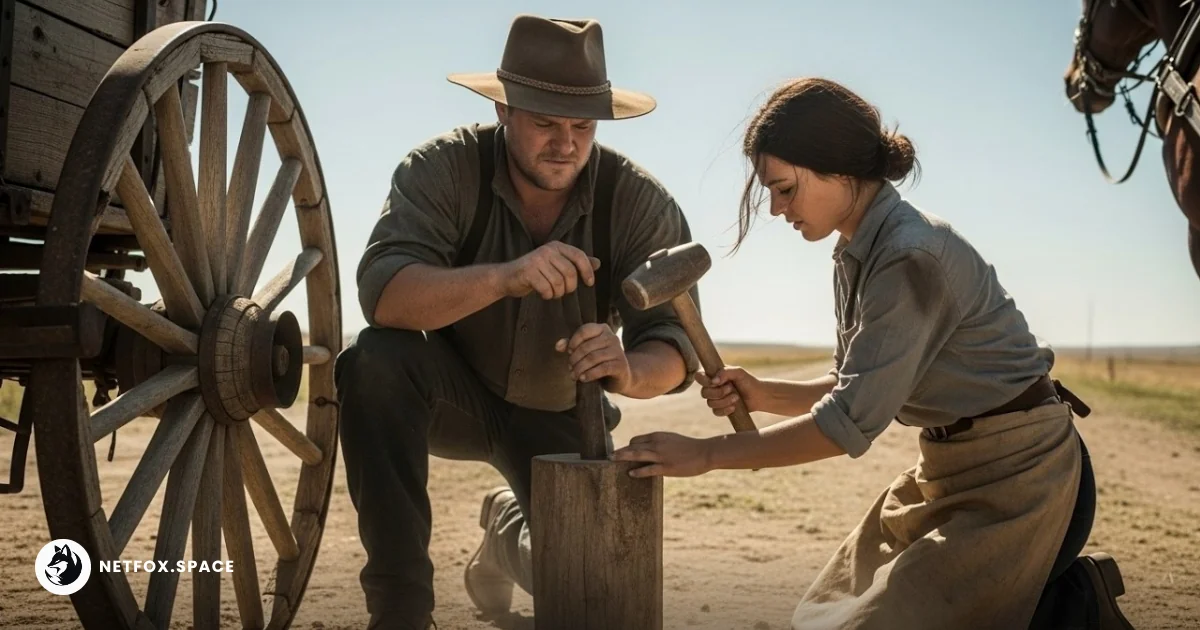
Boots crunched on dry grass. A woman stepped out from between the shadows of the oaks, carrying a short-handled mallet. Viola Cobb was not what Harrison expected. She was young, perhaps in her late twenties, with dark hair pinned back with severe efficiency and a canvas work apron tied at her waist.
She didn't ask if he was alright. She glanced at the wagon, glanced at his dusty hands, and walked directly to the wheel. She crouched, running her fingers along the split wood of the spoke, pressing her thumb against the hub.
"Spokes not gone," she said, her voice like cool well water. "Just needs seating. You have a mallet?"
Harrison straightened, brushing dust from his trousers. "I don’t generally carry one."
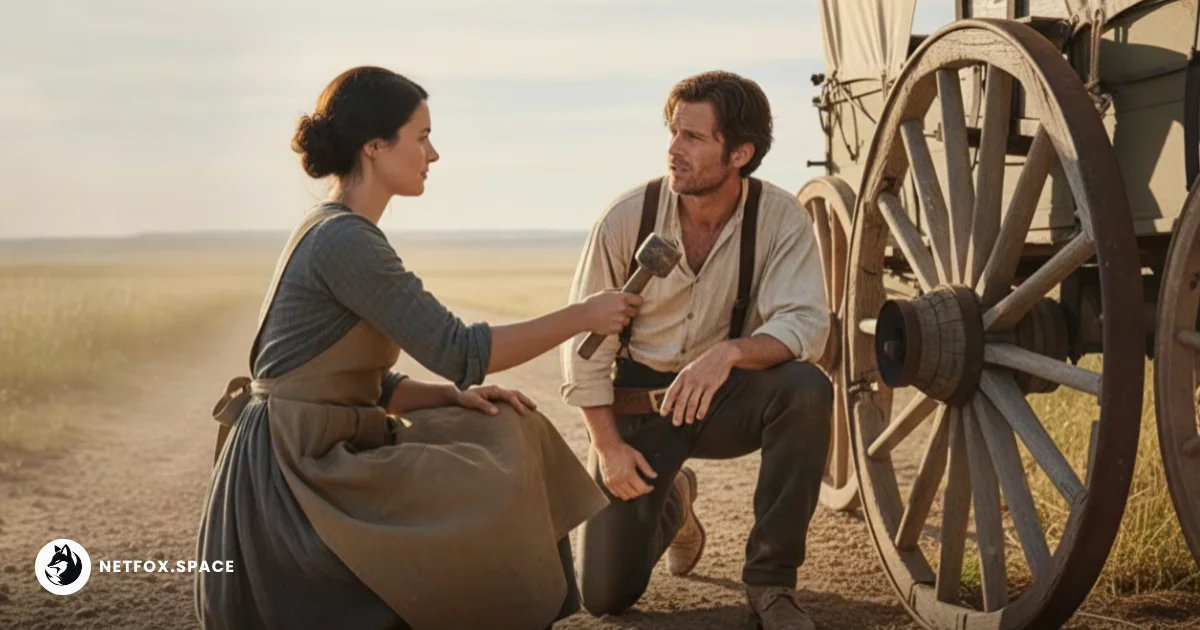
She held hers out without a word. As he took it, she placed her hands on the wheel’s rim, positioning the split spoke with a strength that surprised him. She nodded once. He set the mallet and drove it home in three clean strikes. She tested the wheel, rocking the heavy wagon with her shoulder.
"That'll hold you to town," she said, wiping her palms on her apron. "But get the wheelwright to look at it before you take it back out. This road is hard on things that aren't prepared for it."
In Harrison’s world, people who helped generally wanted something: a job, a favor, or a connection to the Thornwell name. But Viola was already turning back toward the trees.
"What do I owe you?" he called out.
She paused, half-turned. "Nothing."
Then she walked back into the woods, and the sound of the axe started up again as if the interruption had never occurred.
Harrison made it to Caldwell Crossing before sundown. While the wheelwright, a man who opened his shop after hours specifically because Harrison was the one knocking, worked on the repair, Harrison sat on a bench outside. His thoughts kept drifting back to the woman on Miller Road.
"Know a Cobb family out that way?" Harrison asked.
The wheelwright nodded. "Viola Cobb. Runs her father’s old place alone since he passed last winter. Small spread chickens, a garden, takes in mending. Keeps to herself. Doesn't ask for much."
"She helped me with a wheel today," Harrison remarked.
"Sounds about right," the man replied.
That unsettled Harrison. It wasn't just her indifference to his status; it was that her kindness was apparently so common it wasn't even worth a story. She had helped him simply because the wheel was broken and she knew how to fix it.
By morning, Harrison had convinced himself that his next move was purely practical. He had surplus lumber in his barn high-grade cedar. He’d send it over with a note. Reasonable, proportionate, clean. His housekeeper, Mrs. Aldrid, watched him write the note with an expression she reserved for moments when she believed he was fooling himself.
Two hours later, his ranch hand, Tully, returned with the lumber still in the wagon.
"She said she appreciated the thought, sir," Tully said, looking at his boots. "But she said the mallet did the work, not her. Said she couldn't take payment for a few minutes of pointing."
Harrison sat back, stunned. "She sent nothing?"
Tully reached into his coat and produced a small cloth bundle. "Bread, sir. She said you’d had a hard afternoon, and everybody deserves a decent supper after a hard afternoon."
Harrison took the bundle. It was still warm. She had refused his expensive lumber and sent him bread instead. She wasn't being proud; she was leveling the exchange in the only way that felt honest to her. He had been inconvenienced, so she sent him something warm. That was the whole of it.
He didn't go back the next day. He told himself a man of his standing didn't chase after moments that caught him off guard. But on the third morning, he found himself riding out on Miller Road. He told himself he was checking the road's condition.
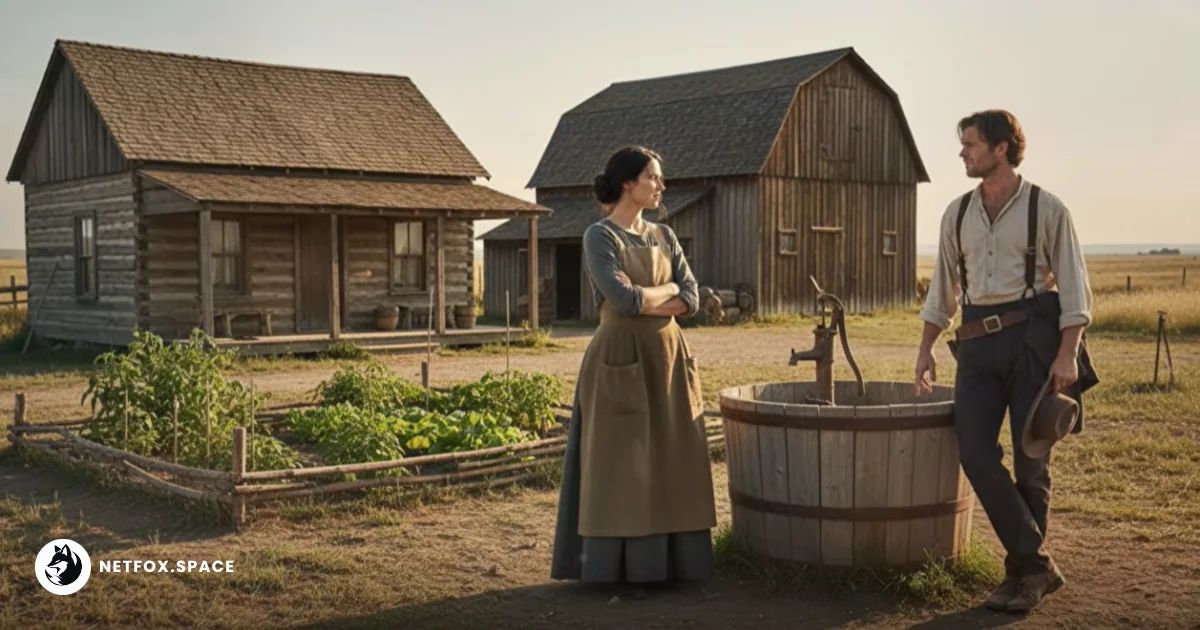
When he crested the hill above her property, he stopped. A covered wagon sat in her yard, dusty from a long journey. Beside it stood a broad-shouldered man Harrison didn't recognize, laughing with Viola.
A weight settled behind Harrison's ribs. He turned his horse and rode back, telling himself it was likely a cousin or a suitor. It took a trip to the dry goods store and the gossip of Mrs. Puit to learn the truth: "Viola’s got her brother back. Desmond. Came back from Wyoming with nothing but his pride."
Harrison felt a strange relief. He gave himself one more day, then rode back. This time, he didn't stop at the hill. He rode into the yard. Viola came around the house with two heavy water buckets. Without a word, Harrison dismounted and took them from her. She looked as though she might argue, then simply nodded toward the trough.
"I heard your brother came back," Harrison said.
"Word travels," she replied. "Desmond’s inside. He’s not well. The road was harder on him than he lets on. I'm managing."
"Your east fence needs work," Harrison noted, pointing to the sagging wire. "I could send a man."
"I'm not a charity case, Mr. Thornwell."
"I'm not offering charity," he snapped. "I still owe you for the wheel."
"We settled that."
"You settled it to your satisfaction," he said, stepping closer. "Not mine."
She studied him then, and he had the uncomfortable sensation of being read like a book by someone who wasn't even trying to turn the pages. "Why does it matter to you?"
"I don't like unfinished accounts," he said finally.
She sighed. "All right. But I’ll pay your man for his time. Coin or food, his choice."
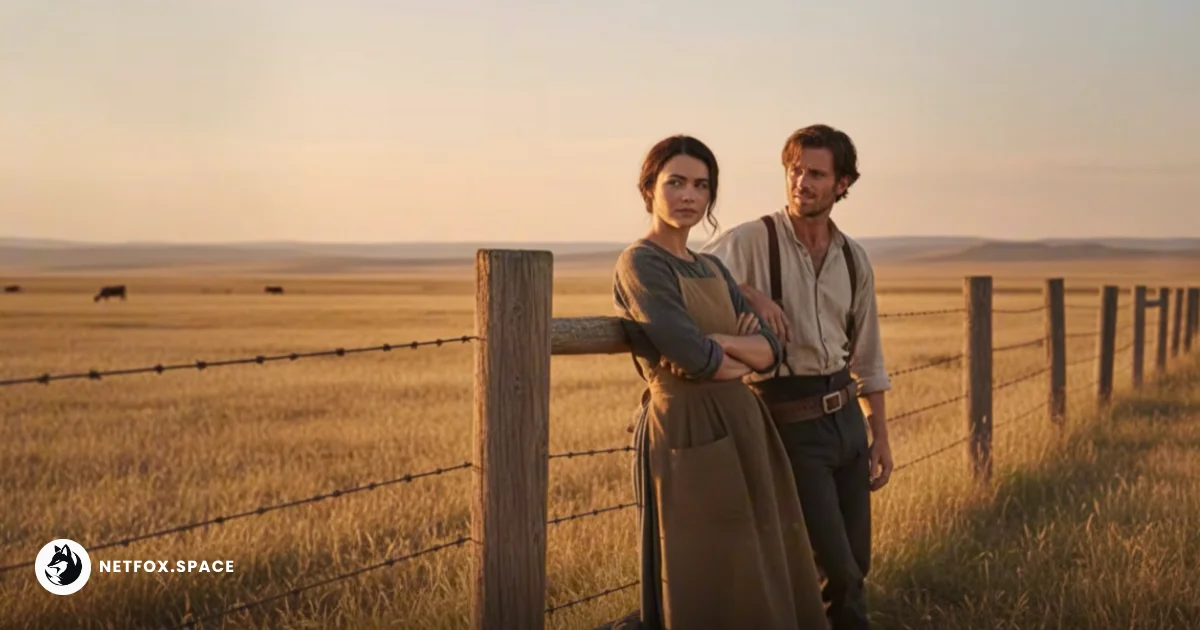
Over the next month, Harrison found reasons to ride the Miller Road three times a week. The conversations grew longer. He learned she had taught herself to read from a Surveyor’s Manual. He learned she could identify six types of hawk by their silhouette.
In return, he told her things he hadn't told anyone the pressure of the Thornwell name, the loneliness of a house that felt too large when the sun went down. She listened with a stillness that was rarer than gold.
One evening, as the shadows stretched long, Mrs. Aldrid finally spoke the truth. "You’re going to lose her to hesitation, Mr. Thornwell. A woman like that doesn't wait for a man to figure himself out. She just keeps living."
She was right. Viola Cobb didn't need him. She had her brother, her land, and her self-sufficiency. If he wanted to be in her life, it wouldn't be because he was a provider it would be because she chose him.
On a Tuesday, Harrison arrived with no plan. He found her repairing the porch railing.
"I'm not good at this," he began, standing at the steps. "I'm good at land and cattle. They have clear terms. You don't."
Viola stopped her work, leaning against the railing. "No," she agreed. "I don't."
"I've been coming out here for reasons that got thinner every time," he admitted. "The fence, the road... I came because I wanted to see you. I think you knew that."
Viola was quiet. A blue jay called from a nearby cottonwood. "I knew," she said softly.
"I’m not coming in here thinking I know what's better for your life," Harrison said, his voice dropping. "I just know that the best part of my week is the hour I spend in this yard. And I don’t want to stop."
Viola looked at him for a long time. "My father used to say the people worth keeping are the ones who show up without wanting anything back. I didn't expect to meet someone like that coming from the other direction."
"The other direction?"
"Someone who has everything," she said, "and still showed up."
They married in December. It was a cold, bright morning with frost on the windows of the Caldwell Crossing church. Viola wore her mother’s dress and a sprig of dried lavender. She walked down the aisle alone, her choice, her steady gaze fixed on Harrison.
The Cobb property and the Thornwell ranch eventually merged into one great operation, though Viola kept her father’s house as her "thinking space." Harrison never questioned it. He had learned that the things that made her her were not meant to be reorganized.
Two years later, on a warm April morning, Desmond rode up to the main house, his face split by a wide grin. Harrison followed him back to the small house on Miller Road.
Inside, Viola was holding a small, serious-faced baby girl.
"She has your expression," Harrison whispered, sitting on the edge of the bed.
"What expression?" Viola asked, tired but smiling.
"The one that means she’s already decided something and she’s just waiting for the rest of the world to catch up."
Viola laughed a full, real laugh that Harrison had spent years earning. Outside, the sun was burning the frost off the pasture. Harrison held his daughter and realized that a man who once had "everything" had actually had nothing until he met a woman who asked for no
Comments (0)
Please login to comment
Sign in to share your thoughts and connect with the community
Loading...