
“You think this is about love You’ll be marrying her, Ugly or Not Cold Blooded Father Forces Son”

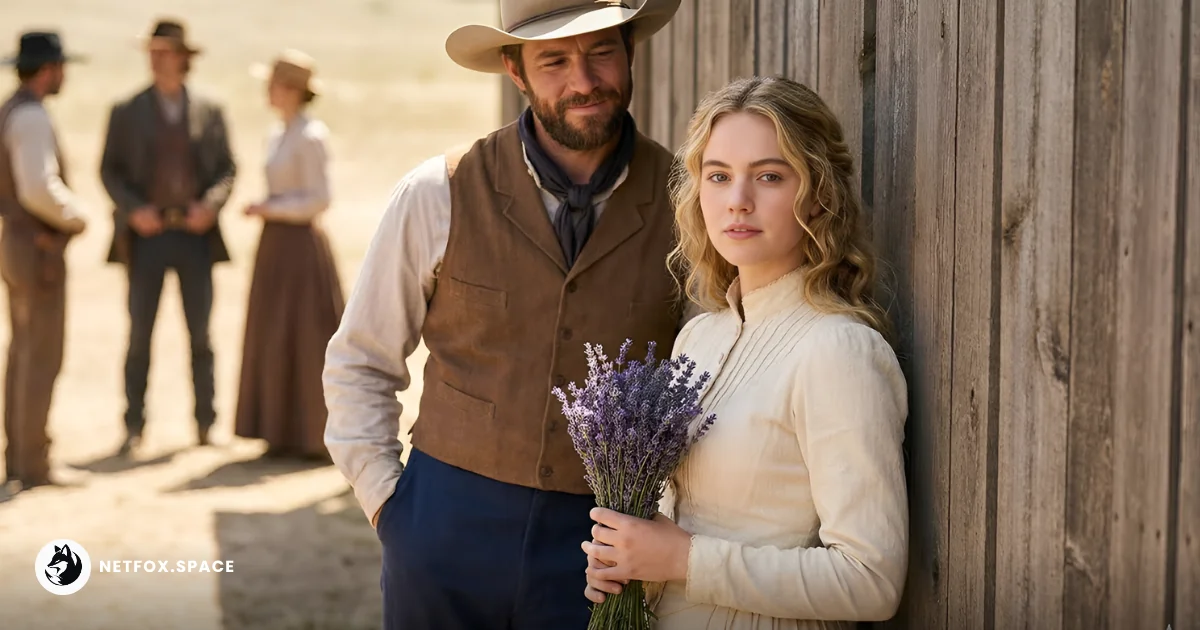
The Iron Inheritance
The storm had not yet broken over the high plains of Colorado, but inside the timbered lodge of the Briggs estate, the air was already thick with the static of an impending strike. It was a room that demanded submissiveness smelling of cured leather, expensive pipe tobacco, and the dark, polished grain of old mahogany. A fire crackled in the hearth, throwing jagged, dancing shadows against walls decorated with the trophies of a lifetime of ruthless conquest.
Calvin Briggs, a man whose word acted as law across three counties, stood by the floor-to-ceiling window. His shoulders were broad, carved from decades of backbreaking labor and the merciless pursuit of expansion, yet his heart had long since calcified into something resembling iron. Behind him stood his son, Thomas, a man of twenty-six who possessed his father’s height but lacked his father’s cruelty. He stood with his hat crushed in his hands, his boots still stained with the grit of the pasture, looking like a ghost in his own home.
“You think this is about love?” Calvin’s voice shattered the silence. It was flat, devoid of warmth, and carried the weight of a gavel.
He struck a match, the sudden flare illuminating the harsh lines of his face before he touched it to his cigar. He drew deep, then turned, smoke curling around his head like a crown of grey fog. “You’ll be marrying her. Ugly or not. And that’s final.”
Thomas blinked, his pulse quickening. He hadn't asked about the girl’s appearance. He hadn't even admitted he’d heard the rumors of the arrangement. Yet, his father knew the vanity that still flickered in him the foolish, dangerous hope that marriage might be something more than a transaction of land and legal binding.
“Do you have something to say, Thomas?” Calvin’s eyes, sharp as a hawk’s, bore into him. “Or are you waiting for a prettier reason to do your duty?”
Thomas found his voice, quiet but steady. “Is she… is she difficult to look upon?”
A cruel, knowing smirk touched Calvin’s mouth. “Your eyes don't need to eat, boy. Your legacy does. She has the deed. Two hundred acres of the finest grazing land in the valley, running right along our northern border. Her parents are buried, the last of the Hartwell line. You marry her, the name dies, and our cattle graze where her people bled. It’s a simple equation.”
Calvin poured two fingers of whiskey into a crystal glass but didn't hand it over. He left it sitting on the side table an invitation he had no intention of actually extending. “Give the child your name. Absorb the land. Or walk out that door tonight, and don’t look back. You’ll be a stranger to this family by morning.”
Thomas had swallowed his father’s bitter medicine for twenty-six years. But this this was a bridge too far. He looked out the window at the storm clouds gathering. The Hartwell land was a prize his father had coveted for decades, a beautiful, rolling expanse that felt like a sanctuary in a world of hard edges. To take it by way of a loveless, forced union felt like theft. But the threat was cold, absolute, and real.
“When is the ceremony?” Thomas asked, the words feeling like gravel in his throat.
“Saturday. Two days. Keep it quick. Keep it legal.”
The Hartwell Homestead sat against the hillside like a mourner dressed in black. The white paint was peeling from the shutters, exposing the grey wood beneath, yet the structure remained stubbornly proud, its foundations deep in the soil. As Thomas rode up, the rain began to fall a steady, rhythmic tapping that sounded like a countdown.
The door opened before he could knock.
She stood in a dress the color of midnight, her hair pulled back in a severe, practical knot. She wasn't the "ugly" creature he had been prepared for, nor was she a delicate belle of the ballroom. She was striking in her austerity, her eyes clear, steady, and terrifyingly perceptive.
“You must be Thomas Briggs,” she said.
“Miss Hartwell… Elanina,” he corrected, stepping over the threshold.
She stepped aside, her movement fluid and graceful. “You can stop the pretense, Thomas. We both know exactly why you are here.”
The interior of the house was a paradox it was impeccably clean but echoed with the silence of a tomb. Furniture was draped in white sheets, resembling ghosts watching them. The scent of dried lavender and old sorrow hung in the air.
“Reverend Patterson will be here at two,” she said, walking toward the kitchen. “Coffee? Or something stronger?”
“Coffee,” he said, watching her work. Her hands were steady, her motions efficient.
“You could have refused, you know,” she said, pouring the dark liquid into mismatched mugs.
“So could you.”
“I couldn’t,” she replied softly, her gaze dropping to the floor. “A woman alone doesn’t keep land long in this valley. Not with men like your father circling. I’d be forced off before the next frost.”
“I’m not him,” Thomas said, the protest rising instinctively.
“Maybe not,” she said, meeting his eyes again, her expression unreadable. “But you’re here, aren't you?”
The truth of it stung more than a lash. At exactly two o'clock, the Reverend arrived. The ceremony was a blur of hollow promises. They signed the registry without looking at each other, their hands firm, their hearts walled off. They were husband and wife, bound by a contract that felt more like a sentence than a start.
“I’ll take the spare room,” Thomas said once the Reverend left.
“Good,” Elanina replied. “Supper’s at six.”
Three weeks into their marriage, the house had settled into a rhythm that resembled a survivalist camp more than a home. They were ghosts sharing a hallway. Elanina rose before the sun to tend to the poultry and the dairy cow. Thomas spent his days in the fields, fixing the miles of rotting fence that had been neglected since the Hartwells passed.
They ate in silence, the clinking of silverware against porcelain the only music in the house. It was lonely, but it was safe. It was a truce.
Then, the sky turned a bruised, unnatural orange.
Thomas woke to the acrid, choking scent of smoke and the frantic, high-pitched screaming of the livestock. He was out of bed before he was fully conscious, boots on in seconds. He sprinted to the window. Across the dry, parched grass of the pasture, a wall of fire was racing toward them, fed by a relentless wind that hadn't ceased for weeks. It was hungry, vibrant, and terrifyingly fast.
“Elanina!” he bellowed, his voice raw.
She was already at his door, dressed in heavy wool, her eyes wide but her focus absolute.
“How bad?” she asked.
“The barn. It’s heading for the hay storage. If we lose the feed, we lose the herd.”
They moved with a synchronized intensity they had never displayed before. Thomas grabbed the wire cutters and rushed to the fence line, shouting at the cattle, driving them toward the creek where the ground was still damp and the fire would struggle to jump. Elanina stayed behind, frantically digging a firebreak around the base of the barn, her skin blistering from the heat.
The fire crested the ridge, a roar like a freight train. The heat became a physical force, turning the night into a searing, hellish noon.
“The house!” Thomas shouted, abandoning the cattle. He grabbed the garden hose, but the pressure was weak. He began to pump, his muscles screaming, as they soaked the wooden shingles of the roof and the siding.
Ash rained down on them like black snow. They worked until their lungs burned and their vision blurred. When the fire finally surged past them, leaving the barn a skeleton of charred timber and the fences a twisted mess of wire, they collapsed on the front porch.
The dawn was pale, cold, and silent. The world around them was scorched, a monochromatic graveyard of ash.
“Thank you,” Elanina whispered, her voice cracking.
Thomas looked at her, his face smeared with soot, his eyes bright with a sudden, fierce realization. “For staying,” he answered. “This is my home, too.”
She didn't pull away when he shifted closer. She leaned into his shoulder, and when she finally stood to make the morning coffee, her hand lingered against his for a heartbeat a spark of humanity in the ruins.
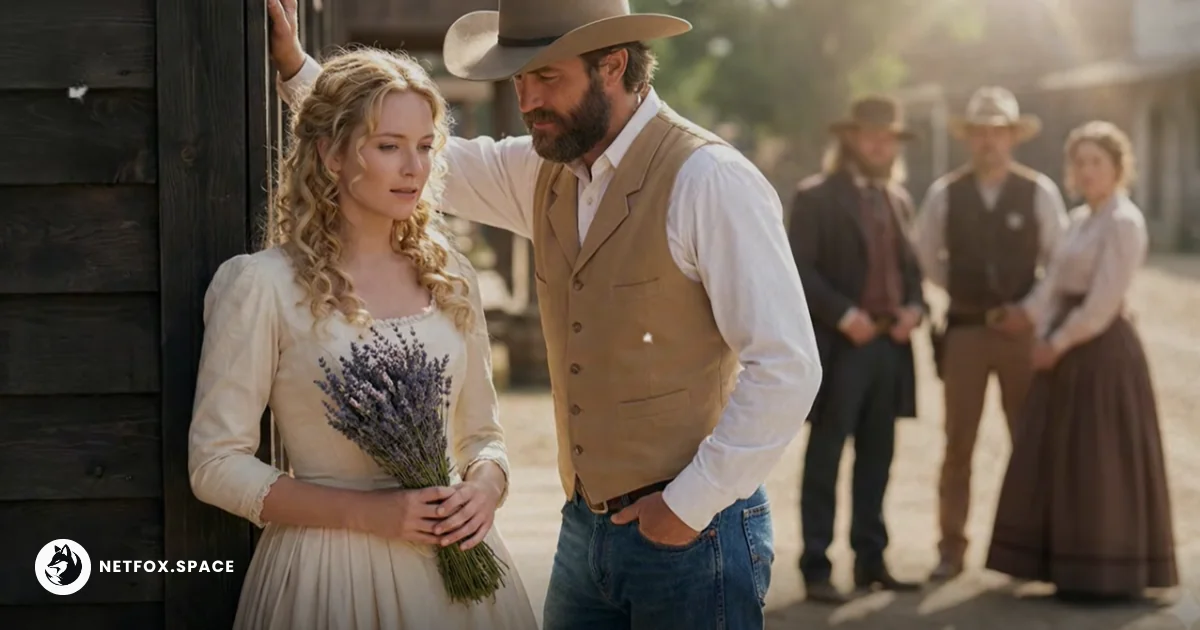
The weeks following the fire were a slow mend. The labor of rebuilding required constant communication, and in that necessity, the walls began to crumble. Silence was no longer a shield; it was a conversation.
When the annual Harvest Festival in Milbrook arrived, Elanina prepared to stay behind, but Thomas surprised her.
“I’m going,” he said, not as a command, but an invitation. “And you’re coming with me.”
“People will stare, Thomas. They know what this marriage is.”
“Let them stare,” he replied, his jaw set. “You’re my wife.”
At the festival, they were the center of whispered speculation. Mrs. Henderson, a woman who treated gossip like a competitive sport, approached them with a sharp, sugary smile. “It’s such a tragedy about the barn, dear. Surely Mr. Briggs will step in to help you rebuild? He has so much pull.”
Thomas stepped closer to Elanina, his hand firm on the small of her back. “We don’t need charity, Mrs. Henderson. We’ve already secured the lumber and the insurance. Our plans for the spring are already finalized.”
The pride in his voice was unmistakable, and it was directed at her. Mrs. Henderson’s smile faltered, her gaze flickering between them, confused by the sudden, palpable shift in the power dynamic.
On the ride home, the silence was no longer empty it was warm, humming with the secret knowledge of a team that had found its footing.
Three days later, Thomas rode to his father’s ranch. He didn't wait for an invitation. He walked straight into the study, where Calvin sat in the same leather chair, the same decanter of whiskey nearby.
“We’re not selling the Hartwell land,” Thomas said, his voice quiet, lacking the trembling hesitance of the boy who had left that room weeks ago.
Calvin rose, his eyes flashing with the familiar, predatory fire. “That wasn't the deal, boy. You take the land, you clear the way for my rail expansion.”
“That was your deal,” Thomas replied. “Not mine. I’m not expanding your empire anymore. I’m building a home.”
Calvin growled, stepping forward. “I built a legacy for you!”
“You built a cage,” Thomas corrected. “I found a wife worth fighting for. And I found a life worth living.”
He turned and walked out, the sound of his boots on the floorboards echoing like a declaration of independence. He felt lighter than he had ever felt in his life.
Winter returned with a vengeance, burying the valley in snow. In December, another knock came at the door. It was Calvin, standing in the biting cold, his breath pluming in the air. He didn't come to argue. He came to negotiate. A railroad company was pushing for a route through the valley, and they were willing to pay a fortune to clear the Hartwell property.
“It’s enough to move to California,” Calvin said, his voice uncharacteristically gravelly. “Fresh start. A life of leisure. Don’t be a fool, Thomas.”
Thomas and Elanina sat at the kitchen table long after the door had closed, the contract lying between them like a snake.
“This land is my family,” Elanina said, her eyes tracing the grain of the wood. “If I sell, I bury their memories under concrete and steel.”
“Then we fight,” Thomas said.
They hired a lawyer from Denver a man with tired eyes and a mind like a razor. The legal battle was brutal. They spent their savings, their time, and their sanity, wading through depositions and public hearings. The railroad men were polite, ruthless, and entirely convinced that progress was a force of nature that could not be stopped.
Throughout the months of uncertainty, they became more than a married couple; they became a singular entity. They learned each other’s rhythms how Elanina’s hands shook only when she was alone, and how Thomas needed the solitude of the dawn to process his guilt.
Finally, in the spring, the ruling came. The railroad was denied the route. The cost of forcing the path through the homestead was too high, and alternative paths were ordered.
The moment they read the letter, the tension that had lived in their chests for months simply evaporated. Thomas laughed a short, disbelieving sound and pulled Elanina into an embrace. It wasn't the tentative touch of strangers; it was the desperate, hard-won hold of two people who had survived a war together.
Summer followed, lush and green. The apple tree by the kitchen window bloomed with stubborn, beautiful white blossoms.
Calvin Briggs rode up one clear morning. He looked older now, his movements slower, the arrogance replaced by a strange, hollowed-out weariness. He stood on the porch, looking at the house, the garden, and the life that had taken root in the soil he had once tried to poison.
“I heard,” he said. “You won.”
“We kept what was ours,” Thomas replied.
Calvin looked past him to the fields. “You chose the hard ground, Thomas. It’s a thankless thing.”
“So did you, once,” Thomas said. “I think you just forgot why.”
The silence stretched between them, not with anger, but with a profound, final distance. Calvin met Elanina’s gaze. There was a flicker of something in his eyes perhaps respect, perhaps regret.
“You have grit,” he said to her. “The land suits you.”
He turned his horse without another word and rode away. He never came back with threats. He never came back with deals.
That summer evening, as the sun dipped behind the mountains and painted the sky in shades of violet and gold, Thomas took Elanina’s hand in the field.
“Would you marry me again?” he asked, the words simple, honest, and entirely his own choice.
She smiled, a sunrise of an expression that reached her eyes and warmed her soul. “Yes. I think I would.”
They held a ceremony under the apple tree, witnessed only by their neighbors and the quiet, rolling hills that had seen their transformation. There was no iron, no power, and no greed. There was only the promise of two people who had built a love out of fire, silence, and the stubborn, beautiful hope of a life truly chosen.
The years rolled on. The ranch grew. Children were born, taught the value of the earth and the importance of their own names. The railroad tracks remained in the distance, a reminder of the world they had defied.
It wasn't a love born of poetry or song. It was a love built on the foundation of shared survival a testament that sometimes, when two people are forced together by the cruelty of the world, they have the power to create a grace that the world can never touch.
Comments (0)
Please login to comment
Sign in to share your thoughts and connect with the community
Loading...