
How Mother Mary Uses Costume Design to Track Star Power

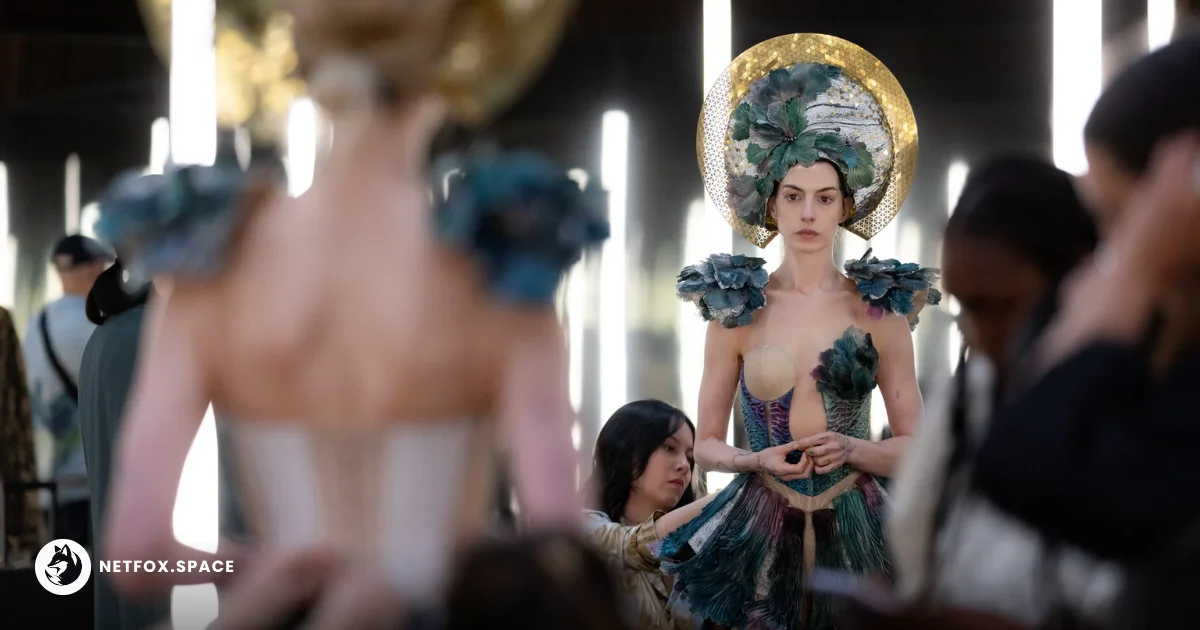
The wardrobe in David Lowery’s Mother Mary functions as more than a high-fashion backdrop; it serves as a primary vehicle for character development and world-building. Costume designer Malgosia Turzanska has constructed a visual language that charts the public rise and private fractures of the film's central pop icon.
Wardrobe as a structural defense against public scrutiny
In the high-stakes environment of global pop stardom depicted in the film, the costumes worn by Anne Hathaway’s character operate as a form of "pop-star armor." Turzanska’s designs prioritize sharp silhouettes and unconventional materials that create a physical distance between the performer and her audience. The interview with the designer reveals that these pieces were intended to reflect a persona that is both aspirational and impenetrable.
From a technical standpoint, the construction of the stage outfits mirrors the rigid requirements of a real-world world tour, balancing the need for visual spectacle with the mobility required for performance. This dual utility reinforces the film's grounding in the physical realities of the music industry. The "daring" nature of the outfits, noted during production, serves to heighten the contrast between the character's curated stage presence and her internal volatility.
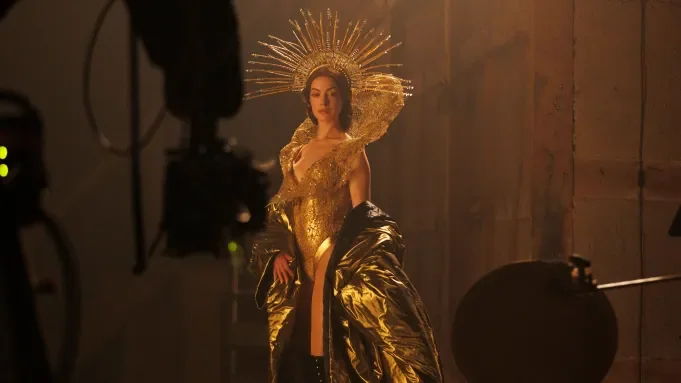 Anne Hathaway in 'Mother Mary'
Contrasting silhouettes define the central power dynamic
The relationship between the characters played by Hathaway and Michaela Coel is articulated through a deliberate divergence in their visual presentation. While Hathaway’s wardrobe leans toward the structured and the reflective symbolizing the constant gaze of the public Coel’s aesthetic is framed to suggest a different kind of creative authority.
Reviewers have noted that this visual friction helps to establish the film’s tension without relying solely on dialogue. The interplay of fabric and light in these scenes serves as a practitioner-level lesson in how costume design can dictate the "weight" of a character in a frame. When the two leads share the screen, the textures of their clothing ranging from soft knits to cold metallics signal the shifting power balance between the icon and the collaborator.
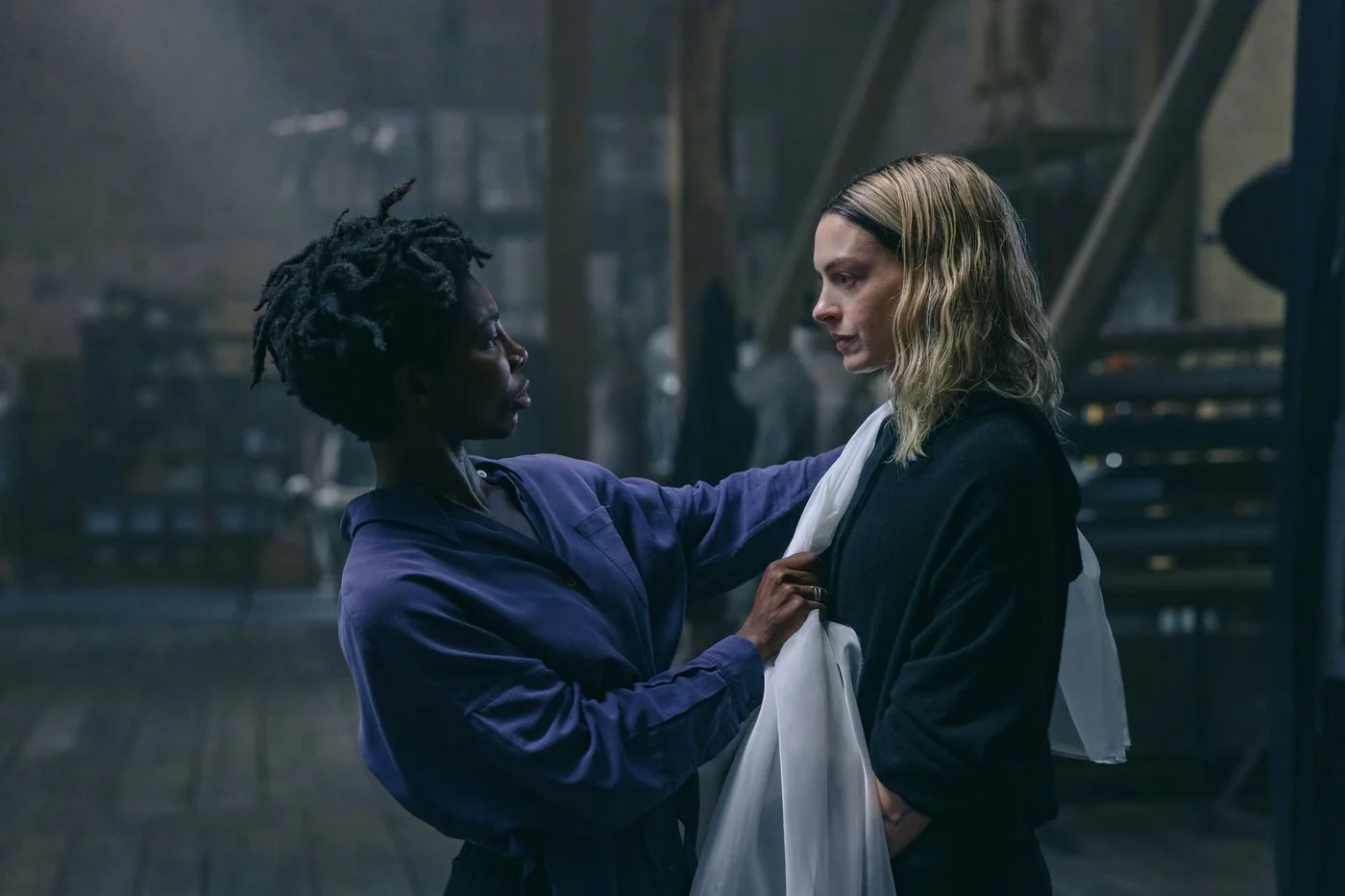 This image released by A24 shows Michaela Coel, left, and Anne Hathaway in a scene from "Mother Mary." (Eric Zachanowich/A24 via AP)
The transition from couture to vulnerability
A critical analytical layer of Mother Mary is the breakdown of the "super-human" aesthetic as the narrative progresses. The film tracks a movement away from the impeccably tailored stage wear toward more deconstructed, organic pieces during the character’s private moments. This shift is not accidental; it is a calculated design choice to mirror the character's psychological unraveling.
By stripping away the layers of sequins and structural padding, the production reveals the person beneath the brand. This transition demonstrates the limitations of the "pop star" image a theme central to the film's exploration of celebrity culture. For the viewer, the costumes act as a real-time indicator of the protagonist's mental state, proving that in a film about icons, the clothing is the character’s most honest dialogue.
Comments (0)
Please login to comment
Sign in to share your thoughts and connect with the community
Loading...