

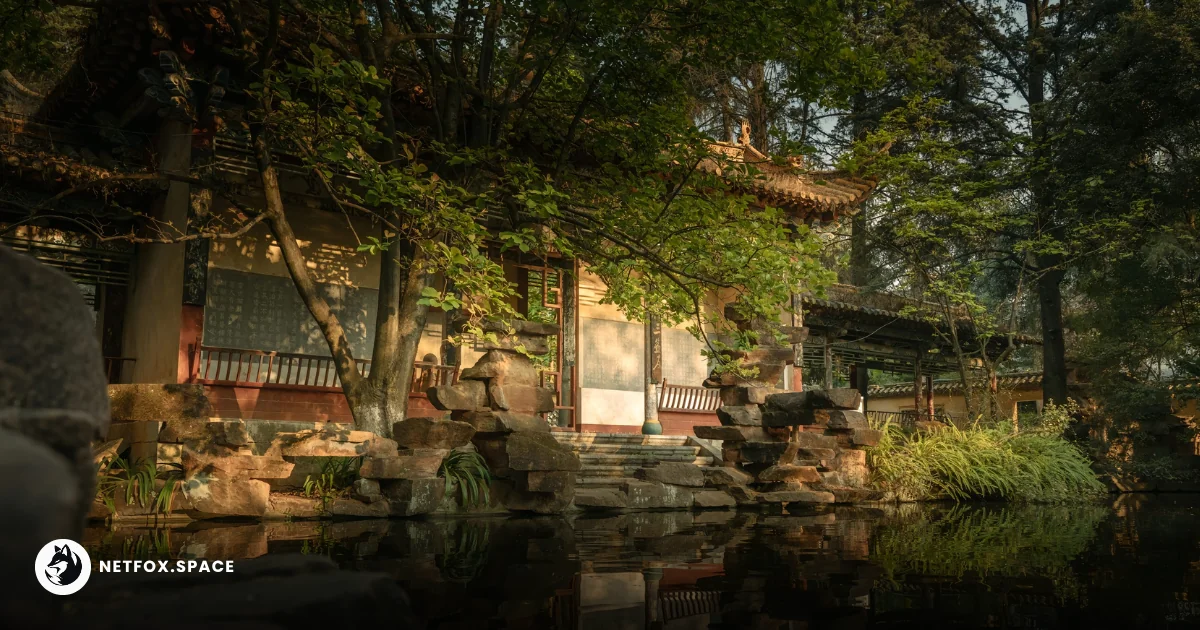
Chasing the Golden Hour in the Spring City
I found myself under the heavy, sun-drenched boughs of Kunming’s cherry blossoms this week, specifically within the historic confines of Daguan Park. While most tourists were focused on the pink canopy, I was drawn to the weathered timber of the Shuang Jue Xuan (Double Excellence Pavilion). This site isn't just a garden; it is a repository of the Yunnan Calligraphy School, where the interplay of light and ancient ink tells a story of the Ming and Qing Dynasties.
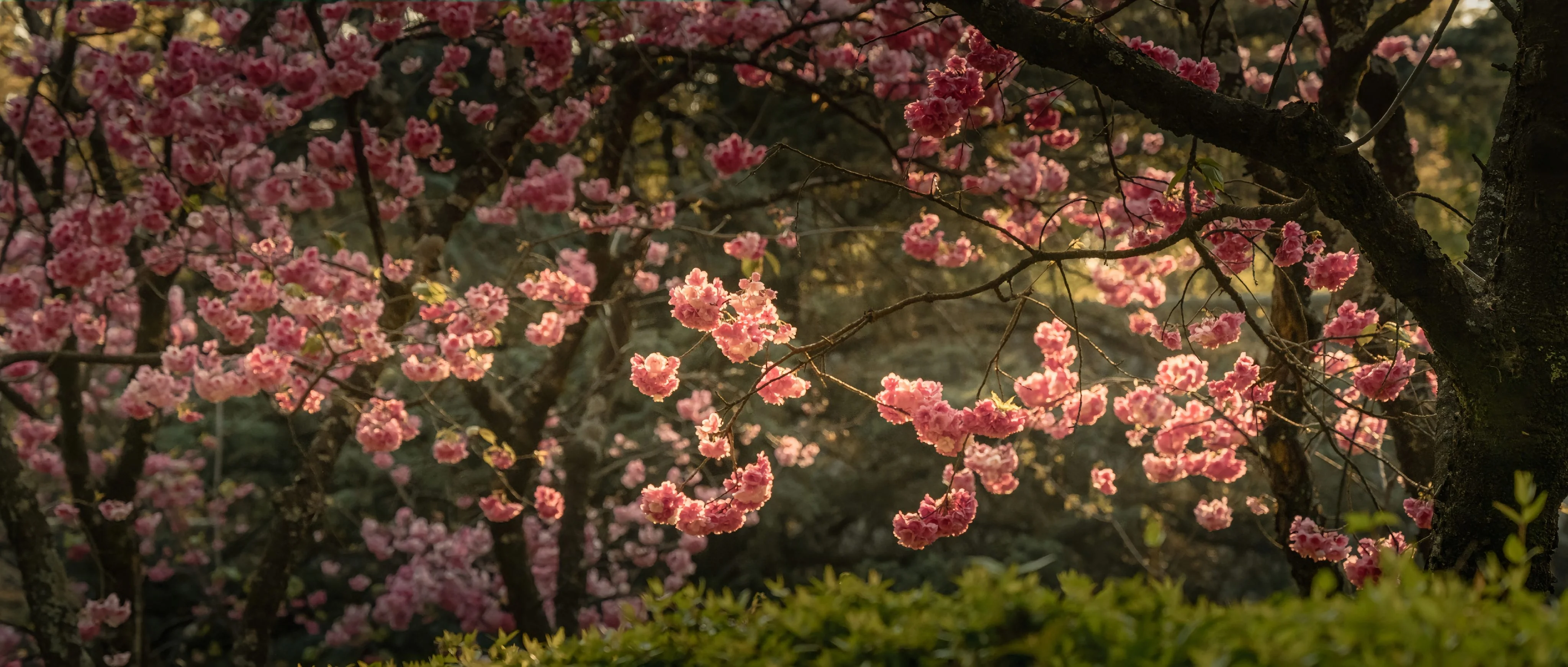 Pink cherry blossoms in full bloom at Daguan Park, Kunming, backlit by the warm, golden light of sunset, emphasizing the "Spring City" atmosphere.
The air in the Panlong District carries a specific crispness this time of year that heightens the sensory experience of the architecture. I spent hours watching the light shift across the "Guang Bei Zhen Yun" plaque, realizing that these structures were designed to be "read" as much as they were to be inhabited. The intentionality of the garden’s layout forces a slower pace, demanding that you look past the flowers to the stone steles that ground the landscape in history.
The Tactile Reality of Heritage Conservation
Standing before the stone lions at the entrance, I noticed that the architectural preservation efforts by the Kunming Municipal Bureau of Culture and Tourism are shifting toward "living history" rather than static museums. The tactile nature of the stone tablets, some dating back centuries, provides a physical link to the scholars who once walked these paths. For me, the permanence of the stone contrasted sharply with the ephemeral nature of the blossoms falling around them.
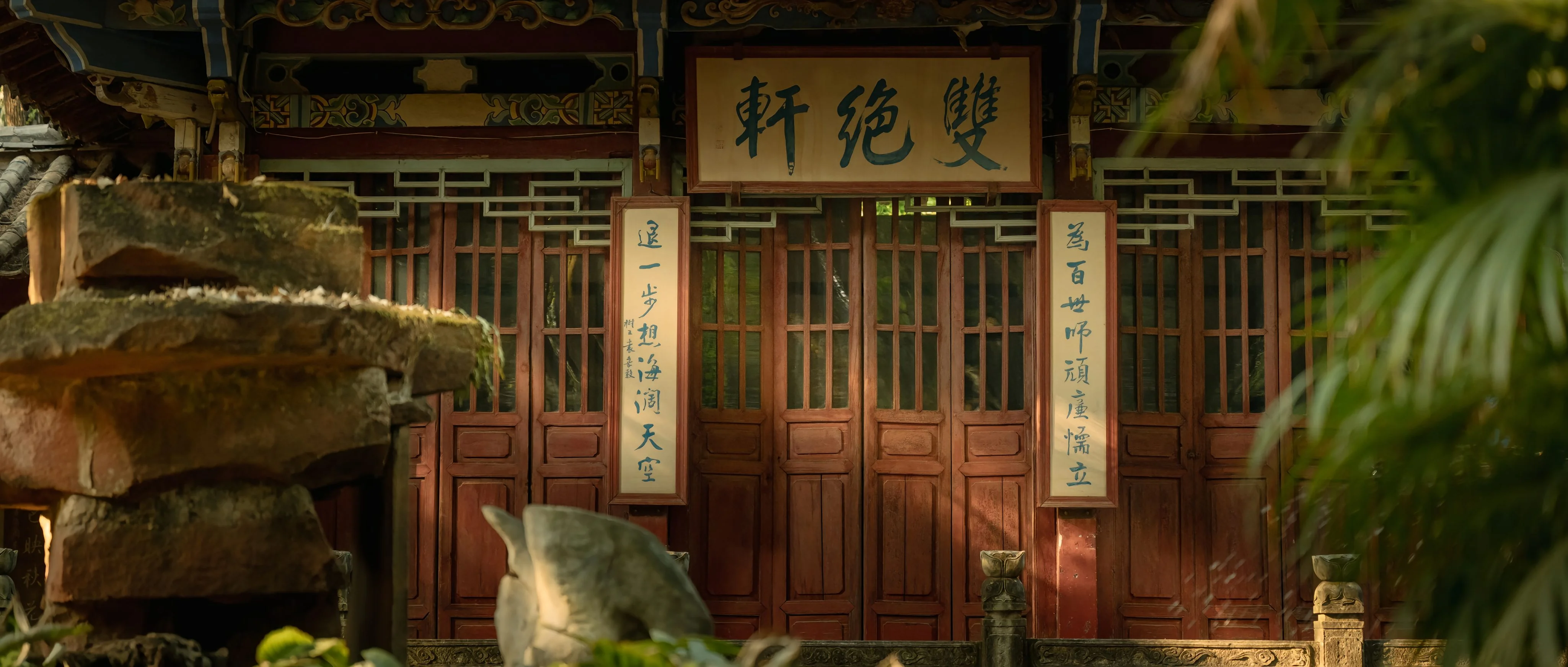 Ornate wooden doors of the Shuang Jue Xuan (Double Excellence Pavilion) in Kunming, adorned with vertical calligraphy couplets and traditional Chinese architectural motifs.
I spoke with a local groundskeeper who mentioned that the recent restoration of the pavilion’s eaves used traditional mortise and tenon joints to maintain structural integrity. This commitment to the Ancient Architecture Restoration Standards ensures that the "Double Excellence" referred to in the name—poetry and calligraphy—remains physically represented. It is a rare moment where modern tourism and ancient preservation find a harmonious, albeit delicate, balance.
The Fragility of the Epigraphic Landscape
What most travel guides fail to mention is the silent crisis of environmental erosion affecting these outdoor steles. Acid rain and fluctuating humidity in the Yunnan-Guizhou Plateau pose a direct threat to the legibility of 18th-century inscriptions. While the park is famous for the "Longest Couplet" by Sun Ranweng, the smaller, auxiliary pavilions are where the real structural maintenance battle is being fought.
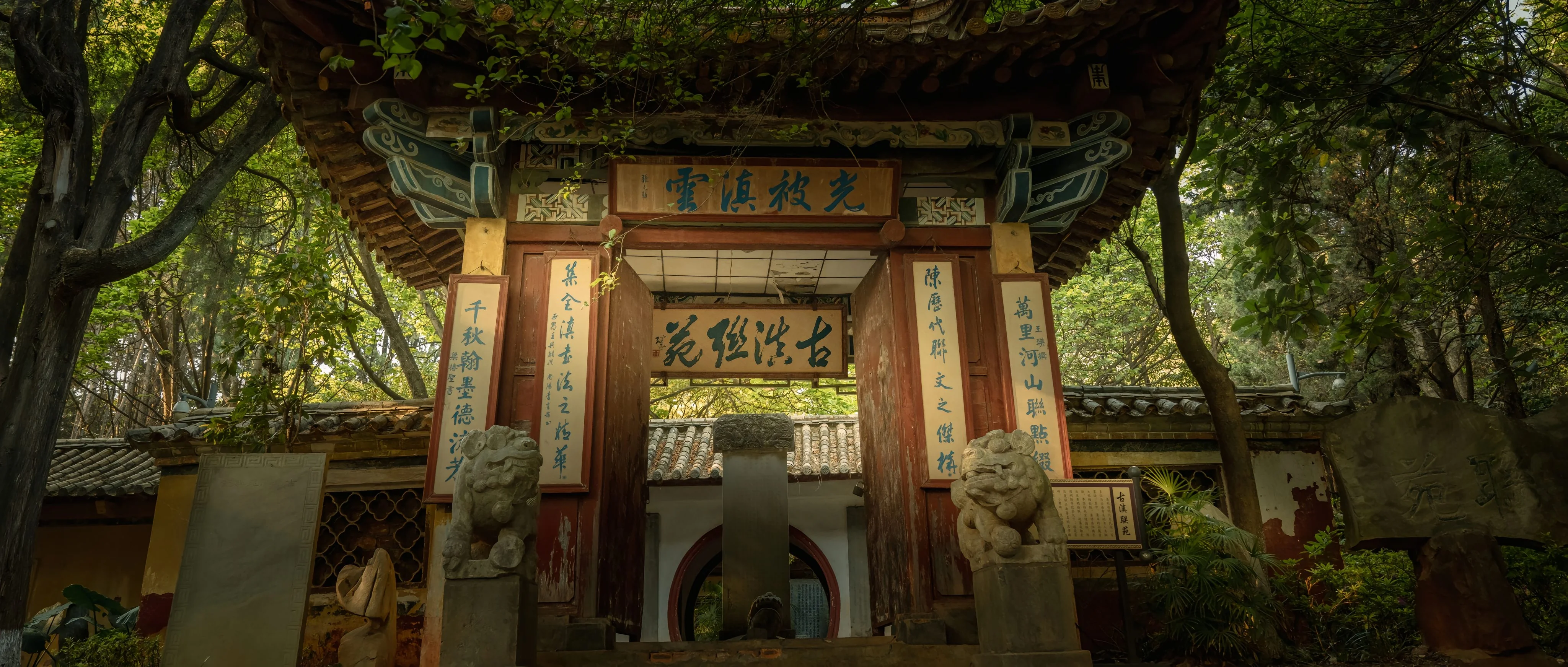 The traditional Chinese entrance gate at a Kunming heritage site, featuring stone lions, blue calligraphy plaques reading "Guang Bei Zhen Yun," and ancient stone steles.
The "Information Gain" here is the realization that these gardens are not static; they are decaying and being rebuilt in a constant cycle of cultural metabolism. We often consume these images as "timeless," yet the physical ink on the wood and the carvings in the stone are under constant threat from the very elements that make the garden beautiful. The shift from pigment-based paints to more durable, modern synthetics on the plaques is a necessary, if controversial, evolution in heritage management.
A Systemic Shift Toward Intellectual Consumption
This experience highlights a broader movement in the Chinese Cultural Tourism sector toward "slow travel" and "intellectual consumption." Data from the China Tourism Academy suggests a significant increase in visits to sites with historical steles among travelers aged 25–35. We are seeing a move away from simple "check-in" tourism toward a genuine engagement with the Sinosphere’s literary heritage.
| Heritage Feature | Period Origin | Primary Preservation Risk |
|---|---|---|
| Shuang Jue Xuan | Qing Dynasty | Timber rot / Humidity |
| Daguan Park Steles | Multiple Eras | Acid rain / Surface spalling |
| Stone Guardian Lions | Traditional Style | Particulate matter abrasion |
| Traditional Couplets | Ming/Qing | UV pigment degradation |
This transition suggests that the future of travel in Yunnan won't just be about the "Spring City" weather, but about the depth of its "Inscribed History." Tourists are increasingly seeking the "Why" behind the "Where," looking for the narrative threads that connect a poem on a wall to the geological history of the rocks in the pond.
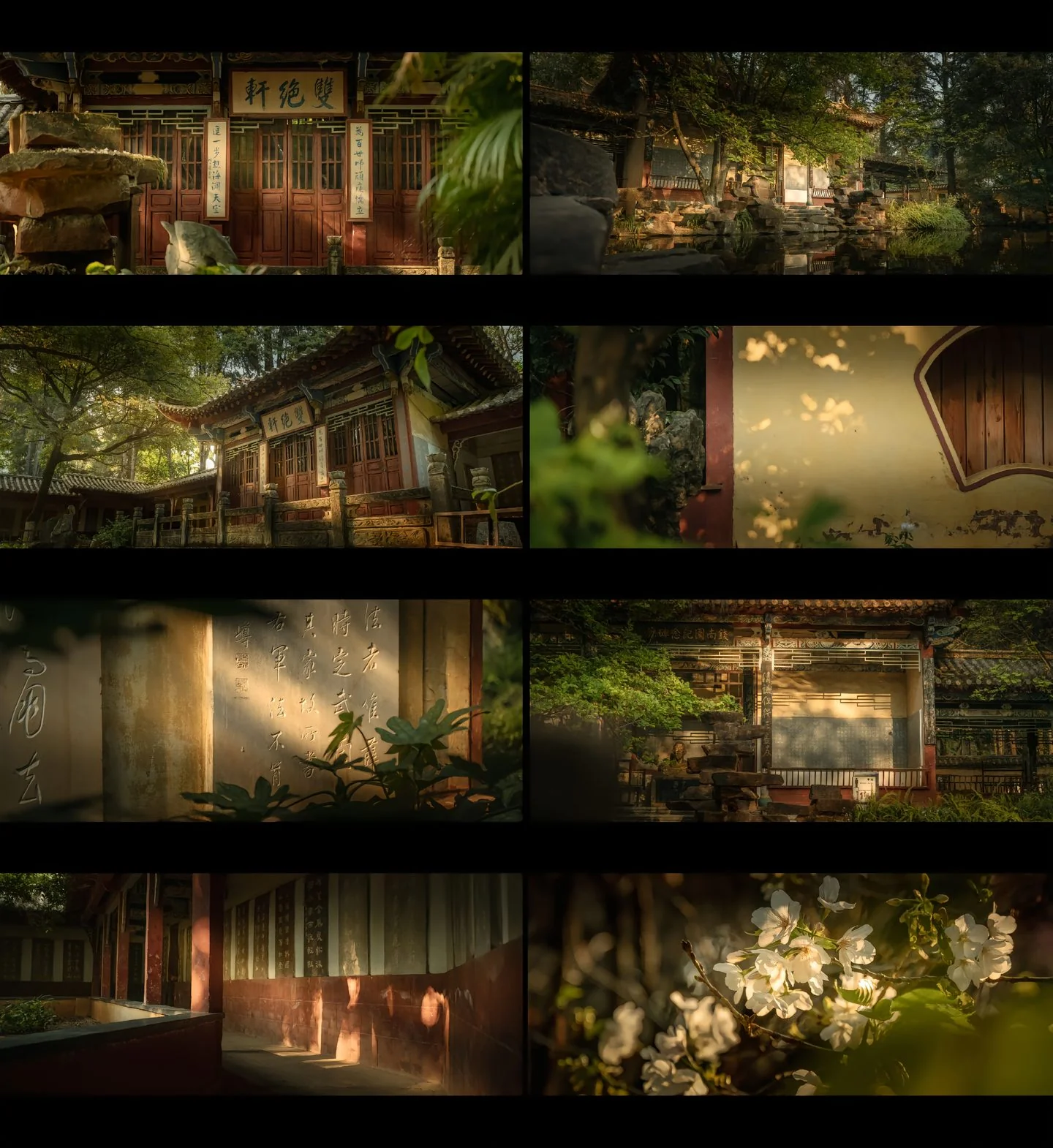 A photographic study of Kunming’s cultural heritage, showing details of stone calligraphy, cherry blossoms, and traditional Ming-Qing style architecture in Yunnan.
The Lingering Tension of the Journey
As the sun dipped below the treeline, the shadows of the cherry branches stretched across the calligraphy, temporarily blurring the lines between nature and art. The tension between the desire to preserve every stroke of a 300-year-old character and the natural cycle of the garden remains unresolved. This inherent fragility makes every visit feel like a final viewing, a reminder that cultural artifacts are as mortal as the people who created them.
I'm busy all day and can't travel.
Comments (0)
Please login to comment
Sign in to share your thoughts and connect with the community
Loading...