

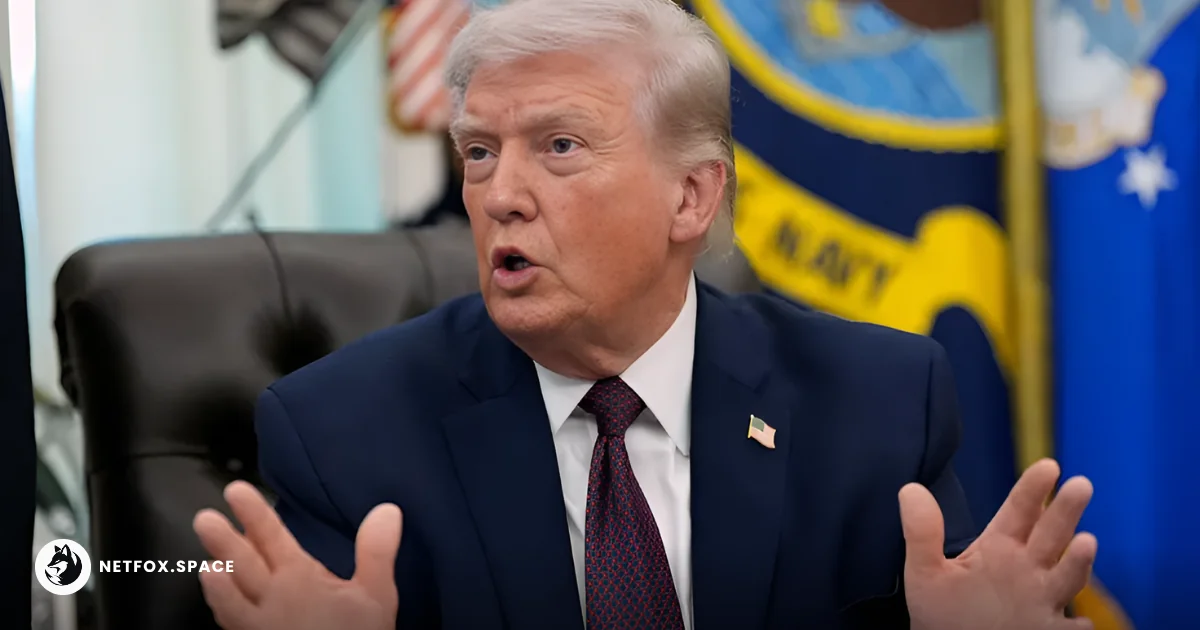
President Donald Trump has stated he is "strongly considering" withdrawing the United States from NATO, citing a lack of military and diplomatic support from European allies during the current war with Iran. The announcement marks a significant escalation in the administration’s transactional approach to collective defense, framing the 77-year-old alliance as a "paper tiger" that fails to serve modern American security interests.
Disagreement over Iran involvement drives the strategic rift
The impetus for the President’s remarks stems from the refusal of several key NATO members to commit troops or resources to the U.S.-led effort in Iran. While the U.S. has engaged in direct military action against Iranian targets, many European capitals have maintained that the North Atlantic Treaty’s mutual defense clauses do not apply to a conflict initiated outside of the North Atlantic area.
President Trump has dismissed these legal distinctions, arguing that the alliance is obsolete if it does not address what he characterizes as the primary global threat to U.S. stability. In recent statements, he suggested that U.S. protection should be contingent upon an "all-in" commitment from partners, regardless of the geographic origin of the hostilities.
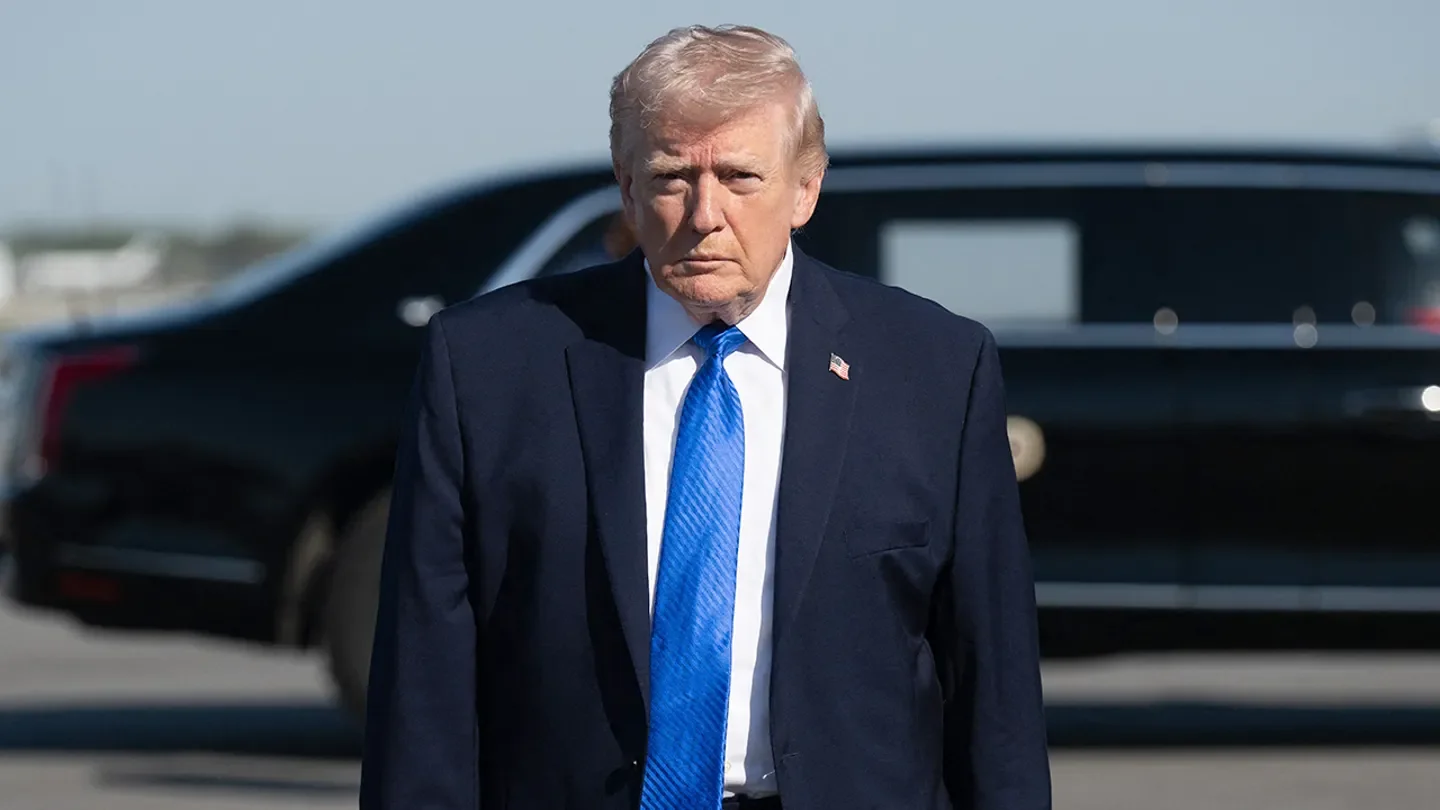 President Donald Trump walks to speak to reporters before boarding Air Force One at Palm Beach International Airport in West Palm Beach, Florida, on March 23, 2026. (SAUL LOEB / AFP via Getty Images)
Legislative barriers to withdrawal face a constitutional test
Any formal attempt to leave NATO would encounter significant domestic legal hurdles. In 2023, Congress passed the National Defense Authorization Act (NDAA) with a provision specifically preventing any president from withdrawing from the alliance without a two-thirds Senate majority or an Act of Congress.
However, legal advisors within the administration are reportedly exploring executive maneuvers to bypass these constraints. The argument hinges on the president’s broad authority over foreign policy and the commander-in-chief powers. Critics and constitutional scholars have noted that a move to ignore the 2023 statute would likely trigger an immediate legal challenge in federal court, potentially leading to a standoff between the executive and legislative branches.
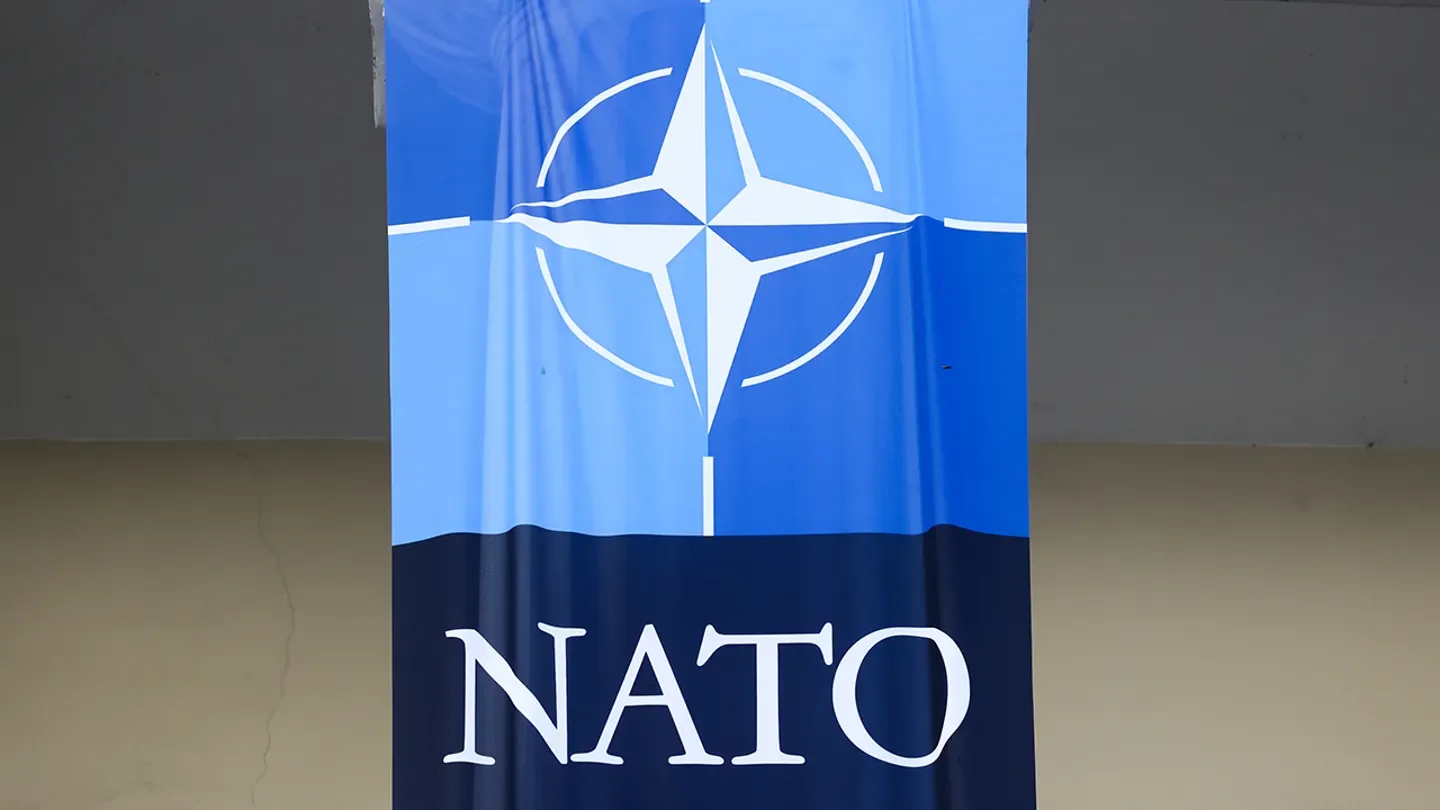 The NATO emblem in the city, in Vilnius, Lithuania on July 12, 2023. (Jakub Porzycki/NurPhoto via Getty Images)
Regional stability and the future of collective defense
The uncertainty regarding the U.S. commitment to NATO has immediate implications for global security architecture. Beyond the rhetoric, the administration has already begun evaluating the reallocation of military assets from European bases to the Middle East theater. This shift suggests that even without a formal withdrawal, the operational focus of the U.S. military is drifting away from traditional European defense.
European leaders have expressed concern that a U.S. exit would effectively dissolve the nuclear umbrella that has underpinned Western security since 1949. While some nations have called for increased European defense autonomy, the practical ability to replace U.S. logistics, intelligence, and strike capabilities remains unproven in the short term.
 U.K. Prime Minister Keir Starmer during a news conference providing an update on the situation in the Middle East, at Downing Street in London, on Thursday, March 5, 2026. (Tolga Akmen/EPA/Bloomberg via Getty Images)
Unresolved questions regarding treaty obligations
While the President’s stance is clear, the formal process of withdrawal remains uninitiated. Under Article 13 of the North Atlantic Treaty, a member state must provide a notice of denunciation to the government of the United States (as the depositary), which then takes effect after a one-year waiting period.
It remains unclear if the administration intends to issue such a notice or if the current rhetoric is a negotiating tactic designed to pressure allies into joining the Iran campaign. Until a formal notification is filed or a court rules on the validity of the 2023 NDAA restrictions, the U.S. remains legally bound to its NATO obligations, despite the deepening diplomatic divide.
Comments (0)
Please login to comment
Sign in to share your thoughts and connect with the community
Loading...