

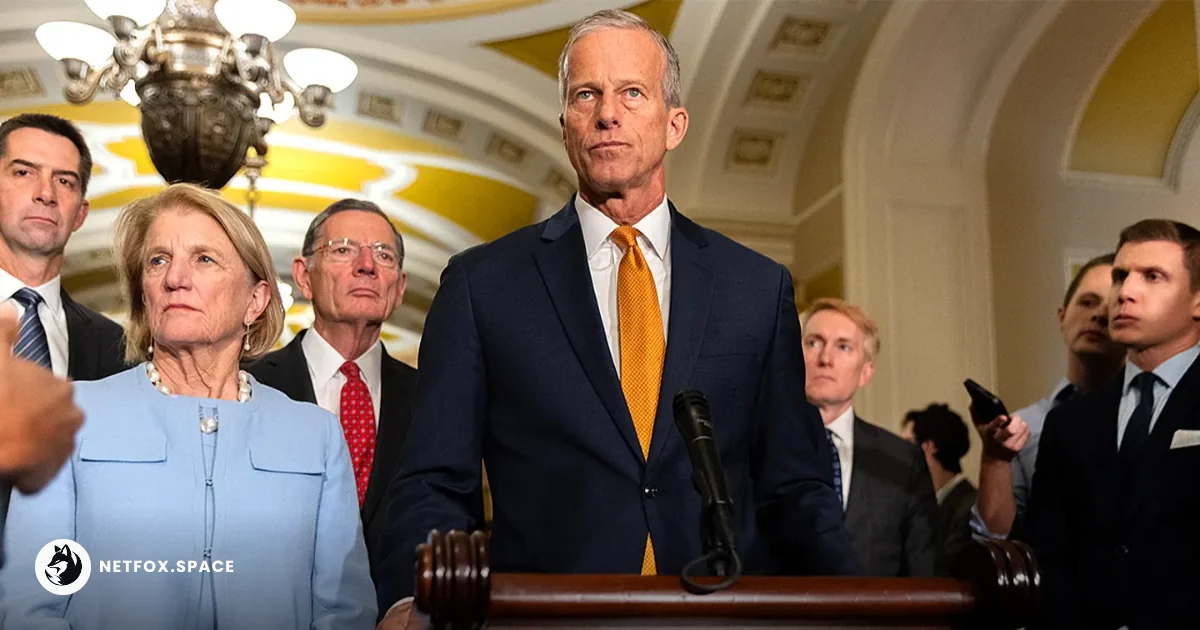
Legislative Framework to Restore DHS Operations
Senate Republicans have initiated a formal move to reopen the Department of Homeland Security (DHS) following a lapse in appropriations that halted non-essential services. The proposal, spearheaded by key figures in the U.S. Senate, seeks to provide a bridge for funding while addressing the underlying disputes regarding border enforcement protocols.
The plan focuses on a "clean" funding extension for administrative functions while sequestering controversial enforcement budgets into a separate debate. This tactic aims to restore payroll for thousands of personnel within the Transportation Security Administration and U.S. Customs and Border Protection who have been working without guaranteed pay dates.
 Senate Minority Leader Chuck Schumer, D-N.Y. and Senate Democrats are trying to fund everything at DHS except for immigration operations. ( Tom Williams/CQ-Roll Call, Inc via Getty Images)
Immediate Operational Strains and Federal Response
The current funding gap has placed the U.S. Federal Government in a precarious position regarding national security logistics. While "excepted" employees remain on duty, the lack of administrative support has slowed processing times at major ports of entry and delayed the rollout of updated cybersecurity initiatives under the Cybersecurity and Infrastructure Security Agency.
Democratic leaders have expressed cautious interest but remain skeptical of any provisions that would codify specific hardline immigration policies as a prerequisite for basic agency funding. The White House has signaled that any bill must reach the President’s desk without "poison pill" amendments that drastically alter asylum processing.
The "Appropriations Decoupling" Strategy
The core differentiation in this Republican proposal lies in its departure from previous "all-or-nothing" funding demands. By utilizing a "Decoupled Appropriations" mechanism, the GOP is attempting to separate the functional survival of the agency from the political battle over the U.S. Southern Border.
Historically, DHS funding has been used as a lever for broader immigration reform. However, this plan introduces a tiered funding structure:
-
Tier 1: Immediate restoration of personnel salaries and counter-terrorism operations.
-
Tier 2: Delayed negotiation for physical barrier construction and high-tech surveillance assets.
This shift suggests an internal recognition within the Republican Party that a prolonged shutdown of a primary security agency carries higher political risk than the potential gain of a static standoff, especially with the 2026 fiscal cycle approaching.
 President Donald Trump takes questions from reporters during a meeting with Irish Prime Minister Micheál Martin in the Oval Office of the White House, on St. Patrick's Day, Tuesday, March 17, 2026, in Washington. (AP Photo/Alex Brandon)
Financial Exposure of the DHS Funding Gap
The economic ripple effects of a shuttered DHS extend beyond federal payrolls, impacting private sector contractors and international trade fluidly.
| Sector/Entity | Impact Type | Estimated Daily Exposure |
|---|---|---|
| Federal Contractors | Stop-work orders on IT/Security | $120 Million+ |
| Air Travel Industry | TSA delay-related logistics | $45 Million |
| Border Trade | Supply chain processing delays | $210 Million |
| State/Local Grants | FEMA disaster preparedness pauses | Variable (Risk-based) |
Systemic Implications for National Security
The standoff reflects a deeper structural fragility within the U.S. Political System, where essential security functions are increasingly tied to discretionary policy disputes. If this Republican plan fails to gain bipartisan "buy-in," the precedent for using the Department of Homeland Security as a recurring bargaining chip could lead to a permanent degradation of morale and recruitment within the federal law enforcement sector.
From a global perspective, the instability within the U.S. Department of State and DHS regarding border control and domestic safety signals a vulnerability that adversaries may look to exploit. The inability to maintain a consistent funding stream for the United States Coast Guard and other maritime security entities further complicates international shipping security and drug interdiction efforts in the Caribbean and Pacific.
 Getty Images
Structural Uncertainty and the Path to Cloture
The immediate challenge rests on the 60-vote threshold required for cloture in the Senate. Even if the Republican plan gains internal consensus, it requires at least nine Democratic votes to bypass a filibuster. This creates a high-stakes environment where the definition of "border security" remains the primary obstacle to operational stability.
The failure to pass this measure by the upcoming weekend deadline would trigger a second wave of furloughs for non-essential staff, potentially disrupting the Federal Emergency Management Agency's ability to respond to seasonal weather events. The focus now shifts to whether the Senate Appropriations Committee can reconcile the GOP's tiered funding approach with the Democratic demand for a full, unencumbered fiscal year budget.
Comments (0)
Please login to comment
Sign in to share your thoughts and connect with the community
Loading...