
UK Excludes Cyprus Bases from Iran Offensive: Starmer’s Pledge

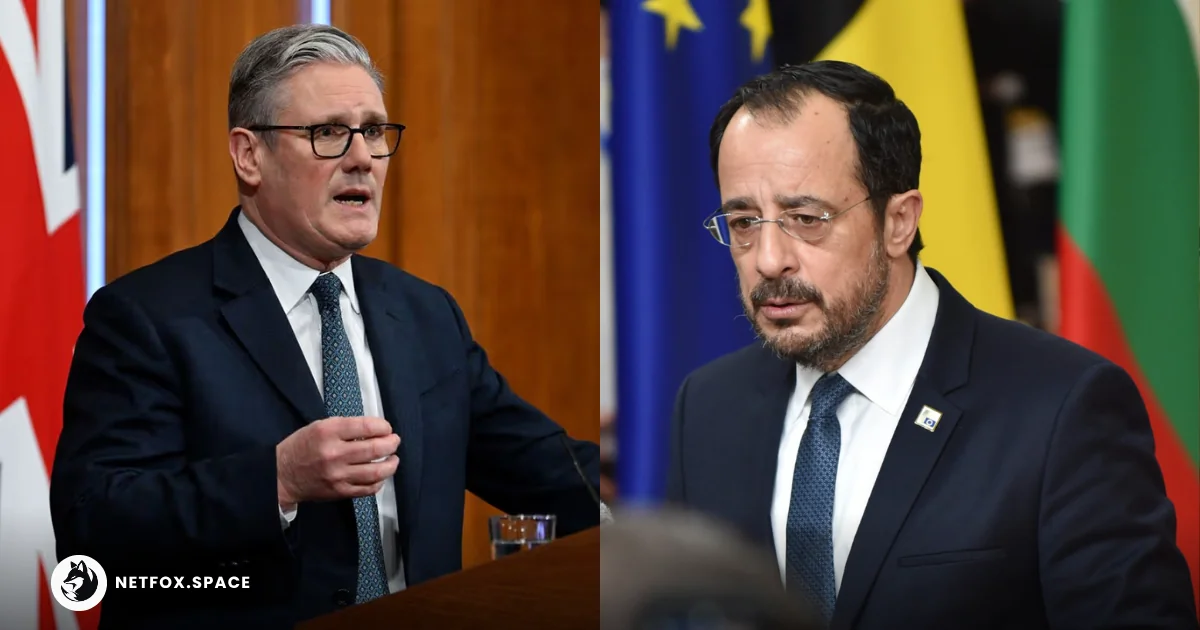
The Starmer-Christodoulides Accord: De-escalating the Mediterranean Front
On March 21, 2026, British Prime Minister Sir Keir Starmer held an "extraordinary" phone call with Cypriot President Nikos Christodoulides to clarify the role of the Sovereign Base Areas (SBAs) in the escalating conflict with the Islamic Republic of Iran. During the call, Starmer provided a categorical assurance that RAF Akrotiri and Dhekelia would not be utilized for "offensive military operations" against Iranian targets.
This diplomatic intervention follows a period of extreme tension in the defense sector, triggered by the February 28 launch of Operation Epic Fury—a joint US-Israeli offensive. While the UK has permitted the United States Air Force to use other British-controlled facilities for "defensive degradation" of missile sites, the unique status of the Cyprus bases as inhabited enclaves has forced a more cautious posture to avoid turning the island into a front-line combat zone.
The ‘Defensive’ Distinction: Why Fairford and Diego Garcia Differ from Akrotiri
The UK’s strategy currently hinges on a semantic and legal distinction between "offensive strikes" and "defensive protection." While Starmer has shuttered Akrotiri to offensive Iran-bound bombers, the Ministry of Defence (MoD) confirmed that RAF Fairford in Gloucestershire and the joint US-UK base at Diego Garcia ($3,800\text{ km}$ from the Iranian coast) are actively supporting operations to secure the Strait of Hormuz.
This "dual-track" policy is designed to satisfy the White House's operational requirements while shielding the Republic of Cyprus from direct retaliation. However, the distinction is under pressure. Iranian Foreign Minister Abbas Araghchi warned his UK counterpart, Yvette Cooper, that Tehran views any base access as "participation in aggression," effectively rejecting the UK's attempt to categorize its involvement as purely defensive.
The Sovereignty Paradox: Leveraging the Chagos Precedent
The Hidden Implication: Nicosia’s Strategic Pivot
What most reporting fails to synthesize is that President Nikos Christodoulides is utilizing this security crisis as a catalyst for a broader decolonization agenda. By highlighting the vulnerability of the 10,000 Cypriot citizens living within the SBAs, Nicosia is formally challenging the "unrestricted use" clauses of the 1960 Treaty of Establishment.
Emboldened by the 2025 transfer of the Chagos Islands to Mauritius, the Cypriot government is signaling that the current "unsinkable aircraft carrier" status of the bases is no longer politically tenable if it brings Iranian Shahed drones to Cypriot doorsteps. This represents a long-term structural shift: the UK’s military presence in the Mediterranean is now being negotiated not just on strategic merit, but on its ability to guarantee the domestic safety of an EU member state.
Systemic Shock: The March Drone Strikes and the ‘Gray Zone’ Threat
The urgency of the Starmer pledge is underscored by a series of security breaches earlier this month. The "Gray Zone" warfare tactics employed by Iranian proxies have already breached the perimeter of British sovereignty in the Mediterranean, proving that "neutrality" on paper does not equate to immunity in the field.
| Date (2026) | Incident Location | Weaponry/Involved Entity | Result/Outcome |
|---|---|---|---|
| March 1 | RAF Akrotiri | Iranian-type Shahed Drone | Hangar damaged; partial evacuation. |
| March 4 | Lebanese Airspace | Hellenic Air Force F-16s | Two drones intercepted en route to Cyprus. |
| March 12 | Diego Garcia | Intermediate-Range Missiles | Failed strike; signaled $3,800\text{ km}$ range. |
| March 21 | London/Nicosia | Sir Keir Starmer Pledge | Official exclusion from offensive strikes. |
Forward Tension: The ‘Targeting’ Risk to British Nationals
Despite the assurance that no missiles will be launched from Cyprus, the SBAs remain high-value intelligence hubs. RAF Akrotiri continues to host advanced surveillance assets that provide real-time telemetry to the United States and Israel, a fact that Tehran has explicitly cited as a justification for further strikes.
The political escalation now centers on the 300,000 British nationals residing across the Middle East and the Mediterranean. By refusing to allow offensive sorties from Cyprus while maintaining intelligence cooperation, the UK is walking a razor-thin line that may soon collapse if Iran decides that the "non-offensive" distinction is a legal fiction that no longer warrants restraint.
References:
Comments (0)
Please login to comment
Sign in to share your thoughts and connect with the community
Loading...