

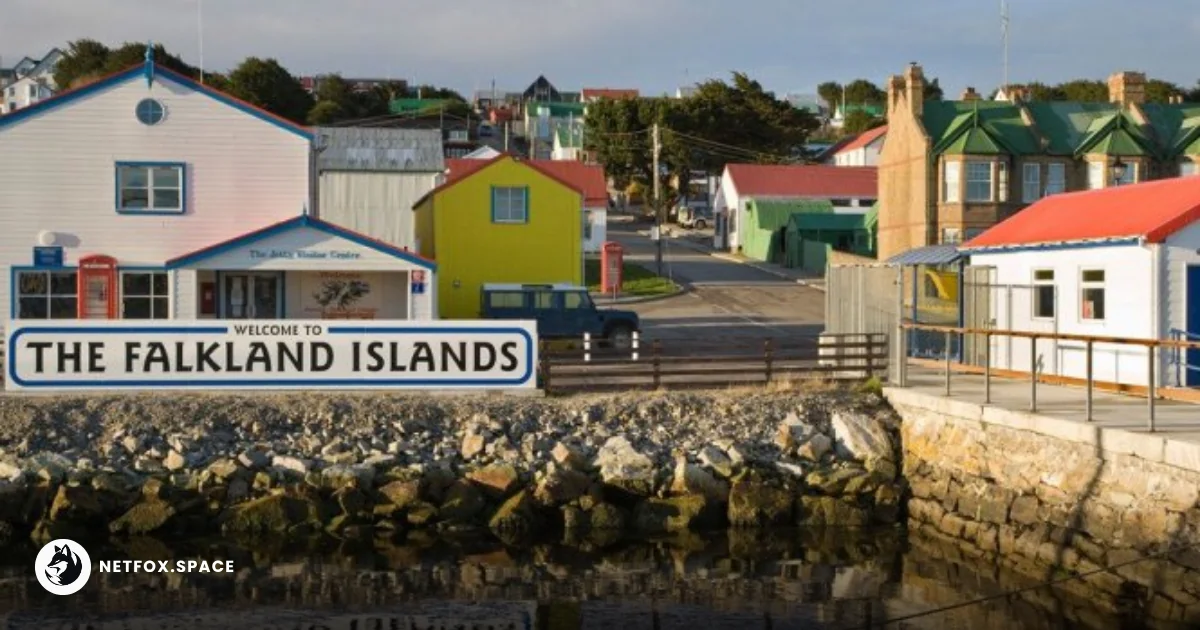
The UK government has reasserted its "resolute and unchanging" stance on the Falkland Islands following reports of a leaked Pentagon memo suggesting the United States should reassess its support for Britain’s claim. The internal document reportedly links the potential shift in diplomatic policy to Washington’s frustration with the level of European support for recent military operations in Iran.
Pentagon memo links Falklands support to NATO participation in Iran bombing
A leaked internal email from the Department of Defense, reported on by several outlets, suggests that the U.S. should review its endorsement of European "imperial possessions." The document specifically highlights the Falkland Islands—the subject of a 10-week war between Britain and Argentina in 1982—as a primary candidate for this reassessment.
The proposal appears to be a direct response to White House dissatisfaction with NATO allies during "Operation Epic Fury," the 38-day bombing campaign against Iran. According to the memo, the U.S. could use its recognition of territorial claims as leverage to ensure allies provide more substantial military contributions. The document also suggested extreme measures such as suspending Spain from NATO for denying airspace access to U.S. warplanes during the conflict, despite the absence of a formal mechanism for such an expulsion.
Number 10 maintains 'resolute' stance on self-determination
A spokesperson for Prime Minister Keir Starmer stated on Friday that the UK’s position on the Falkland Islands remains paramount and consistent. Downing Street emphasized that the sovereignty of the islands rests with the UK and is supported by the 2013 referendum, in which islanders voted overwhelmingly to remain a British Overseas Territory.
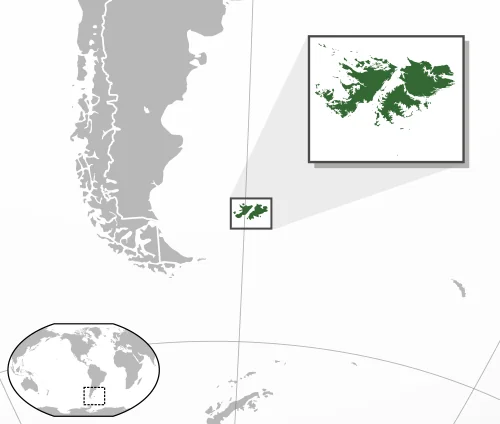 The Falkland Islands take their name from the Falkland Strait, which separates the two main islands of the archipelago. The English captain John Strong, who landed on the islands in 1690, named the channel "Falkland."
While the spokesperson did not dispute the existence of the Pentagon email, they insisted that the UK’s defense and security relationship with the U.S. remains "one of the closest the world has ever seen." The UK government’s response seeks to downplay the memo as an internal deliberation rather than an official change in White House policy. However, the spokesperson declined to answer hypothetical questions regarding whether Britain could defend the islands without U.S. intelligence and logistical support.
Transactional diplomacy threatens a 44-year intelligence-sharing precedent
The suggestion of withdrawing support for the Falklands strikes a sensitive chord in British defense circles due to the historical precedent set during the 1982 conflict. While the U.S. officially remained neutral at the start of that war, it provided critical "discreet" assistance to the UK, including satellite imagery, signals intelligence, and Stinger missiles. This cooperation has long been viewed as a cornerstone of the "Special Relationship."
The current friction stems from Starmer’s Iran war strategy, which focused on defensive missions and protecting shipping in the Strait of Hormuz rather than participating in the broader offensive campaign. The Pentagon memo indicates that this distinction has not satisfied U.S. military planners. By framing the Falklands as an "imperial possession," the memo’s authors are signaling a shift toward a more transactional foreign policy where historical alliances are subordinate to immediate operational objectives.
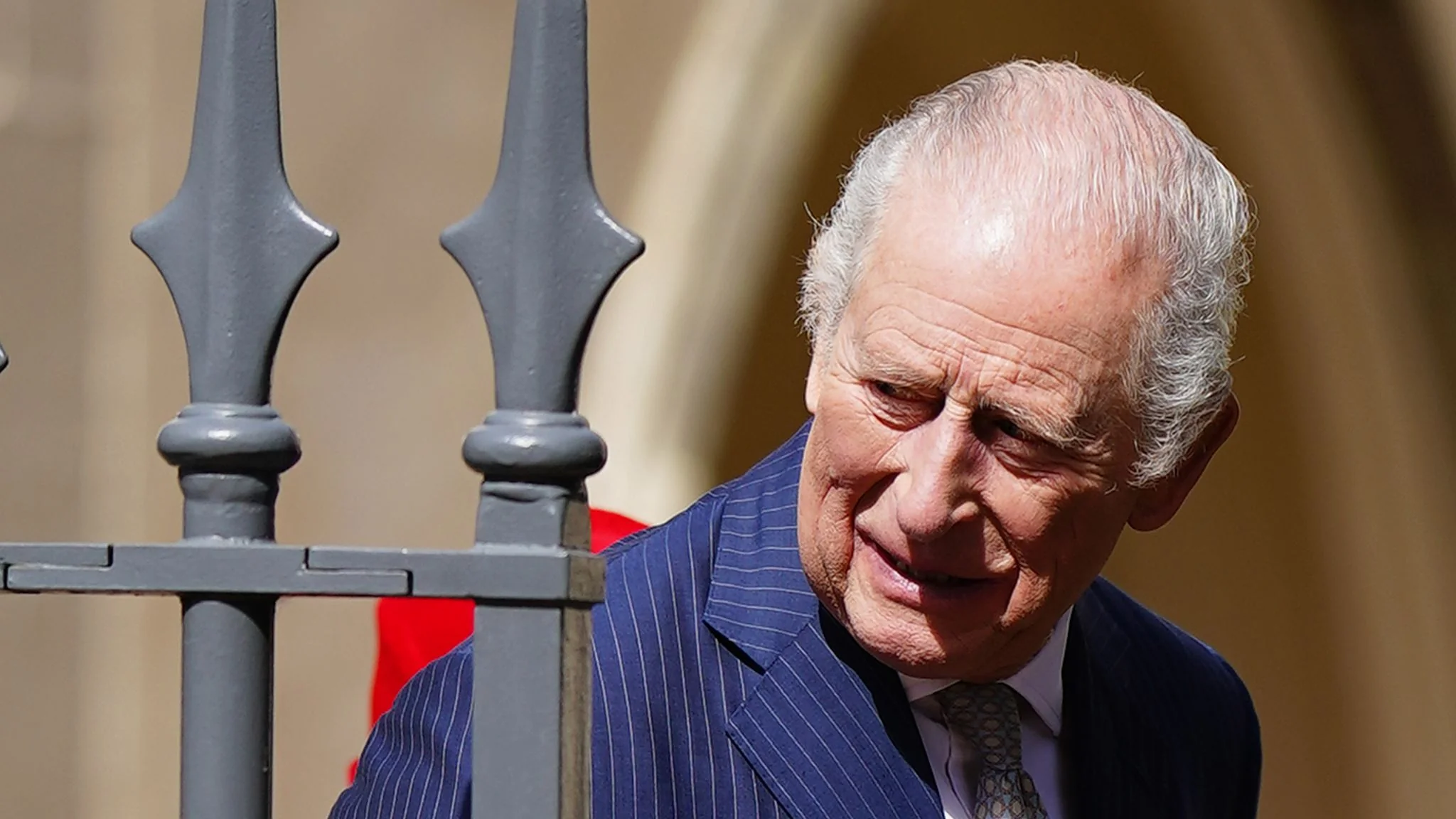 King Charles leaving an Easter Service at Windsor Castle this month. Pic: PA
Strategic timing and the influence of regional allies
The leak coincides with two significant diplomatic factors: an upcoming royal visit to the U.S. by King Charles III and the close relationship between the current U.S. administration and Argentinian President Javier Milei. Argentina continues to dispute the status of the islands, and any perceived softening of the U.S. position could embolden Buenos Aires to press its claim in international forums.
Pentagon Press Secretary Kingsley Wilson did not deny the memo’s contents, stating instead that the Department of Defense is ensuring the President has "credible options" to ensure allies "do their part." This language confirms that while the policy may not have been formally adopted, it is being actively discussed as a viable diplomatic tool. For London, the challenge remains maintaining a unified front with Washington on global security while the fundamental terms of that partnership are being questioned within the Pentagon.
Comments (0)
Please login to comment
Sign in to share your thoughts and connect with the community
Loading...