

President Donald Trump has nominated Rear Admiral Erica Schwartz, a veteran of the U.S. Public Health Service Commissioned Corps, to serve as the Director of the Centers for Disease Control and Prevention (CDC). Schwartz, who previously served as the nation’s Deputy Surgeon General, would succeed the current leadership as the administration seeks to realign the agency's operational focus.
A career official returns to federal health leadership
Schwartz brings 24 years of experience within the uniformed services to the role, having served as the Deputy Surgeon General until her retirement in 2021. Her career has been defined by clinical and administrative oversight rather than partisan policy advocacy, a background that may influence the tenor of her confirmation process. During her previous tenure, she was a central figure in the federal response to several public health emergencies, providing a bridge between the clinical requirements of the Department of Health and Human Services (HHS) and the administrative directives of the White House.
The selection of a high-ranking Commissioned Corps officer suggests an emphasis on restoring a chain-of-command structure within the CDC. Practitioners in the public health sector often view the appointment of uniformed officers as a move toward institutional stability, as these roles typically prioritize emergency preparedness and agency logistics over the more academic or theoretical pivots often seen under civilian directors.
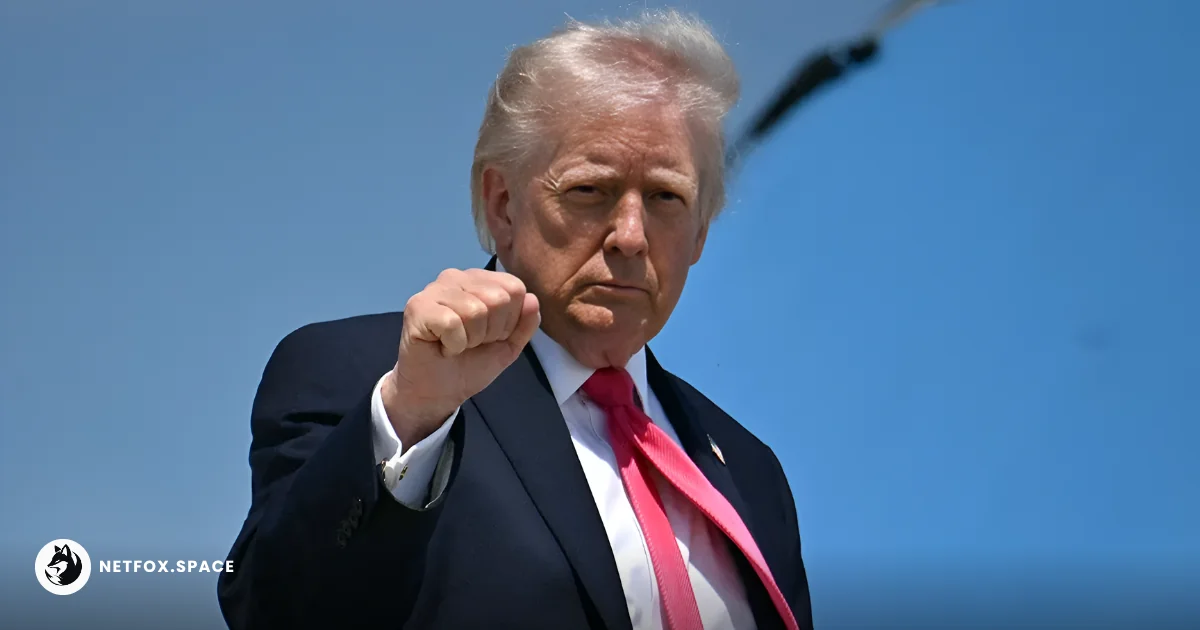
 President Donald Trump on the South Lawn of the White House before boarding Marine One in Washington, D.C., on Thursday, April 16, 2026. (Graeme Sloan/Sipa/Bloomberg via Getty Images)
Strategic alignment and the confirmation path
The nomination comes at a time when the CDC is facing ongoing scrutiny regarding its data collection methods and its autonomy within the broader HHS framework. By tapping Schwartz, the administration appears to be prioritizing an insider who understands the existing bureaucratic constraints of the agency but has also operated at the highest levels of the Surgeon General's office.
While the nomination has been announced, the specific policy mandates Schwartz will be tasked with such as potential restructuring of the agency’s respiratory disease surveillance or its global health outposts have not yet been detailed in official filings. The transition will require Senate confirmation, a process that will likely focus on her previous involvement in pandemic-era decision-making and her plans for the agency’s budget transparency.
Practical implications for the public health workforce
For local and state health departments, the appointment of a former Deputy Surgeon General typically signals a period of "back-to-basics" operational focus. Schwartz’s background in the Commissioned Corps suggests she may favor standardized reporting protocols and a more disciplined communication strategy between the CDC and its regional partners.
However, it remains unconfirmed how Schwartz will navigate the intersection of political directives and scientific recommendations, a persistent challenge for every director in the modern era. Observers will be looking for her first formal testimony to determine whether her leadership will lean toward significant structural decentralization or a reinforcement of the CDC’s centralized authority in Atlanta.
Comments (0)
Please login to comment
Sign in to share your thoughts and connect with the community
Loading...