
Tisza Party Secures Robust Majority in Final Hungary Count


The final tally of Hungary’s 2026 general election confirms a decisive shift in the nation's political landscape, as Péter Magyar’s Tisza party secured a wider parliamentary majority than initially projected. The results officially conclude the 16-year premiership of Viktor Orbán, providing Tisza with a clear mandate to form a government without the need for a complex coalition.
Final vote tally provides Tisza with a governing mandate
The National Election Office completed the count of mail-in ballots and overseas votes late Sunday, solidifying Tisza's lead in several key swing districts. This final adjustment to the seat count ensures that the party moves beyond a simple majority, granting it the legislative weight to appoint a new cabinet and initiate the repeal of several contested laws enacted during the Fidesz era.
For the first time since 2010, the Fidesz party will move to the opposition benches. While Fidesz maintains a significant presence in rural constituencies, the final data shows a near-total loss of support in urban centers and a surprising erosion of its traditional base in western Hungary. This outcome removes the immediate risk of a hung parliament, which analysts had previously feared would lead to a period of executive paralysis.
 Hungary's election winner Péter Magyar arrives to talk to the media in Hungary's Parliament in Budapest on Friday. Bernadett Szabo/Reuters
Challenges remain in addressing institutional influence
Despite the clear parliamentary majority, the incoming administration faces a complex operational environment. A decade of Fidesz governance has seen the installation of long-term appointees in the judiciary, the central bank, and the media authority. The prevailing media landscape, which has long favored the previous administration, remains a primary hurdle for the Tisza party as it attempts to communicate its transition plan to the public.
Péter Magyar has signaled that his first priorities will involve joining the European Public Prosecutor’s Office (EPPO) and unfreezing EU funds currently tied to rule-of-law disputes. However, the procedural next steps for these actions require not just a parliamentary vote, but also the cooperation of administrative bodies that have historically been insulated from rapid political shifts. The size of the majority is sufficient for standard legislation, but constitutional changes which Fidesz used to cement its influence require a two-thirds "supermajority" that Tisza has not yet reached.
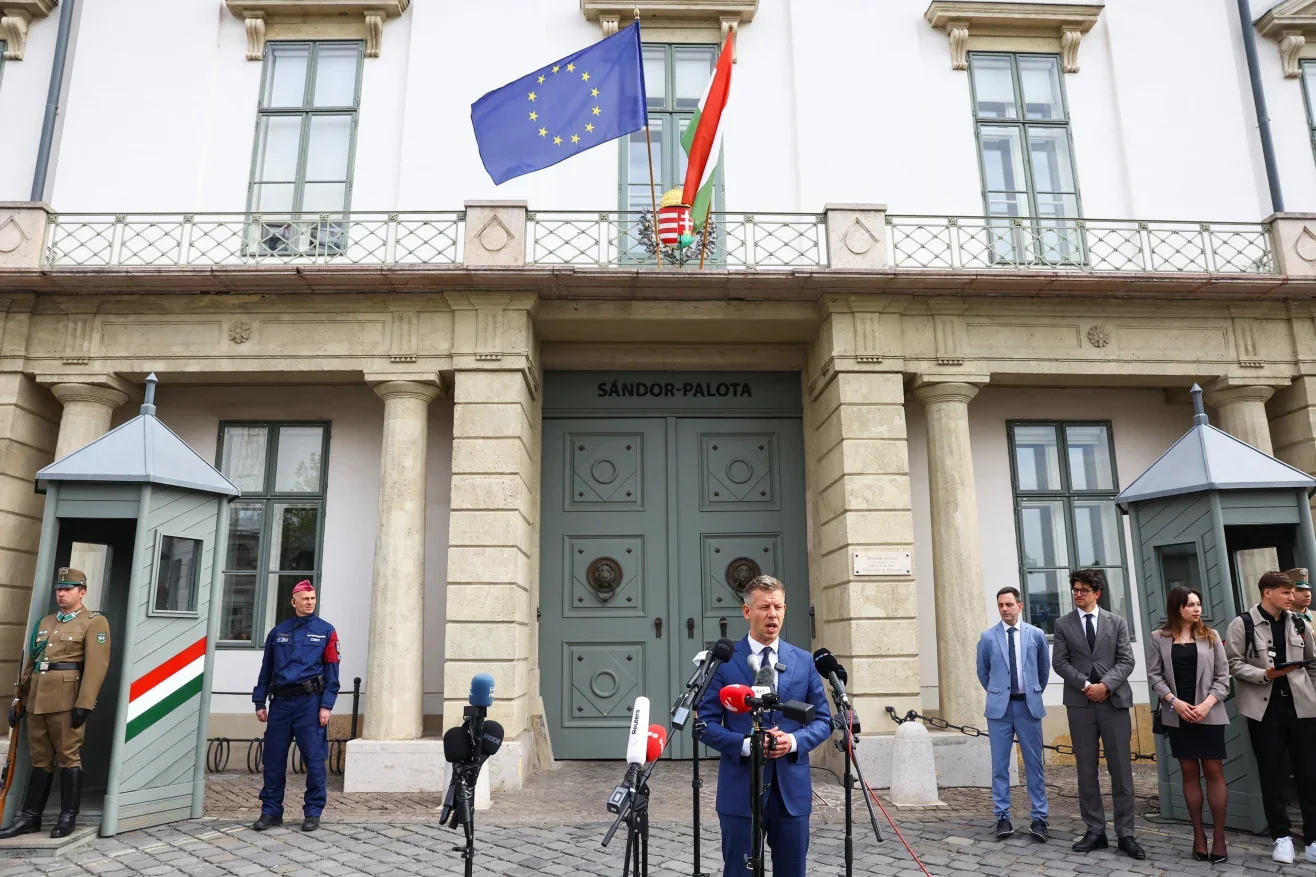 Magyar speaks to reporters at Sándor Palace in Budapest on Wednesday after telling Hungary's president to resign. Bernadett Szabo/Reuters
Diplomatic and economic shifts following the official certification
The certification of the results triggers a formal transition period. International observers have noted the relative stability of the Hungarian forint following the announcement, suggesting that markets have priced in the change of leadership. The incoming government must now navigate a delicate diplomatic path, balancing its pro-EU stance with the existing economic agreements and energy contracts established by the previous government.
The transition team is expected to announce its ministerial list within the coming week. The focus will likely be on economic stabilization and the restoration of judicial independence. While the final count confirms the scale of the victory, the true test for Tisza lies in its ability to govern effectively through a state apparatus that was, for sixteen years, designed to serve a different political vision.
Comments (0)
Please login to comment
Sign in to share your thoughts and connect with the community
Loading...