
Swalwell nanny hire investigation: Campaign fund legalities


Representative Eric Swalwell is reportedly under federal investigation following allegations that he used campaign funds to pay a nanny who did not have legal authorization to work in the United States.
Scrutiny shifts from expenditure type to employment legality
The investigation marks a shift in the scrutiny facing the California Democrat. While Federal Election Commission (FEC) rules generally allow candidates to use campaign funds for childcare expenses incurred as a direct result of campaign activity, the current probe focuses on the legal status of the individual employed.
Under federal law, employers are required to verify the work eligibility of domestic employees. If the recipient of the campaign funds lacked a valid work permit or visa, the expenditure could violate federal labor and immigration statutes regardless of whether the FEC considers childcare a valid campaign-related expense.
 Rep. Eric Swalwell delivers a speech as he attends the SEIU-United Service Workers West's Gubernatorial Candidate Worker Forum at Meruelo Studios in Los Angeles on Jan. 10, 2026. (Etienne Laurent/AFP via Getty Images)
Campaign filings reveal recurring payments for domestic services
Publicly available campaign finance records indicate a pattern of payments labeled for "childcare" or "nanny services" over a multi-year period. While the use of campaign funds for such services became increasingly common following a 2018 FEC ruling intended to support parents running for office, the specific hire in this case has drawn the attention of federal investigators.
The core of the legal risk for a campaign in this scenario is not the purpose of the money, but the status of the payee. Congressional campaigns operate under strict accounting standards, and payments made to individuals unable to provide an I-9 form or valid Social Security number for tax withholding can trigger flags within the Department of Justice or other federal oversight bodies.
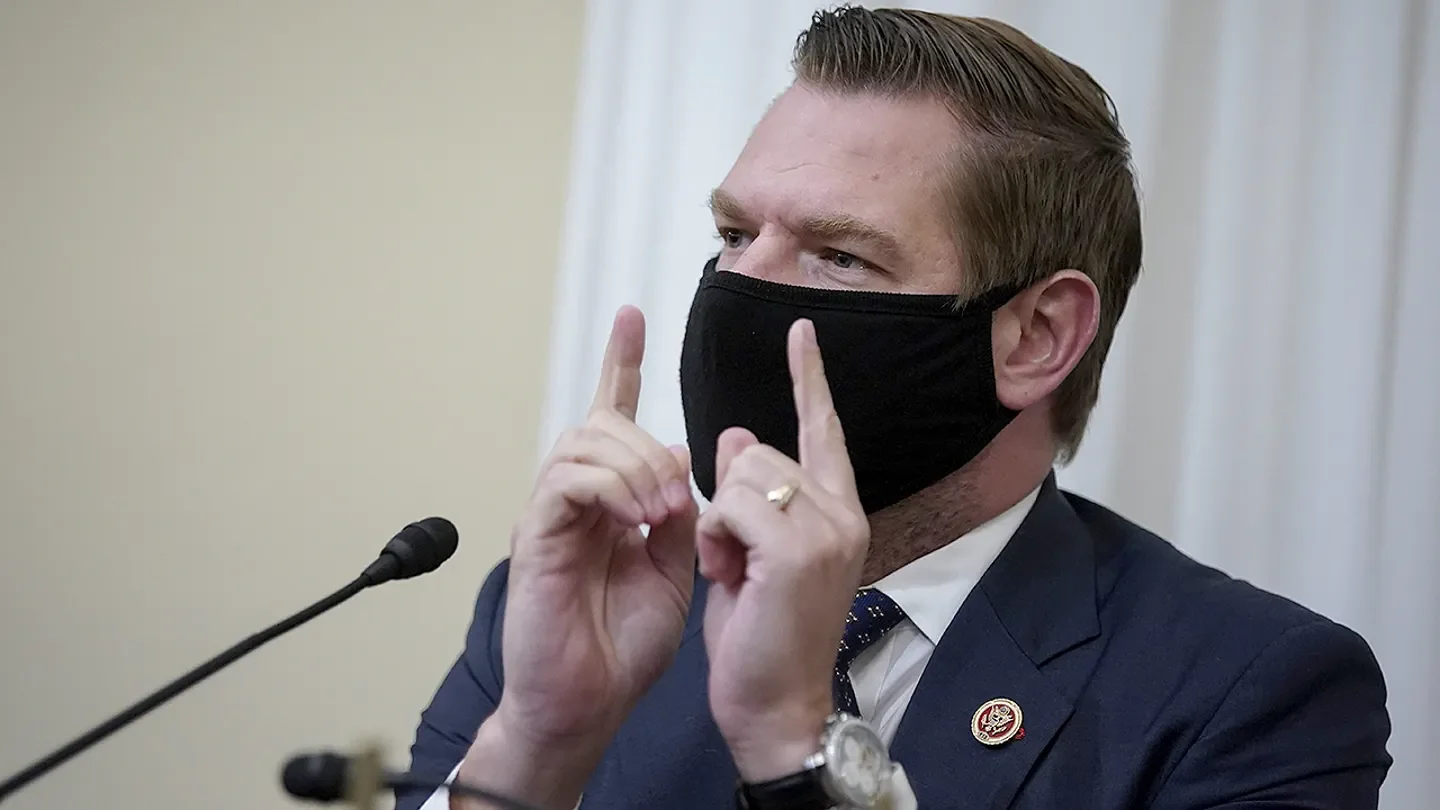 Rep. Eric Swalwell wears a protective mask while speaking during a House Intelligence Committee hearing on April 15, 2021, in Washington, D.C. (Al Drago-Pool/Getty Images)
Unresolved questions regarding vetting and oversight
A central question remains whether the campaign conducted standard due diligence before issuing payments. If the nanny provided fraudulent documentation, the legal culpability of the campaign may be limited. However, if the hire was made with the knowledge of a lack of authorization, the investigation could broaden into a more significant compliance failure.
Swalwell’s office has not yet provided a detailed rebuttal of the specific claims regarding the nanny’s work status, nor has a specific federal agency been officially named as the lead on the probe. The outcome of the investigation will likely hinge on the paper trail of the hiring process and whether the campaign followed the specific reporting and tax requirements mandated for domestic employees paid through a political committee.
Comments (0)
Please login to comment
Sign in to share your thoughts and connect with the community
Loading...