
GOP Targets Graham Platner in Maine 2026 Senate Race Shift


The Maine U.S. Senate race has abruptly shifted into a general election footing following Governor Janet Mills' decision to suspend her primary campaign, leaving oyster farmer and Marine veteran Graham Platner as the presumptive Democratic nominee to face incumbent Senator Susan Collins.
National Republicans pivot to a "target-rich" general election
The consolidation of the Democratic field has triggered an immediate response from national Republican groups, who are moving to define Platner before he can solidify his standing with the broader Maine electorate. The National Republican Senatorial Committee (NRSC) and the Senate Leadership Fund which has pledged $42 million to defend Collins' seat have characterized Platner as a "phony" and "too extreme for Maine."
For the GOP, the strategy relies on a "target-rich environment" of past statements. Republican consultants have signaled they will weaponize Platner’s history of controversial Reddit posts, which include past references to political violence and remarks about rural voters that were first highlighted by the Mills campaign during the primary. By shifting the focus to these cultural and rhetorical vulnerabilities now, Republicans aim to blunt the momentum of Platner's populist economic platform before the November contest.
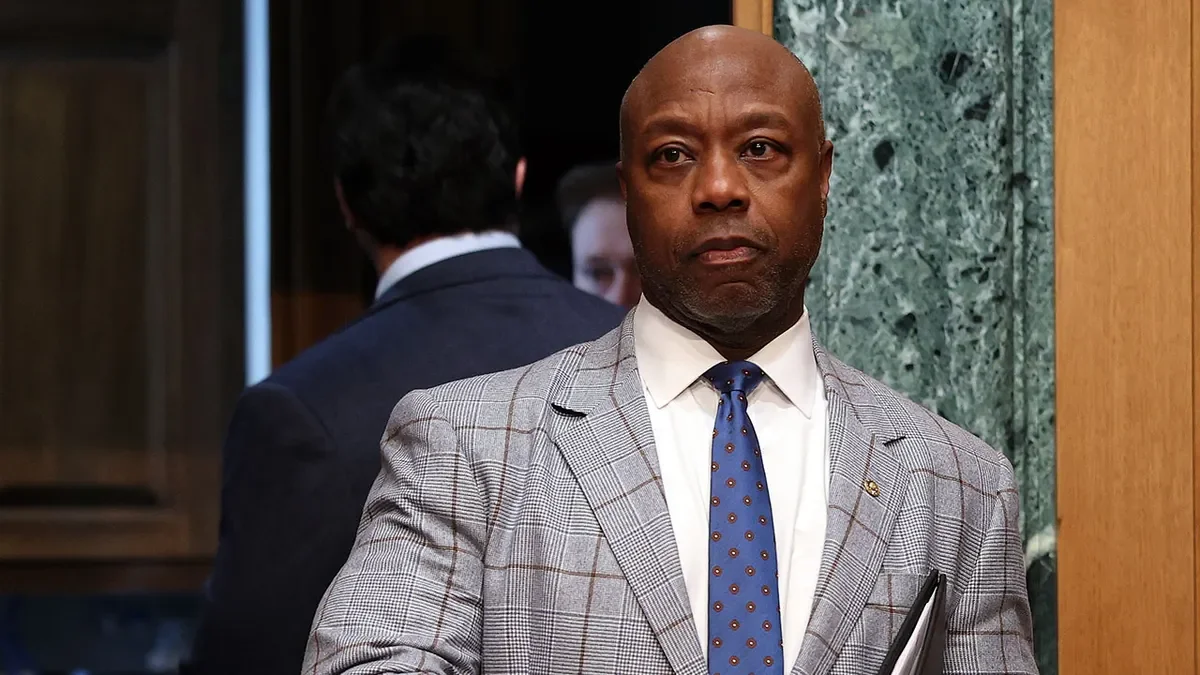 Sen. Tim Scott, R-S.C., arrives at a Senate hearing in Washington, D.C., on Feb. 5, 2026. (Kevin Dietsch/Getty Images)
The risk of defining a newcomer through past rhetoric
While Republicans focus on character-based attacks, Platner’s campaign has maintained a strategy centered on "economic justice" and anti-establishment sentiment. This creates a significant strategic tension: Republicans are betting that Platner's past comments on sexual assault and his previous "communist" self-identification will alienate Maine’s moderate and rural voters, while Platner is betting that voters are more concerned with unseating "billionaire-owned" politicians.
Recent polling data from Emerson College suggests this race is highly competitive, with Platner holding a narrow edge over Collins in hypothetical matchups. However, the same data reveals a vulnerability: 52% of Mills' primary supporters held an unfavorable view of Platner. The GOP’s "extreme" framing is specifically designed to prevent these centrist Democrats and independent voters from gravitating toward Platner in the general election.
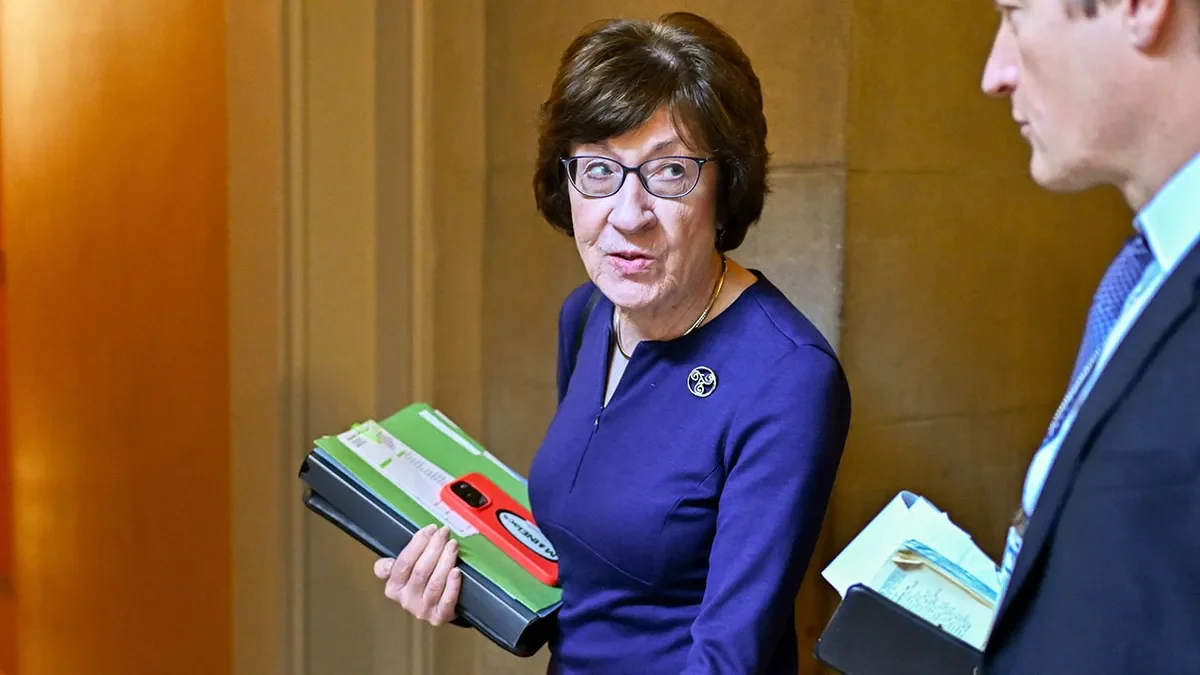 Sen. Susan Collins, R-Maine, seen at the U.S. Capitol in Washington, D.C., on Dec. 3, 2025. (Graeme Sloan/Bloomberg via Getty Images)
Democratic leadership faces a forced consolidation
The exit of Janet Mills, a two-term governor and a preferred choice for the Democratic establishment, has forced national leaders like Chuck Schumer to quickly align with a candidate who has been openly critical of the Democratic National Committee. This pivot reflects a practical necessity: with Mills struggling to raise funds compared to Platner’s $4 million haul in the first quarter, the party had little choice but to back the insurgent frontrunner.
The challenge for the Democratic infrastructure will be defending a candidate whose "outsider" brand is both his greatest asset for turnout and his greatest liability for opposition research. Unlike traditional candidates, Platner has not shied away from his past, dismissing GOP attacks as outdated establishment tactics. Whether Maine voters view his past immaturity as disqualifying or see his current populism as a necessary departure from the status quo will likely determine the outcome of what is now one of the most expensive Senate races in the country.
Comments (0)
Please login to comment
Sign in to share your thoughts and connect with the community
Loading...