
Newsom’s High-Tax Claim for TX and FL Faces Expert Scrutiny


The California-Texas-Florida Tax Confrontation
California Governor Gavin Newsom has intensified a long-standing ideological battle by asserting that Florida and Texas states traditionally lauded for their lack of personal income tax are actually "high-tax" jurisdictions for the average citizen. This claim relies on a specific data lens focusing on the bottom 20% to 40% of earners, where sales and property taxes consume a larger share of disposable income compared to California’s highly progressive structure.
The narrative seeks to neutralize the "California Exodus" trope by suggesting that the cost of living advantages in the Sun Belt are an optical illusion. By shifting the focus from top-line marginal rates to "effective tax rates" for the working class, Newsom attempts to redefine the competitive landscape of the U.S. Federalism model.
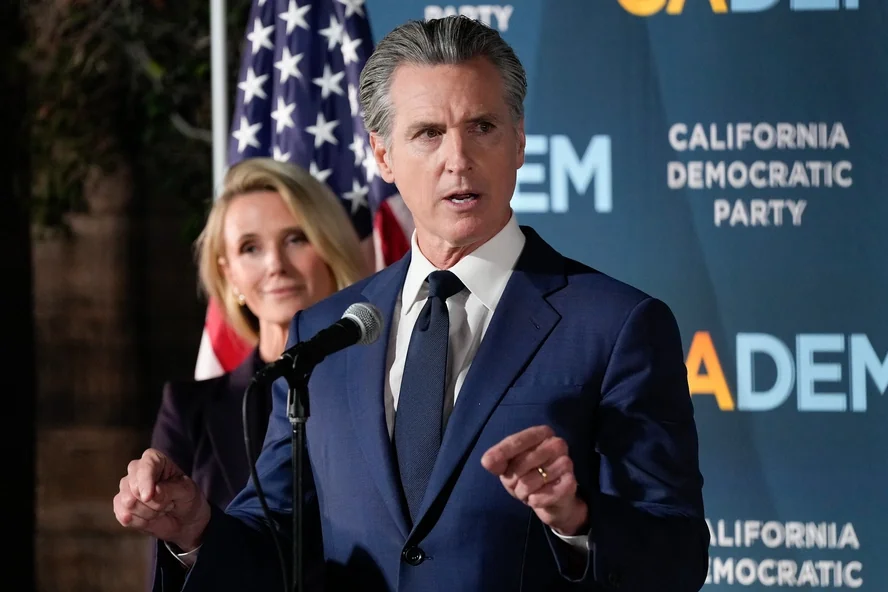 Gov. Gavin Newsom leaned into his role as a party leader by urging other states to emulate California. | Godofredo A. Vásquez/AP
Analytical Critique of the ITEP Dataset
Critics and fiscal experts have characterized Newsom’s reliance on the Institute on Taxation and Economic Policy (ITEP) reports as "fatally flawed" due to what they describe as selective data isolation. The primary point of contention lies in the omission of "cost of government" services and the exclusion of the "implicit tax" of California’s regulatory environment.
While California’s bottom-tier earners may pay less in direct state taxes, experts argue this is offset by the state's highest-in-the-nation gasoline taxes and utility costs. The debate highlights a fundamental disagreement on how to measure "tax burden": whether it is strictly a legislative levy or a holistic measure of state-mandated living expenses.
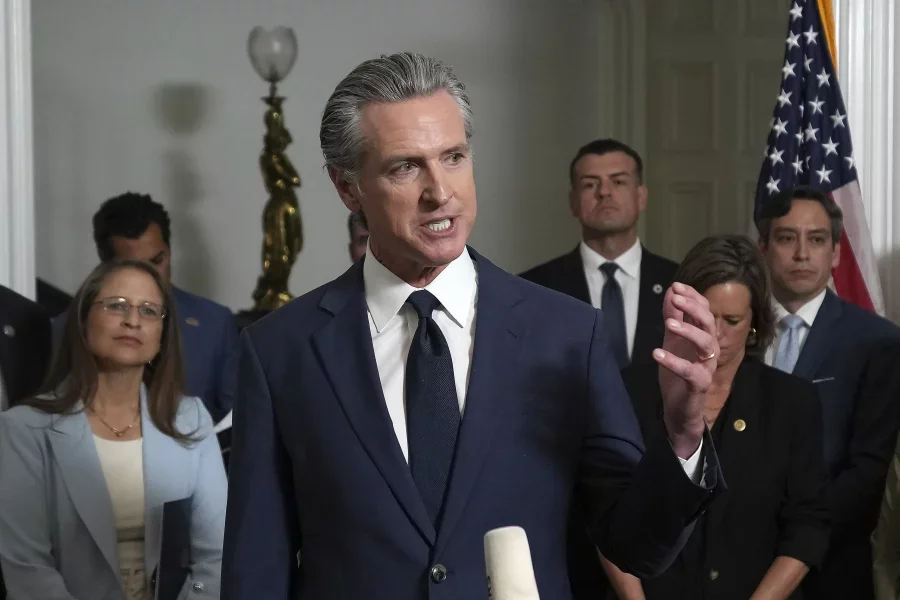 Accompanied by California and Texas lawmakers, California Gov. Gavin Newsom speaks in support of the Texas Democratic lawmakers for their walkout to block a vote on a congressional redistricting plan sought by President Trump, during a news conference in Sacramento, Calif., on Aug. 8.
The "Regressive Trap" vs. Progressive Volatility
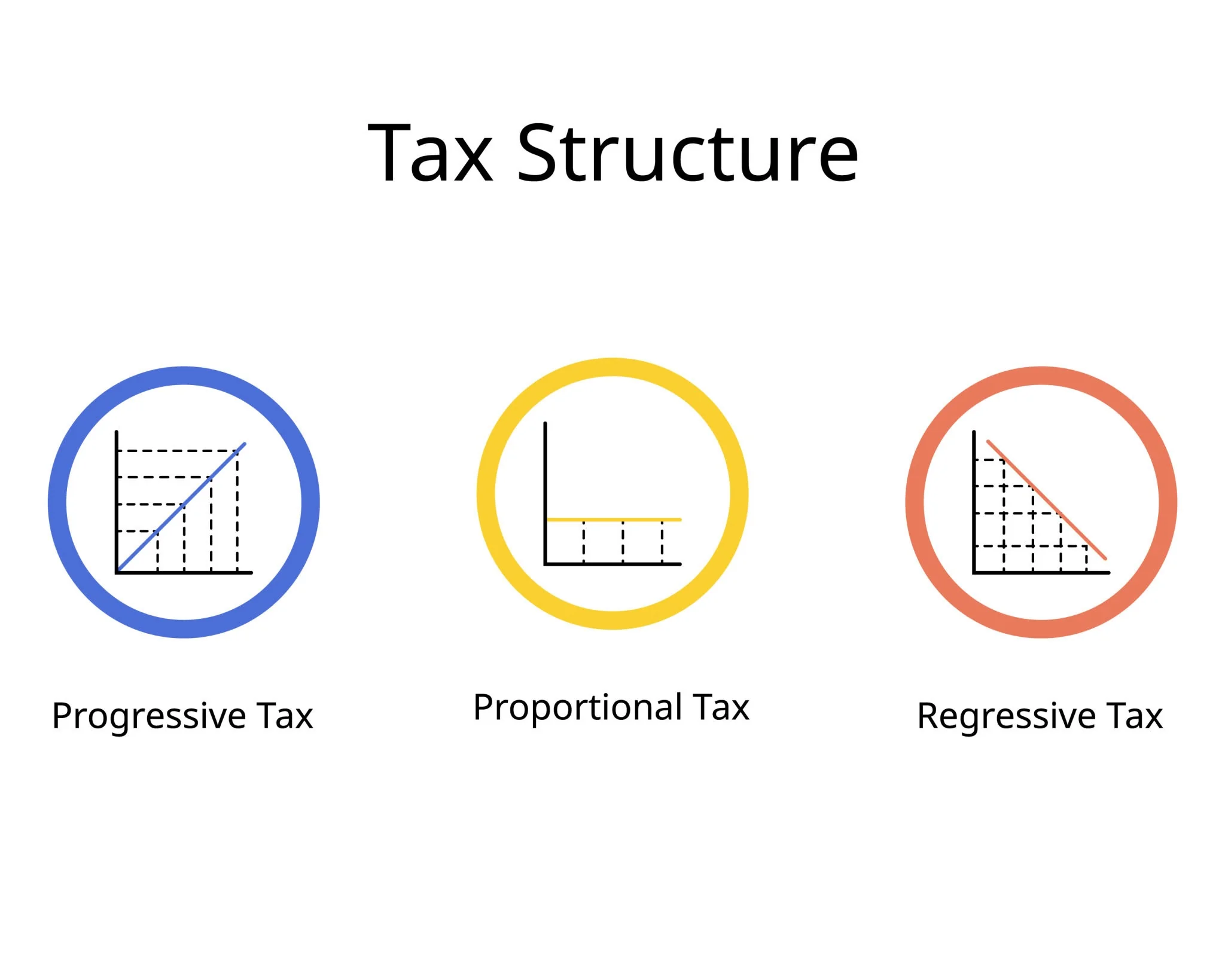
What many analysts overlook is the structural trade-off between stability and equity in these disparate tax regimes. Texas and Florida utilize "regressive" consumption-based models (sales and property taxes) because they provide a stable revenue floor that does not fluctuate wildly with the stock market.
 Piscine - Getty Images
California’s "progressive" model, which relies heavily on the top 1% of earners for nearly half of its income tax revenue, creates extreme "revenue volatility." During economic downturns, California faces massive budget deficits that Texas and Florida largely avoid. Newsom’s argument focuses on the equity of the contribution but ignores the systemic risk of a tax base that is tethered to capital gains and executive bonuses.
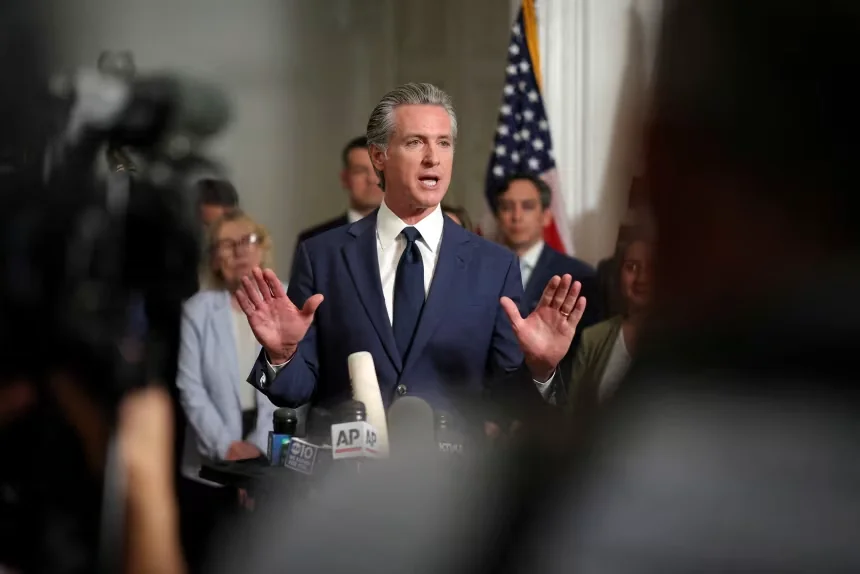 California Gov. Gavin Newsom speaks at a press conference, accompanied by Texas Democratic legislators, at the governor’s mansion in Sacramento on August 8. Carlos Barria/Reuters
Long-term Structural Shifts in Internal Migration
The data suggests that regardless of Newsom's messaging, the U.S. Census Bureau continues to track a net migration pattern favoring low-income-tax states. This movement is not driven solely by the tax code but by the secondary effect of those codes: housing supply.
| Metric | California | Texas | Florida |
|---|---|---|---|
| Top Marginal Income Tax | 13.3% | 0% | 0% |
| Median Property Tax Rate | 0.75% | 1.74% | 0.91% |
| Combined Sales Tax (Avg) | 8.85% | 8.20% | 7.02% |
| Cost of Living Index | 138.5 | 93.0 | 102.8 |
The "High-Tax" label Newsom applies to Texas is largely a reflection of property tax rates. However, in the Real Estate Sector, the absence of an income tax in Texas allows for higher mortgage qualification thresholds, a nuance often missed in the political rhetoric surrounding state-to-state comparisons.
Regulatory Uncertainty and Future Fiscal Solvability
The escalating war of words between Newsom and leaders like Ron DeSantis and Greg Abbott signals a looming crisis in how states will fund future liabilities. California faces a projected multi-billion dollar budget gap, while Florida maintains a significant surplus. Newsom’s rhetorical pivot is an attempt to preemptively frame California’s upcoming fiscal adjustments as a necessary cost of "fairness" rather than a symptom of mismanagement.
As states compete for the "remote work" class, the definition of a "high-tax state" will likely move beyond the tax form and into the realm of "purchasing power parity." The outcome of this debate will dictate where the next decade of venture capital and industrial manufacturing settles, as corporations weigh California’s social infrastructure against the Sun Belt’s raw cost efficiency.
Comments (0)
Please login to comment
Sign in to share your thoughts and connect with the community
Loading...