
Trump Threatens Iran South Pars Gas Field Post-Israeli Strike

Escalation from Kinetic Warfare to Energy Infrastructure Targeting
Following recent Israeli military operations against Iranian targets, former President Donald Trump has explicitly identified the South Pars gas field the world’s largest natural gas deposit as a primary vulnerability. This rhetoric marks a departure from traditional "proportional" military responses, shifting the focus toward the total neutralization of Iran's primary economic engine. By naming a specific offshore asset, the communication signals a transition from tactical deterrence to a strategy of permanent industrial degradation.
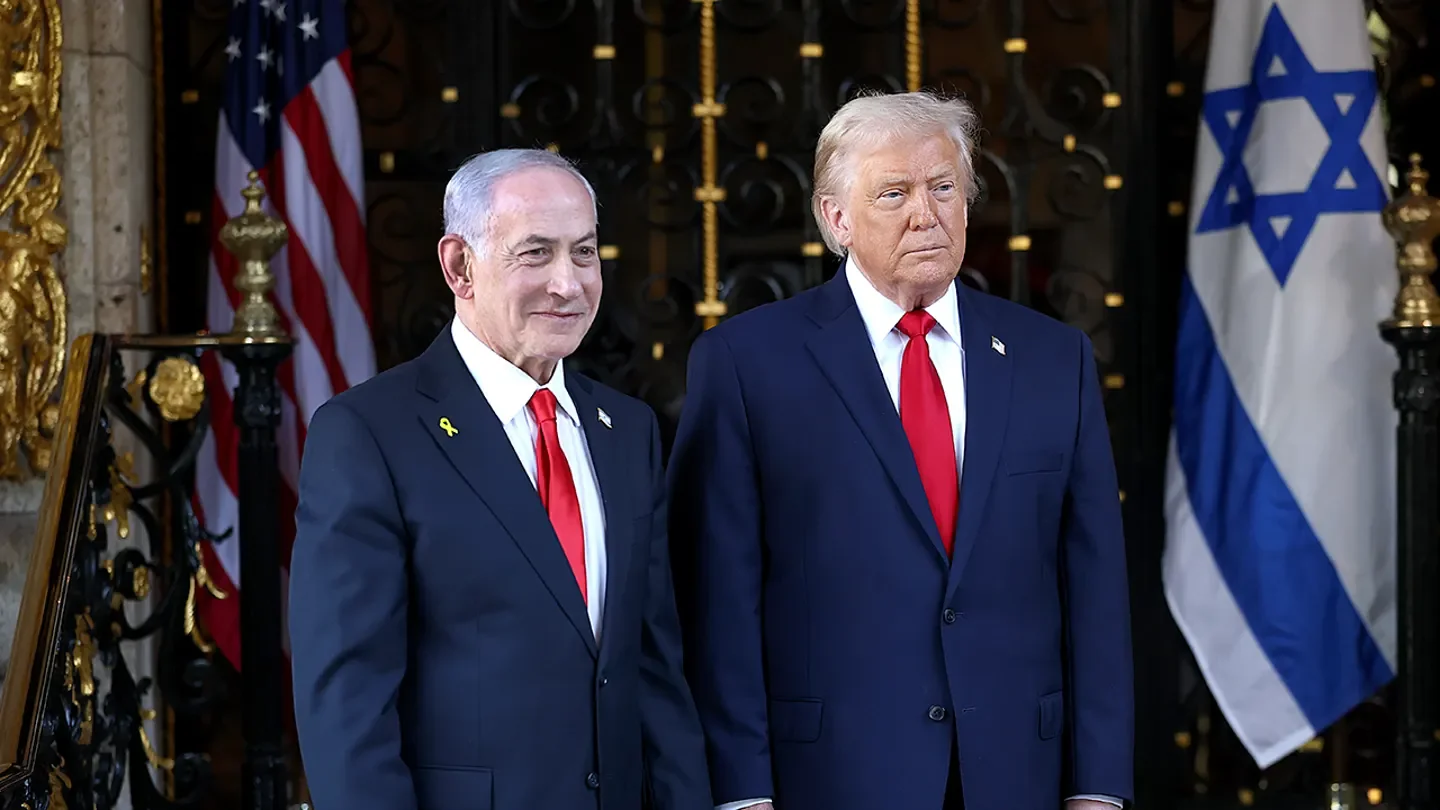 President Donald Trump welcomes Israeli Prime Minister Benjamin Netanyahu to his Mar-a-Lago club on Dec. 29, 2025, in Palm Beach, Fla. (Joe Raedle/Getty Images)
Regional Economic Shockwaves and the Persian Gulf Security Framework
The threat to South Pars carries immediate implications for the Islamic Republic of Iran’s ability to maintain domestic power stability and export commitments. As a shared field with Qatar (where it is known as the North Field), any kinetic activity in this specific maritime sector risks drawing the State of Qatar and global liquefied natural gas (LNG) markets into a direct confrontation. The Integrated Air Defense System (IADS) of the Gulf Cooperation Council (GCC) states is currently being reassessed as the threat of infrastructure-level warfare replaces localized proxy skirmishes.
The "Stranded Asset" Doctrine: Weaponizing Energy Dependency
While media coverage often focuses on the immediate military exchange, the underlying shift is the weaponization of Iran’s geographical energy concentration. South Pars accounts for roughly 70% of Iran’s domestic gas consumption and a significant portion of its remaining foreign currency earnings.
Unlike the Kharg Island oil terminal, which has been a frequent rhetorical target, South Pars represents a "deep-tissue" economic hit. If the facility were neutralized, the structural integrity of the Iranian state would face a non-recoverable energy deficit, leading to the collapse of the industrial manufacturing sector and a total cessation of petrochemical exports. This is not a "maximum pressure" tactic via sanctions; it is a proposal for the physical removal of the state’s fiscal foundation.
 Joe Kent, then-director of the National Counterterrorism Center, is sworn in to a House Homeland Security Committee hearing on Dec. 11, 2025. (Tom Williams/CQ-Roll Call, Inc via Getty Images)
Disrupting the Eurasian Energy Pivot and "Gas OPEC" Ambitions
The targeting of South Pars is fundamentally a move to check the growing energy alliance between the Islamic Republic of Iran, the Russian Federation, and the People’s Republic of China. Iran has recently sought to position itself as a regional gas hub, utilizing South Pars to facilitate swaps with Turkmenistan and eventual exports to South Asia. By threatening the physical destruction of these fields, the U.S. and its allies signal to Beijing and Moscow that the Iranian "bridge" in the Eurasian energy architecture is an unreliable and high-risk investment.
The Geopolitical Risk of Environmental and Maritime Contamination
An attack on offshore gas infrastructure in the Persian Gulf would create a maritime exclusion zone, impacting the Strait of Hormuz a chokepoint through which 20% of the world's total oil consumption passes. Beyond the immediate fire risks, the release of methane and potential chemical runoff would jeopardize desalination plants across the Arabian Peninsula. This environmental leverage acts as a secondary deterrent, forcing regional neighbors to choose between supporting a hardline stance against Tehran or protecting their own vital water security.
| Asset Component | Strategic Value | Regional Impact |
|---|---|---|
| South Pars Phase 11 | High-pressure gas extraction | Critical for domestic winter heating |
| Assaluyeh Terminal | Petrochemical processing hub | Primary source of non-oil GDP |
| Platform Infrastructure | Fixed maritime targets | Vulnerable to standoff precision munitions |
| Export Pipelines | Regional energy connectivity | Disrupts supply to Iraq and Turkey |
The trajectory of the conflict now suggests that the "red lines" of the past decade which largely protected energy production to maintain global price stability are being discarded in favor of a definitive conclusion to the Iranian nuclear and regional hegemony challenge.
Comments (0)
Please login to comment
Sign in to share your thoughts and connect with the community
Loading...