

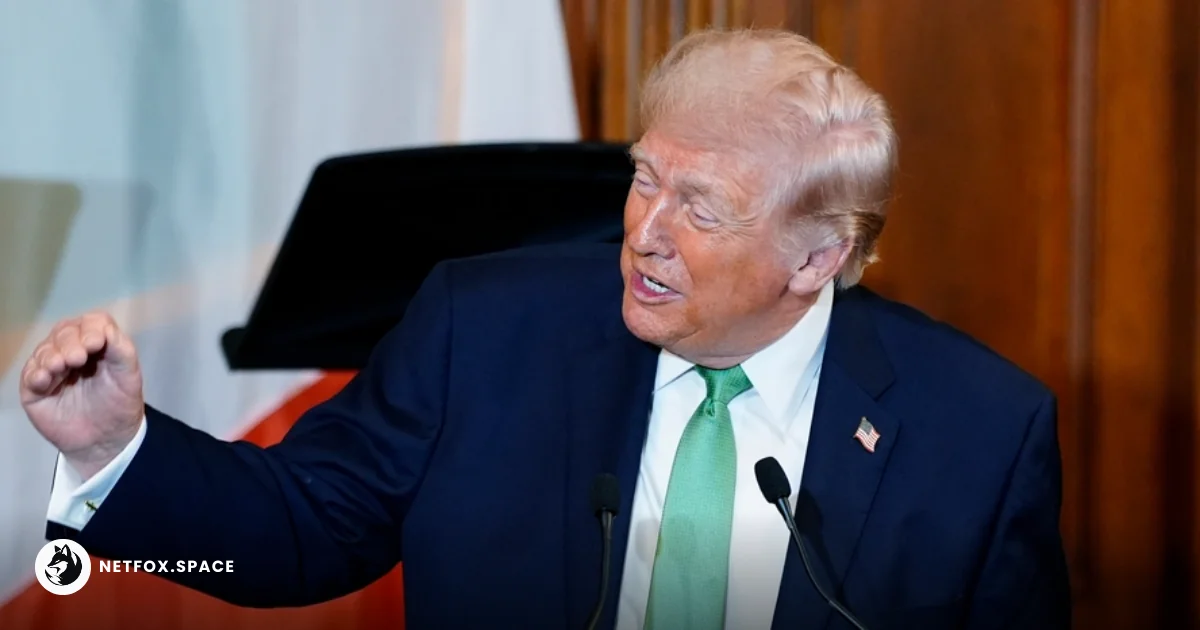
Trump’s Multilateral Ultimatum: Defending "Your Own Territory"
President Donald Trump has escalated his demands for a multinational naval coalition to break the Iranian blockade of the Strait of Hormuz, signaling a shift from unilateral strikes to a "pay-to-play" maritime security model. Aboard Air Force One on March 15, 2026, the President asserted that the United States has no geographic or existential need to police the waterway alone, given its domestic energy independence. Instead, he characterized the strait as the "territory" of the nations whose economies depend on it, specifically targeting China, Japan, South Korea, France, and the United Kingdom.
The administration's rhetoric frames the current crisis where oil has surged 40% this month to cross $105 per barrel as a burden-sharing litmus test. While the President claimed "many countries" are preparing to send warships, the reality on the ground remains a series of cautious "deliberations" rather than firm military commitments. This pressure campaign comes as the U.S. Navy prepares for a transition from offensive strikes to active tanker escort operations, a mission fraught with tactical risks in the world’s most volatile maritime chokepoint.
Strategic Hesitation: The Gap Between Rhetory and Readiness
Despite the White House’s insistence that a coalition is forming, key global powers are signaling significant reservations. UK Prime Minister Keir Starmer has distanced London from a formal NATO mission, emphasizing that British involvement would remain "defensive" and limited to protecting national interests rather than joining a wider war effort. Similarly, Japan’s Prime Minister Sanae Takaichi faces constitutional constraints that limit overseas military deployments, despite Japan being one of the most vulnerable nations to a Hormuz shutdown.
The hesitation is primarily driven by the "sporty" nature of the current environment. Military analysts warn that placing destroyers in the 21-mile-wide strait while hostilities are active invites high-velocity engagement with Iranian anti-ship missiles and drone swarms. For many allies, the lack of a clear U.S. "endgame" or "off-ramp" makes the prospect of a permanent naval presence in the Persian Gulf a diplomatic and military minefield.
The Shadow Procurement: Why Alliances Are Fracturing Over Escorts
What competitors are not discussing is the fundamental breakdown of the "Security Umbrella" doctrine that has defined the Persian Gulf for decades. Historically, the U.S. provided security as a global public good to ensure price stability. By demanding that allies police their own energy routes, the Trump Administration is effectively privatizing maritime security. This creates a dangerous precedent where security is no longer a collective guarantee but a transactional service.
This shift has led to "Shadow Procurement" negotiations. Countries like South Korea and India are reportedly exploring back-channel communications with Tehran to secure "safe passage" for their specific hulls, rather than joining a U.S.-led combat coalition. If nations believe they can negotiate individual immunity from the Islamic Revolutionary Guard Corps (IRGC), the incentive to join a high-risk U.S. military escort mission evaporates. This fragmentation could leave the U.S. and Israel isolated in the military theater, even as they attempt to solve a global economic crisis.
Systemic Implication: The $100 Billion Energy Trap
The blockade has effectively removed 20% of the world’s daily oil supply from the market, creating a structural deficit that strategic reserves cannot bridge indefinitely. The International Energy Agency (IEA) has authorized the release of 400 million barrels, but this is a temporary buffer for a permanent geopolitical shift. The semiconductor industry and biotech sector are already reporting increased logistics costs as refined products and chemical precursors, normally transiting the Gulf, are rerouted or stalled.
Impact of Hormuz Disruption (March 2026 Data)
| Metric | Pre-Conflict Level | Current Status (March 18) | Impact Severity |
|---|---|---|---|
| Oil Flow | 20 Million bpd | < 2 Million bpd | Extreme |
| Brent Crude Price | $74.00 | $105.40 | High |
| Shipping Traffic | ~50 Transits/Day | ~5-8 Transits/Day | Critical |
| LNG Exports (Qatar/UAE) | 20% Global Share | Effectively Halted | Severe |
Escalation Risks: Preparing the "Battlefield" for Convoys
Before any formal escort mission begins, the U.S. Department of Defense is pursuing a "Phase One" strategy of degrading Iranian coastal infrastructure. Defense Secretary Pete Hegseth has indicated that while there is no evidence of widespread mining yet, the threat of Iranian drone boats and shore-based batteries remains the primary obstacle to commercial shipping. The administration’s goal is to "clear the lanes" through sustained aerial bombardment of IRGC Navy assets before inviting commercial tankers back into the corridor.
The tension remains forward-looking and unresolved. As the end-of-month deadline for the IEA reserve release approaches, the pressure on South Korea and Japan to commit hulls will reach a breaking point. Failure to form a coalition would leave the U.S. with two choices: a risky unilateral escort mission that could trigger a full-scale naval war, or a tactical retreat that cedes control of global energy prices to Tehran.
Comments (0)
Please login to comment
Sign in to share your thoughts and connect with the community
Loading...