
Trump Oil Pivot: TotalEnergies Replaces Wind with $1B Fossil Deal

Strategic Buyout: The TotalEnergies Lease Termination
On March 23, 2026, the U.S. Department of the Interior (DOI) announced a landmark settlement with the French energy giant TotalEnergies SE. Under the terms of the agreement, the federal government will provide a "reimbursement" of approximately $928 million effectively a dollar-for-dollar refund of lease fees paid during the Biden administration.
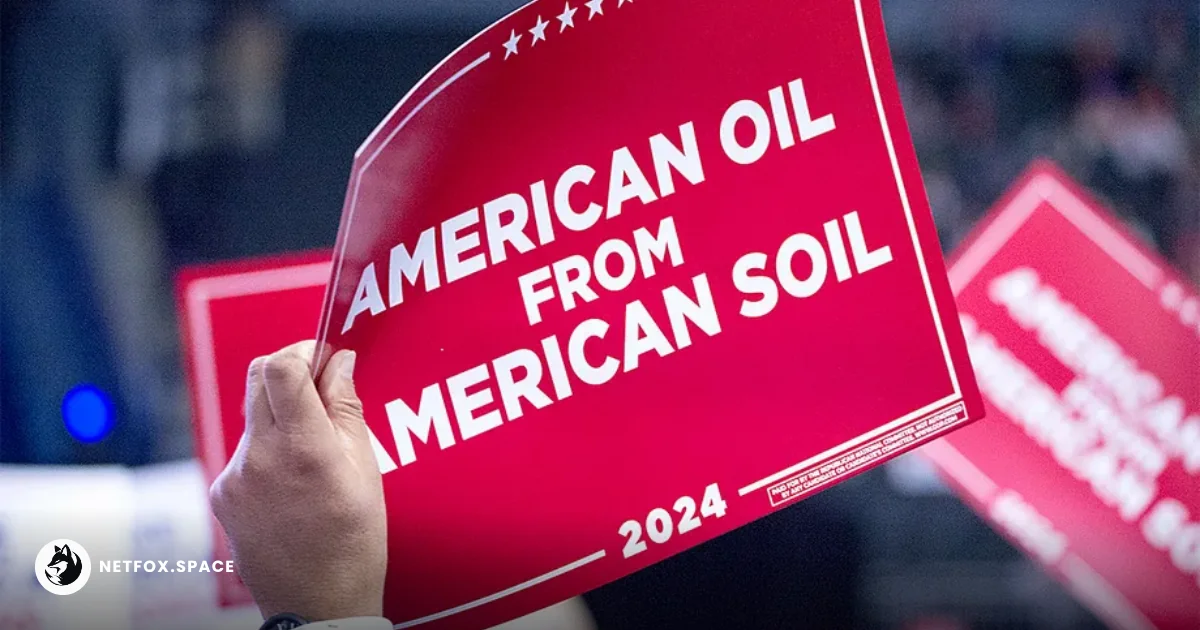
In exchange, TotalEnergies has agreed to formally relinquish its rights to develop the Attentive Energy project in the New York Bight and the Carolina Long Bay project off the coast of North Carolina. These two projects, which had the combined potential to generate over 4 gigawatts (GW) of renewable electricity, are now effectively dead. The capital recovered by the firm will be immediately redirected into domestic fossil fuel infrastructure, specifically targeting the Rio Grande LNG export facility in Texas and conventional oil extraction in the Gulf of Mexico (recently rebranded by the administration as the "Gulf of America").
 President Trump, l., and an oil drill, r. (Getty Images)
From "Green" to "Grid-Reliant": The Interior Department’s Rationale
Interior Secretary Doug Burgum unveiled the deal during the CERAWeek energy conference in Houston, characterizing the move as a correction of "ideological subsidies." The administration’s position is that offshore wind is an "unreliable and costly" energy source that threatens national security and grid stability.
By facilitating this exit, the Trump Administration is signaling a shift away from the protracted legal battles that have plagued its previous attempts to halt wind construction. While federal courts previously overturned executive "stop-work" orders on projects like Vineyard Wind 1, this "pay-to-not-play" strategy offers a legally insulated pathway to de-carbonize the federal energy portfolio by incentivizing private developers to voluntarily exit the sector.
 Interior Secretary Doug Burgum delivers remarks outside the White House on March 19, 2025, in Washington, D.C. (Getty Images)
Hidden Implications: The "Settlement" as a Legal Workaround
What competitors and standard news outlets are largely overlooking is the procedural precedent this settlement sets for the remaining 30+ offshore wind leases currently in the U.S. pipeline. By framing the $1 billion payment as a "reimbursement for lease fees" rather than a cancellation penalty, the Department of Justice avoids the "arbitrary and capricious" label that judges used to strike down previous executive actions.
This mechanism serves two strategic purposes:
-
Liability Mitigation: It prevents multi-billion dollar breach-of-contract lawsuits from developers who have already spent hundreds of millions on environmental impact surveys and supply chain contracts.
-
Capital Capture: The agreement explicitly ties the refund to a commitment from the developer to reinvest that capital into specific "Energy Dominance" sectors (Oil & Gas). This effectively turns a renewable energy developer into a fossil fuel financier under federal duress.
Sectoral Shift: Financial Exposure and Market Realignment
The dissolution of these projects sends a chilling signal to the global Renewable Energy Sector. Analysts at the American Clean Power Association suggest that if this settlement model is applied to the five other major projects currently under federal "security review," it could result in a total loss of 15 GW of planned capacity by 2030.
| Project Name | Original Lease Cost | Location | New Investment Target |
|---|---|---|---|
| Attentive Energy | $795 Million | NY Bight | Rio Grande LNG (Texas) |
| Carolina Long Bay | $133 Million | North Carolina | Gulf Oil & Shale Gas |
| Empire Wind (Equinor) | Under Review | New York | TBD |
| Coastal Virginia | Under Review | Virginia | TBD |
 Madaket beachgoers walk along the beach in this 800mm telephoto view that compresses distance of the Vineyard Wind turbines 15 miles away. (Stan Grossfeld/The Boston Globe via Getty Images)
For the Oil and Gas Industry, specifically in the Permian Basin and LNG corridor, this represents a massive influx of liquidity. TotalEnergies’ commitment to accelerate "Train 1 through 4" at the Rio Grande LNG plant will likely expedite U.S. gas export capacity to Europe, further leveraging energy as a geopolitical tool against Russian and Iranian influence.
Future Outlook: Regulatory Uncertainty and the AI Power Gap
The administration justifies the fossil fuel pivot by citing the "unprecedented baseload demand" generated by the Artificial Intelligence (AI) Sector and data center expansion. Unlike wind, which is intermittent, the administration argues that only natural gas and nuclear can provide the 24/7 "constant-on" power required for the next generation of American computing.
However, the strategy carries significant long-term structural risk. By dismantling the offshore wind supply chain including specialized vessel construction and port upgrades in New York and New Jersey the U.S. may find itself technologically leapfrogged by China and the European Union, who continue to scale offshore renewables as a hedge against volatile global commodity prices.
The immediate consequence is a bifurcated energy market: a federal government doubling down on 20th-century extraction technologies while coastal states like California and Massachusetts remain locked in a constitutional struggle over their own mandated renewable energy targets.
Comments (0)
Please login to comment
Sign in to share your thoughts and connect with the community
Loading...