

The Asaluyeh Escalation: Precision Strike on Iran’s Economic Heart
On March 18, 2026, the Israeli Air Force conducted a high-precision operation against the Asaluyeh processing hub, the onshore nerve center for the South Pars gas field. This facility is the bedrock of the Iranian energy sector, providing approximately 75% of the nation’s domestic gas and powering 80% of its electricity grid.
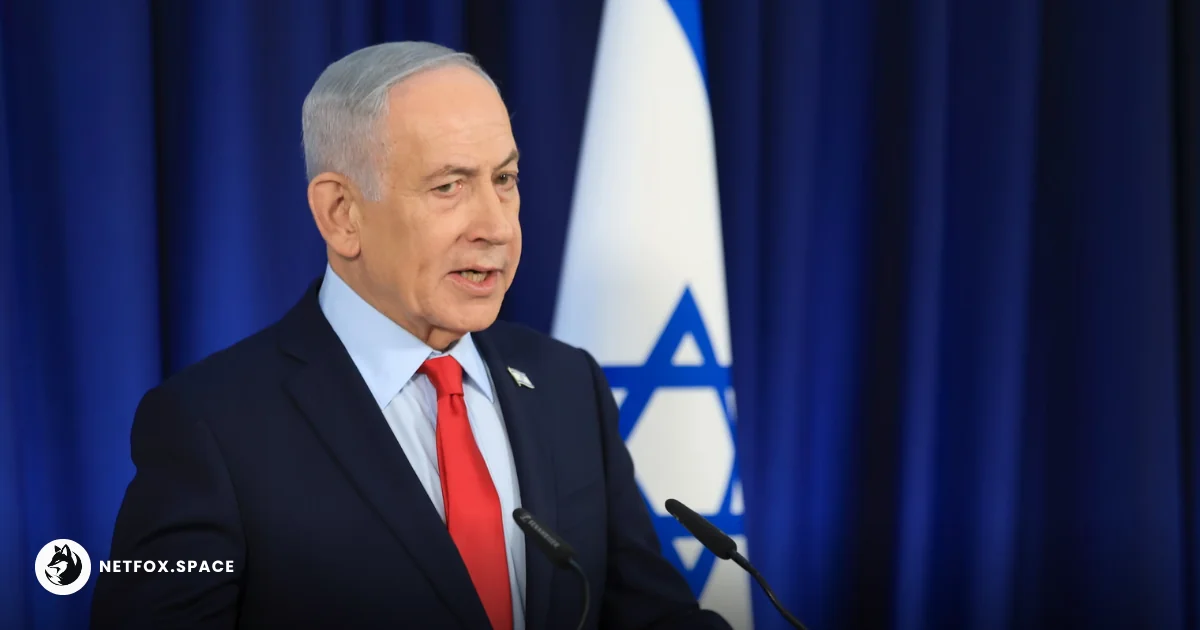
Israeli Prime Minister Benjamin Netanyahu confirmed the strike during a Jerusalem press conference on March 19, characterizing it as the "third phase" of Operation Roaring Lion. By targeting upstream production rather than just export terminals, Israel has successfully taken offline roughly 100 million cubic meters of gas per day—a move designed to "cripple the regime's wallet" and trigger internal systemic collapse through widespread power failures and industrial paralysis.
Denial of the ‘Drag’ Narrative: Netanyahu vs. The Trump Administration
A central theme of Netanyahu’s address was the refutation of claims that Israel "bounced" the United States into a broader regional conflict. Amid reports of a growing rift with Washington, Netanyahu asserted that Israel acted independently in the South Pars raid. "Does anyone really think someone can tell President Donald Trump what to do?" Netanyahu asked, dismissing allegations of "dragging" the US as "fake news."
However, the Prime Minister acknowledged a significant tactical disagreement: President Donald Trump has explicitly requested that Israel refrain from further strikes on Iranian energy infrastructure. While Netanyahu maintained that the two nations remain in "close coordination," his admission that Israel "is holding off" on future energy targets for now confirms that the White House is seeking to limit the global economic fallout of a war it officially joined on February 28, 2026.
The Shared Reservoir Complication: A Geopolitical Minefield
What major news outlets have largely overlooked is the "geological collateral damage" inherent in striking South Pars. The field is a single, integrated reservoir shared between Iran and Qatar (where it is known as the North Dome). Because the reservoir operates at extreme pressures—often between and bar—kinetic damage to the Iranian side causes immediate pressure drops and potential methane leaks that compromise Qatari extraction efficiency.
This technical reality has turned a bilateral conflict into a diplomatic crisis with Doha. Following the strike, QatarEnergy reported "extensive damage" at its Ras Laffan terminal due to Iranian retaliatory fire, leading the Gulf state to expel Iranian diplomats. By hitting South Pars, Israel has inadvertently weaponized a shared resource, forcing the US to choose between supporting its primary military ally or protecting the energy sovereignty of its key Arab partners and the stability of the global LNG market.
Systemic Shock: The 5-Year Force Majeure and Global Markets
The immediate economic repercussions have exceeded theoretical models. On March 20, Brent crude surged past $115 per barrel, while European gas prices jumped 35%. The most significant structural shift, however, came from Qatar’s Ministry of Energy, which warned that repairs to damaged infrastructure could take three to five years.
| Metric | Pre-Strike Status | Post-Strike Impact (Est.) |
|---|---|---|
| Iran Domestic Gas Supply | ~730 million /day | 14% Daily Loss (~100m ) |
| Electricity Generation | 80% Gas-Dependent | Immediate Rolling Blackouts |
| Global LNG Security | High (via Qatar) | 5-Year Force Majeure Warnings |
| Strait of Hormuz | Partially Contested | Total Insurance Market Panic |
The International Energy Agency (IEA) has convened an emergency session, agreeing to release 400 million barrels of oil—the largest release in history—to counteract the "unprecedented disruption" caused by the targeting of the world's largest natural gas reserve.
War of Attrition: Assessing the ‘Decimation’ of Iranian Capability
Netanyahu claimed that after 20 days of sustained air strikes, the Islamic Republic of Iran no longer possesses the capacity to enrich uranium or manufacture ballistic missiles. He argued that the "industrial base" of the regime has been "decimated," citing the destruction of key components in the missile supply chain.
While US intelligence, led by Director of National Intelligence Tulsi Gabbard, suggests the Iranian government remains "intact if degraded," the shift toward economic targets indicates that the Israeli command believes military degradation alone is insufficient. The strategy now focuses on creating the "conditions for collapse" by forcing the Iranian population to bear the brunt of an energy-starved economy, even as Tehran continues to demonstrate its ability to penetrate Israeli airspace with sporadic, high-altitude missile salvos.
The divergence between Jerusalem’s "total victory" timeline and Washington’s urgent need for market stability suggests a looming fracture in the coalition. As Iran prepares its next cycle of "energy-for-energy" retaliation, the risk is no longer just a regional war, but a permanent restructuring of the global energy order that may leave the Persian Gulf’s infrastructure unfixable for a generation.
References:
Comments (0)
Please login to comment
Sign in to share your thoughts and connect with the community
Loading...