
Trump Declares Iran 'No Longer a Threat' After 32-Day War

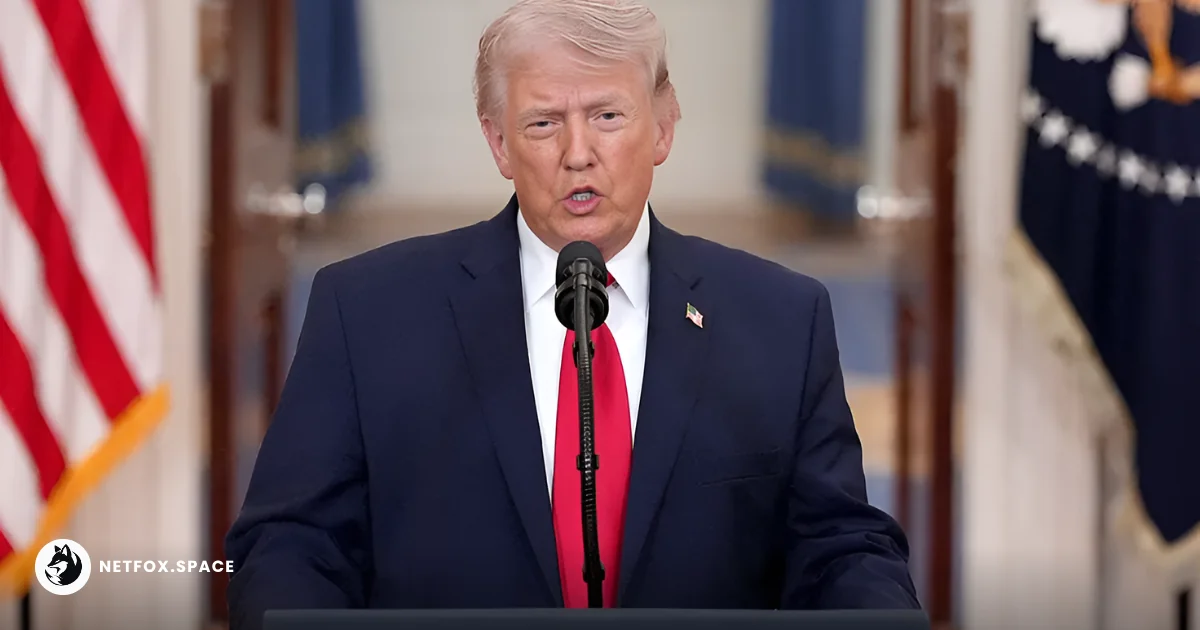
President Trump has announced the conclusion of major offensive operations against Iran after a 32-day military campaign, signaling a transition toward regional stabilization and a new diplomatic framework. The administration now characterizes the Iranian government's previous military capabilities as effectively neutralized, moving the American objective from active combat to the oversight of a post-war environment.
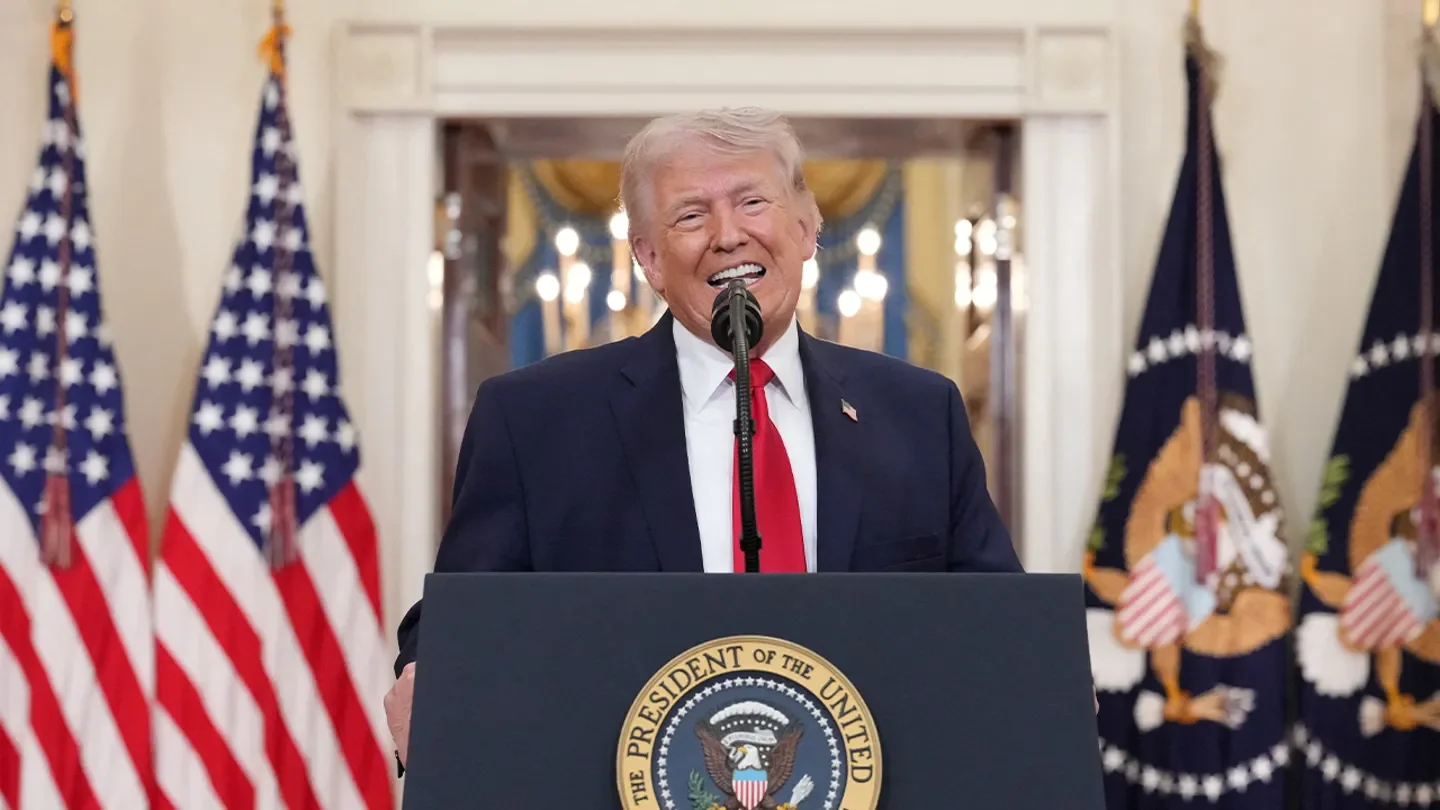 Trump gives primetime address on Iran, April 1, 2026. (Alex Brandon/Pool via Reuters)
Combat operations yield to a declared "neutralization" of Iranian influence
After 32 days of sustained military engagement, the President asserted that the immediate threat posed by the Iranian regime has been eliminated. This declaration marks a significant shift in U.S. foreign policy, moving away from the high-intensity strikes that defined the first month of the conflict. The administration’s assessment suggests that the degradation of Iran’s command-and-control infrastructure has reached a point where the country can no longer project power or threaten regional interests in the same capacity.
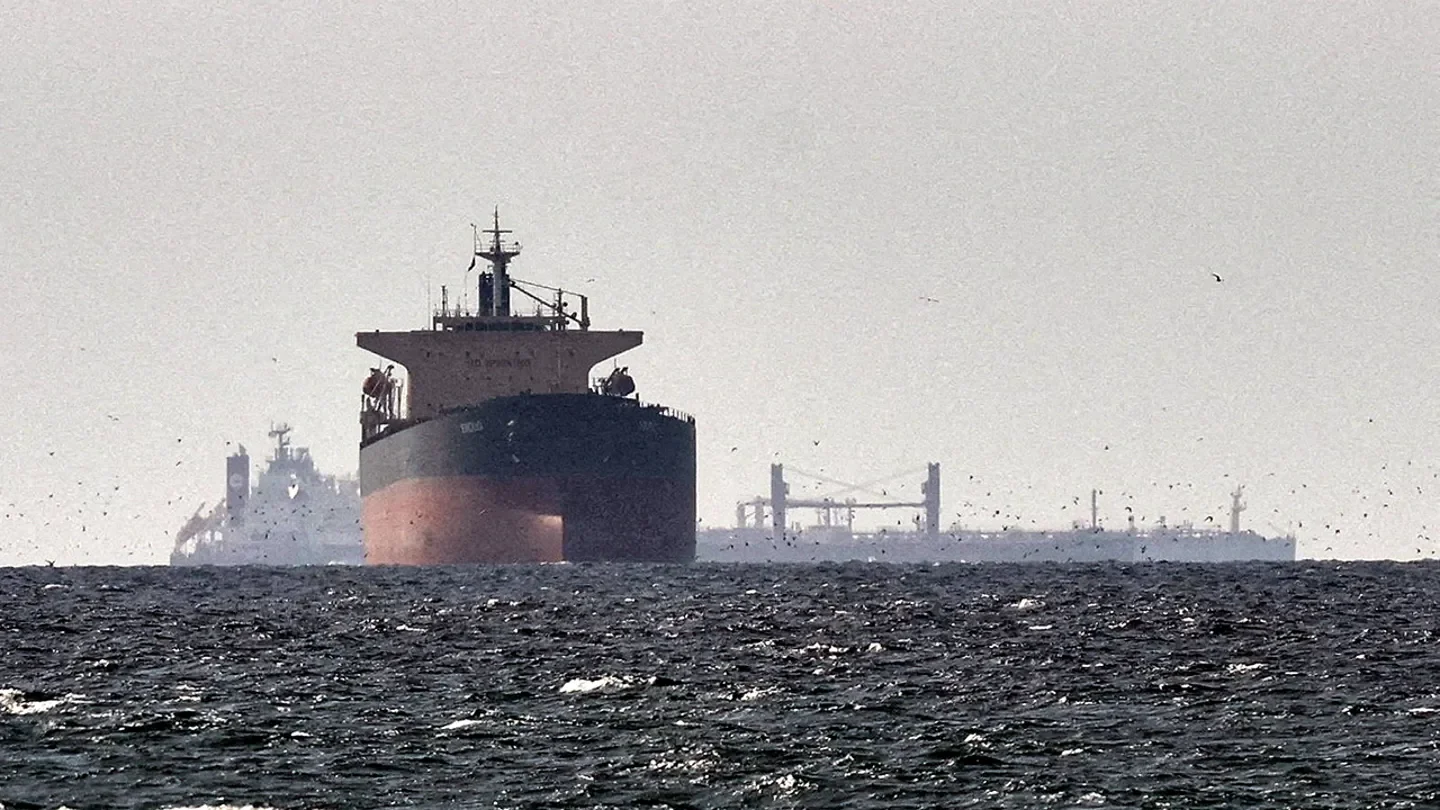 Trump also called on U.S. allies to take a more active role in securing global energy routes, arguing that countries reliant on Middle Eastern oil should be responsible for protecting the Strait of Hormuz. (Reuters/Stringer/File Photo/File Photo)
The administration outlines a transition toward regional reconstruction
The next phase of the U.S. strategy involves a pivot toward reconstruction and the establishment of a revised security architecture in the Middle East. According to official statements regarding the next phase, the focus will shift toward ensuring that the power vacuum created by the conflict is not filled by adversarial non-state actors or rival regional powers. This transition implies a long-term, though perhaps less kinetic, American presence aimed at overseeing the political and physical rebuilding of the region.
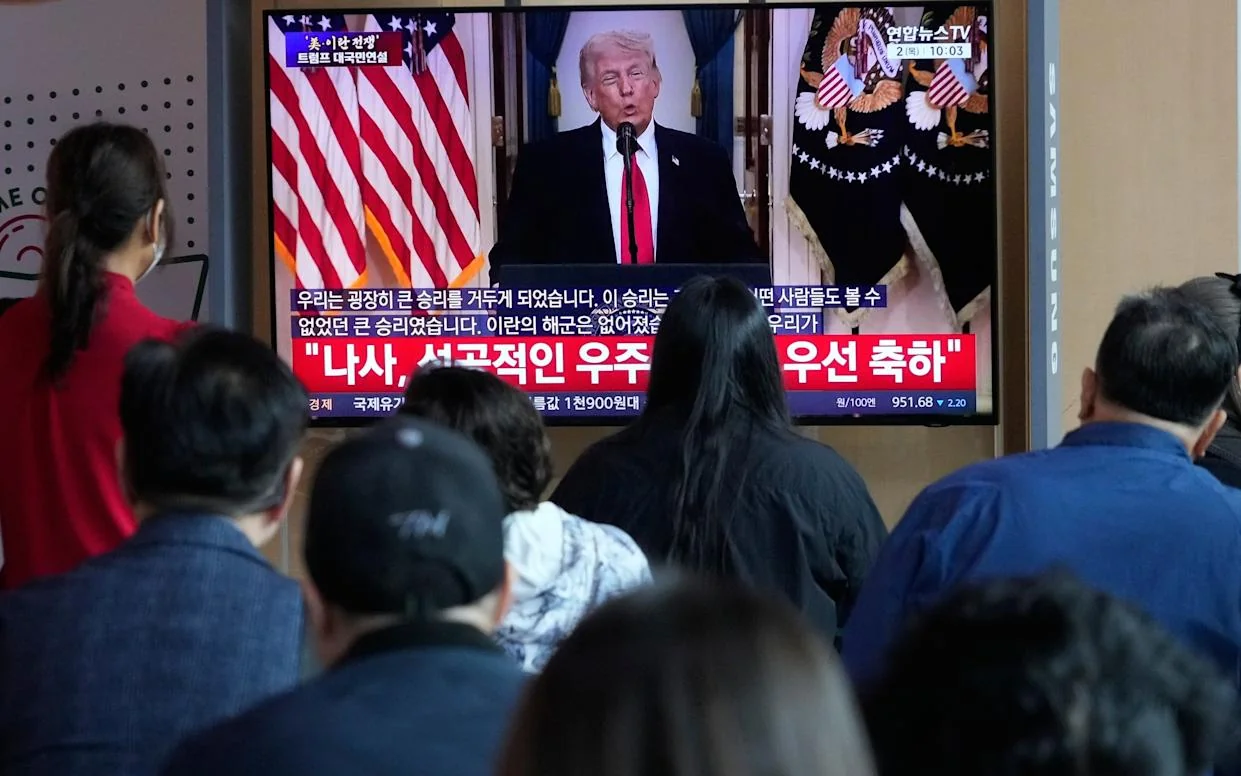 People in South Korea watch Mr Trump’s speech. Asian markets fell after his address - AP
Uncertainty remains regarding the specifics of a new diplomatic framework
While the President has declared an end to the primary threat, the exact procedural steps for a formal peace or a replacement governing structure remain largely undisclosed. The move toward a post-war phase coincides with a broader effort to redefine U.S. alliances in the region. However, questions persist regarding the degree of international cooperation required for reconstruction and how the U.S. will manage the internal humanitarian and governance challenges now facing Iran.
Strategic implications for the broader Middle East security landscape
The declaration that Iran is "no longer a threat" fundamentally alters the calculus for neighboring states and international energy markets. By signaling the end of the 32-day war’s primary combat phase, the U.S. is attempting to stabilize global expectations while asserting its role as the primary arbiter of the new regional order. The success of this next phase will depend on the ability of the administration to translate tactical military gains into a sustainable political settlement that prevents a resurgence of hostilities.
Comments (0)
Please login to comment
Sign in to share your thoughts and connect with the community
Loading...