


Supreme Court Justice Ketanji Brown Jackson has drawn significant public and professional scrutiny following an analogy she used during oral arguments regarding the constitutional basis of birthright citizenship. The comparison, which linked the acquisition of citizenship to finding a stolen wallet, sparked an immediate reaction across social media and among legal scholars.
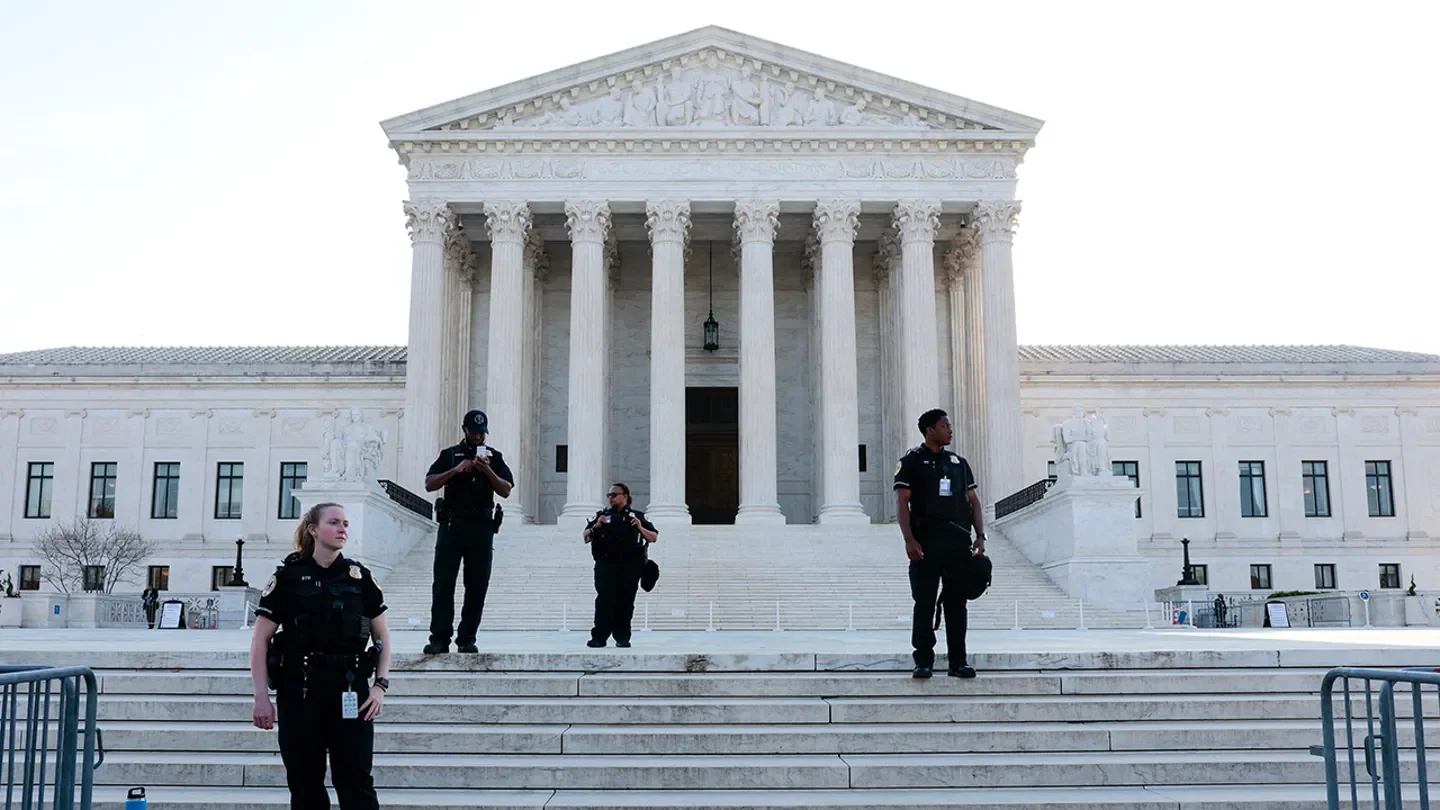 Police stand outside the U.S. Supreme Court. (Heather Diehl/Getty Images)
The stolen wallet analogy used during oral arguments
The controversy stems from a hypothetical scenario Justice Jackson presented while the Court discussed the 14th Amendment's Citizenship Clause. In an effort to explore the jurisdictional limits of birthright citizenship, Jackson proposed a comparison involving a traveler in Japan who finds a stolen wallet. She questioned whether the act of possessing the item even if acquired through a chain of events starting with a theft conferred a specific status or right, attempting to parallel the legal "theft" some critics associate with illegal entry into the country.
While the Justice appeared to be testing the boundaries of "jurisdiction" as defined in the 14th Amendment, the framing was quickly labeled as "bizarre" by various legal commentators. Critics argued that comparing the fundamental right of citizenship to the possession of stolen property trivialized the constitutional weight of the Citizenship Clause and relied on a flawed premise of "stolen" status.
 Well-known D.C. chef and activist José Andrés leads protesters outside the Supreme Court on Wednesday, April 1, 2026. (Photo by Heather Diehl/Getty Images)
Legal commentators and public react to the framing
The analogy triggered a "legal firestorm" online, with many constitutional scholars expressing concern over the implications of the Justice's reasoning. Observers noted that the analogy seemed to align perhaps inadvertently with arguments often made by those seeking to restrict birthright citizenship for the children of undocumented immigrants.
Some defenders suggested Jackson was simply playing "devil's advocate" to probe the strongest version of the opposing counsel's argument. However, the prevailing reaction focused on the perceived lack of sensitivity and the potential for such an analogy to be misinterpreted or weaponized in broader political debates. The incident highlights the intense scrutiny faced by Supreme Court justices as they navigate highly polarized constitutional questions in a public forum.
Comments (0)
Please login to comment
Sign in to share your thoughts and connect with the community
Loading...