
Gold Prices Hit Record $5,300 as Analysts Eye $6,000 High

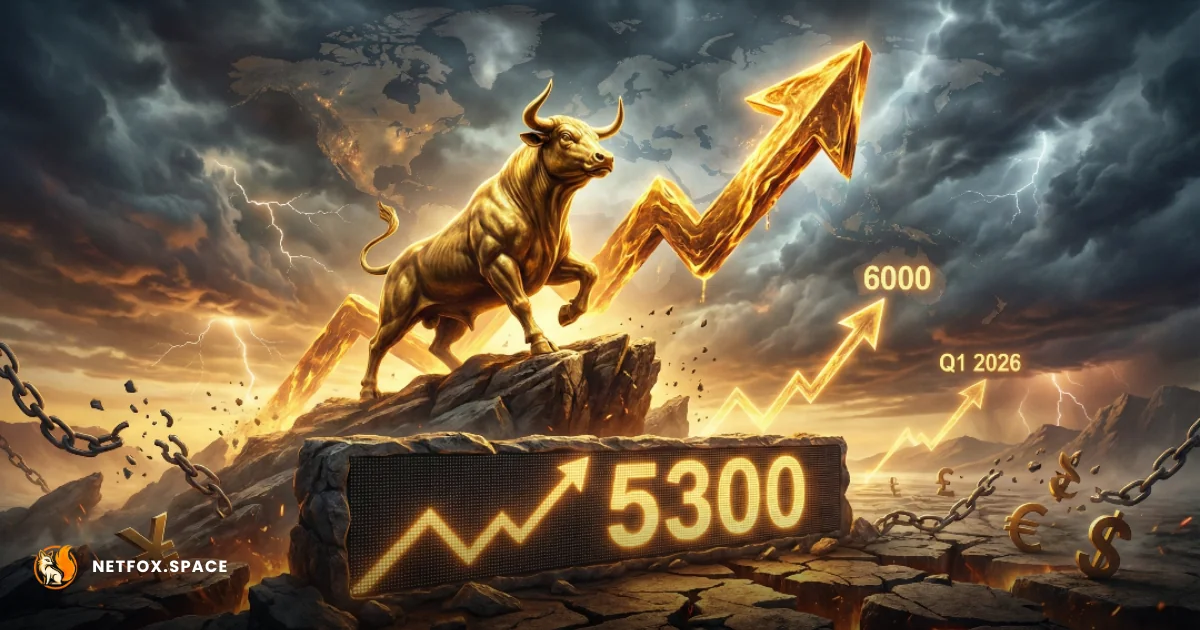
Gold prices shattered all previous records on Wednesday, touching a historic $5,300 per ounce as investors globally flee to safe-haven assets. The rally, which has accelerated with unprecedented velocity since the start of the year, has prompted leading commodities analysts to project a climb toward the $6,000 mark before the end of the first quarter.
The surge reflects a deepening anxiety across international markets. As traditional currencies face pressure from persistent inflation and shifting trade alliances, the yellow metal has reasserted its role as the ultimate store of value.
Fear and Inflation Drive the Global Gold Rush
The current momentum follows a period where gold hits record high prices surge fed rate cut hopes, but the latest jump suggests a shift from speculative trading to long-term wealth preservation. Behind the scenes, central banks—particularly in Asia and the Middle East—have been diversifying their reserves away from the U.S. Dollar, creating a massive floor for prices that refuses to crack.
This institutional buying is being mirrored by retail investors. In Europe and North America, "gold-only" investment funds have seen record inflows this month. For the average person, the "So-What" factor is clear: the rising price of gold is a flashing red light for the purchasing power of paper money. When gold climbs this fast, it generally indicates that the market expects a prolonged period of economic instability or a devaluation of major currencies.
The Mathematical March to the $6,000 Psychological Barrier
Reaching $5,300 was once considered a "stretch goal" for late 2026, yet the market reached it in January. Analysts at Goldman Sachs and Citigroup have updated their models, citing a "perfect storm" of supply constraints and insatiable demand. To reach $6,000 by the end of March, gold would need to maintain a growth rate of roughly 4% per month—a feat it has already doubled in the first three weeks of the year.
"We are seeing a decoupling of gold from traditional interest rate logic," noted Marcus Holloway, a senior commodities strategist. "Usually, higher rates hurt gold. Today, investors are so concerned about systemic risk that they don't care about the yield—they just want to ensure their capital still exists in six months."
Why Your Wallet Feels the Weight of the Bull Market
While investors are celebrating, the general public will likely feel the sting of this rally in more mundane ways. Beyond the obvious spike in the price of jewelry and luxury watches, gold is a critical component in high-end electronics.
-
Technology Costs: Manufacturers of smartphones and high-performance medical equipment use thin layers of gold for its superior conductivity and resistance to corrosion. At $5,300 an ounce, the "input cost" for a flagship device is climbing, potentially leading to another round of consumer price hikes later this year.
-
The "Cash for Gold" Resurgence: High street retailers are reporting a massive uptick in people selling old jewelry to cover rising living costs, a trend that typically peaks just before a market correction.
The focus now shifts to the upcoming Federal Reserve meeting in February. Should the central bank signal a pause in its tightening cycle, the path to $6,000 could be cleared within weeks. Investors are also keeping a close eye on tensions in the South China Sea, as any further geopolitical friction would likely act as a secondary booster for the current rally.
Comments (0)
Please login to comment
Sign in to share your thoughts and connect with the community
Loading...