Logo
HomeQ&AAnti-ScamNotifications
Comment
Business

UN Reports March Food Price Spike Amid Middle East Conflict

Seraphina Vance
Seraphina Vance
Apr 3, 20263 min
0
0
0
20
The UN Food and Agriculture Organization reports a March price spike driven by rising energy costs and Middle East instability, ending a seven-month decline.

Global food commodity prices rose in March for the first time since August 2023, driven by escalating conflict in the Middle East and a corresponding surge in energy and logistics costs. The United Nations Food and Agriculture Organization (FAO) reported that its price index averaged 118.3 points in March, a 1.1% increase from February.

Rising energy costs and shipping disruptions reverse the downward trend

The modest rise in the FAO Food Price Index marks a significant shift after seven consecutive months of decline. This reversal is largely attributed to higher costs for international oil and gas, which have increased the expense of both agricultural production and global distribution.

Vegetable oil prices led the monthly increase, rising 8% to reach a one-year high. This spike reflects not only higher crude oil prices which incentivize the use of vegetable oils for biodiesel but also specific supply constraints in Southeast Asia and seasonally lower output in key producing regions.
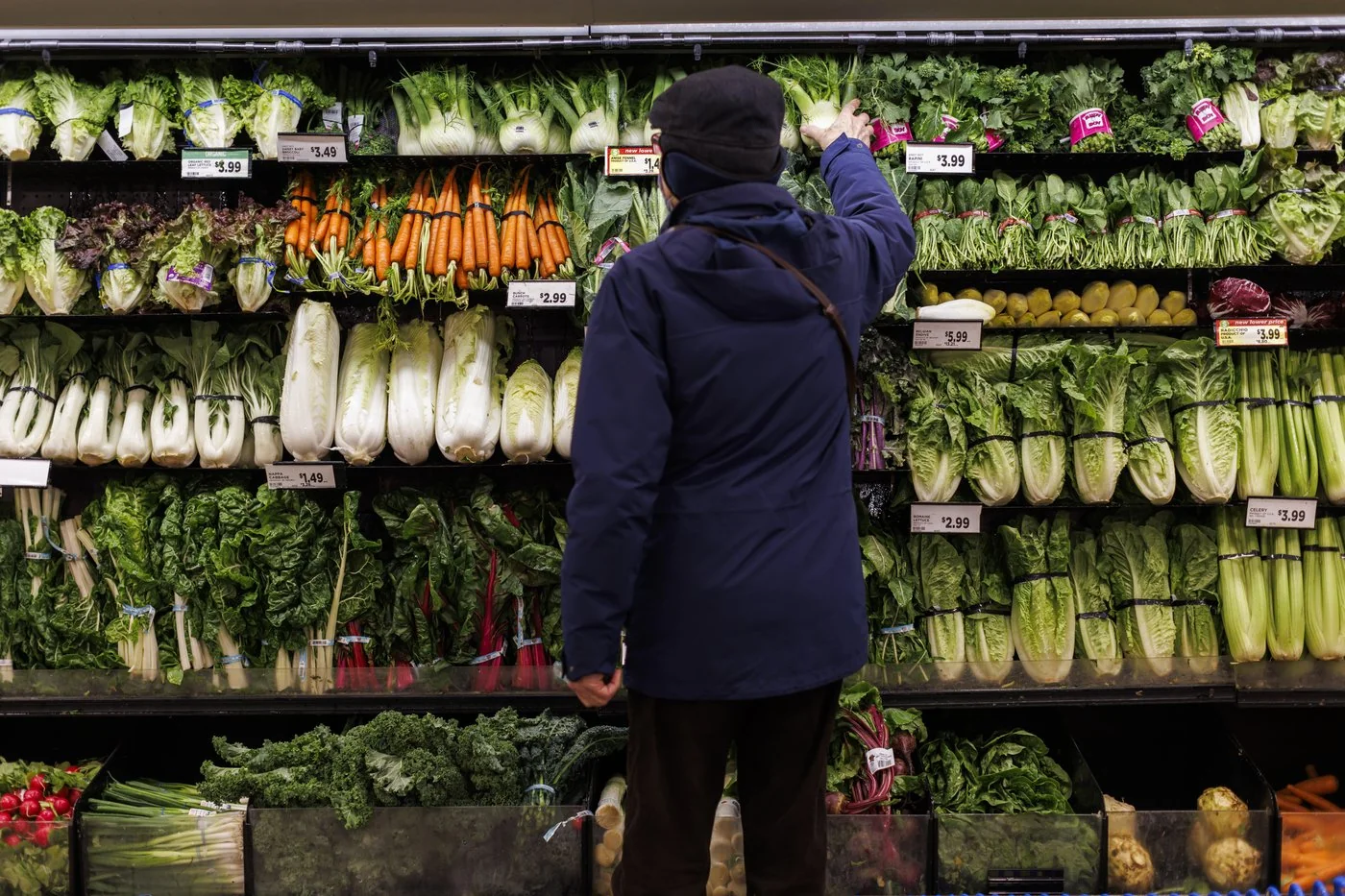
A customer shops in the produce section at a Metro grocery store in Toronto on Friday, Feb. 2, 2024. Food prices in Canada are likely to increase by three to five per cent in 2025, according to a newly released report, but wild cards like climate change and Donald Trump could have unforeseen impacts. THE CANADIAN PRESS/Cole BurstonA customer shops in the produce section at a Metro grocery store in Toronto on Friday, Feb. 2, 2024. Food prices in Canada are likely to increase by three to five per cent in 2025, according to a newly released report, but wild cards like climate change and Donald Trump could have unforeseen impacts. THE CANADIAN PRESS/Cole Burston

Middle East instability pressures regional food security

While the global index rose slightly, the impact is disproportionately concentrated in the Middle East and North Africa. Conflict-driven disruptions to Red Sea shipping routes have forced vessels to take longer, more expensive paths around Africa, delaying the arrival of essential grains and fertilizers.

Current UN estimates suggest that continued price volatility could push an additional 5 million people in the Arab world into food insecurity. The convergence of local currency depreciation and rising import costs has made basic staples less affordable in nations that rely heavily on international markets for wheat and maize.
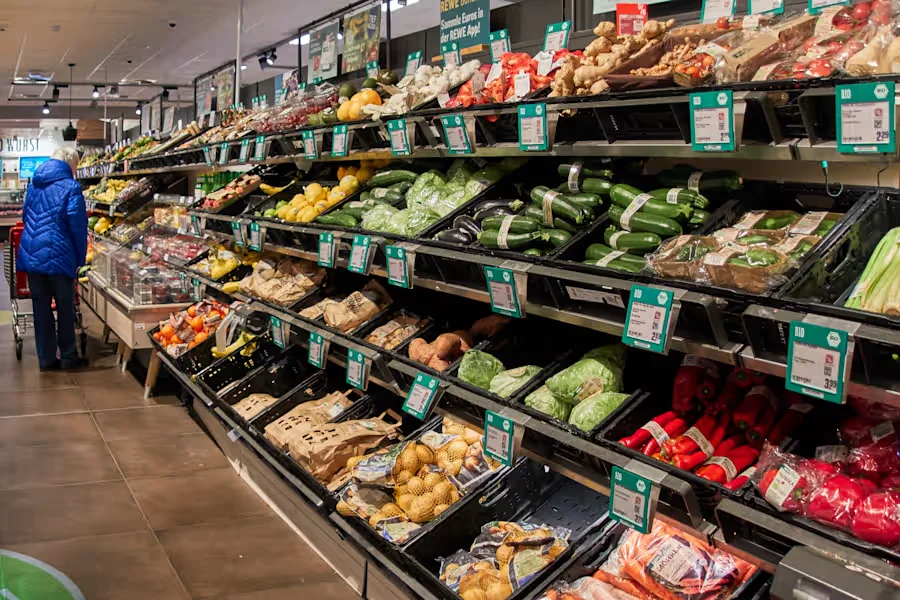
Vegetables in a super market are pictured in Wehrheim near Frankfurt, Germany, Tuesday, March 31, 2026. (AP Photo/Michael Probst)Vegetables in a super market are pictured in Wehrheim near Frankfurt, Germany, Tuesday, March 31, 2026. (AP Photo/Michael Probst)

Cereal and sugar prices provide a partial buffer against spikes

The overall increase in the index was moderated by continued downward pressure on cereal and sugar prices. International wheat prices fell for the third month in a row, supported by strong competition among exporters and an unexpected increase in crop estimates for the United States and Europe.

Similarly, sugar prices declined by nearly 5.4% in March. This drop followed reports of improved harvest prospects in Brazil and a higher-than-anticipated production volume from India. These commodity-specific surpluses have prevented a more drastic jump in the global index, even as geopolitical risks remain elevated.
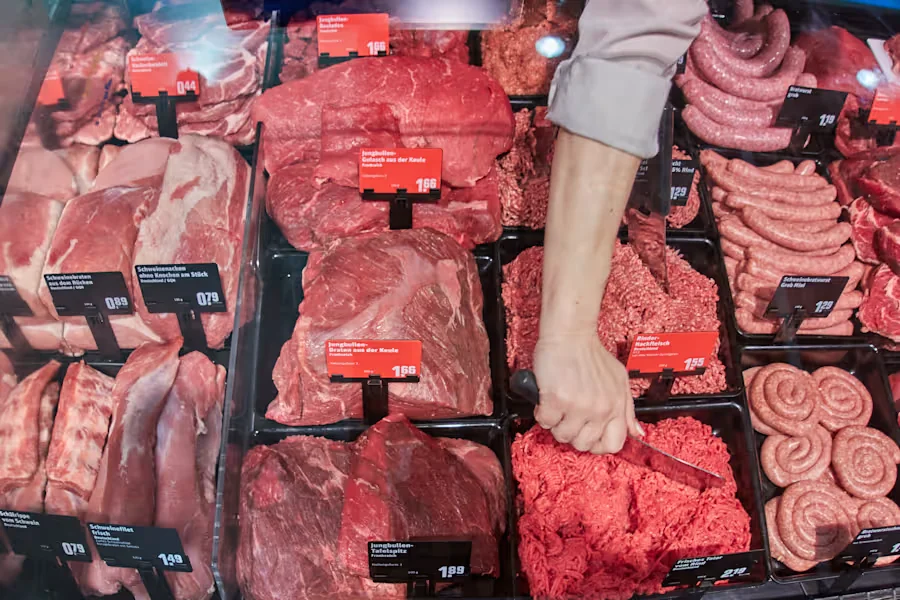
A woman works at the meat counter of a super market in Wehrheim near Frankfurt, Germany, Tuesday, March 31, 2026. (AP Photo/Michael Probst)A woman works at the meat counter of a super market in Wehrheim near Frankfurt, Germany, Tuesday, March 31, 2026. (AP Photo/Michael Probst)

Operational constraints remain for global food producers

Despite the stabilization of some crop prices, the cost of "farm-to-fork" delivery remains high. Farmers face sustained costs for nitrogen-based fertilizers, which are highly sensitive to natural gas price fluctuations.

The FAO’s report indicates that while global food supplies remain relatively ample for now, the primary risk to long-term stability is no longer just crop yield, but the fragility of the energy and transport infrastructure required to move those supplies through active conflict zones. Industry analysts are now monitoring whether these logistics-driven costs will lead to a sustained inflationary period or remain a short-term reaction to regional volatility.

Comments (0)

Sort by

Please login to comment

Sign in to share your thoughts and connect with the community

Loading...

Related news

Recent data reveals a surprising winner in vehicle durability. Learn why standard hybrids are outperforming both electric and gasoline cars in long-term reliability.

Hybrid vs. Electric vs. Gas Car Reliability Explained

68 views•4 min
As Apple marks 50 years, we examine the cultural and technical shifts that turned a garage startup into a $3.5 trillion titan through eight core product leaps.

Apple at 50: From Garage Startup to $3.5 Trillion Technology Pillar

150 views•3 min
Sony increases PlayStation 5 prices by $100, citing AI-driven memory demand and geopolitical instability. The hike affects PS5, PS5 Pro, and PlayStation Portal.

Sony Hikes PlayStation 5 Prices by $100 Amid Surging Memory Costs

78 views•3 min
An analysis of why the 2026 labor market is failing new graduates, looking at structural hiring slumps, AI displacement, and the collapse of entry-level roles.

Why 2026 College Graduates Feel Betrayed by the Economy

197 views•5 min
Meta has initiated targeted layoffs across several divisions, including Reality Labs and Instagram, as it pivots its capital allocation toward AI development.

Meta Cuts Jobs Across Reality Labs to Fund AI Pivot

234 views•2 min
Estée Lauder confirms merger talks with Spanish giant Puig. The $40B deal aims to challenge L’Oréal’s dominance in the high-growth prestige fragrance sector.

Estée Lauder and Puig Merger: A $40B Fragrance Gamble

129 views•5 min
The Trump administration reaches a $1 billion settlement with TotalEnergies to cancel East Coast offshore wind projects in favor of Texas LNG and Gulf oil drilling.

Trump Oil Pivot: TotalEnergies Replaces Wind with $1B Fossil Deal

62 views•5 min
The 2026 Iran war and Strait of Hormuz closure trigger record oil price spikes and supply chain collapse. Analyze the systemic economic impact and fiscal risks.

Iran War 2026: Global Economic Fallout & Market Risks

107 views•4 min
Eli Lilly’s retatrutide meets all primary endpoints in a Phase 3 trial for type 2 diabetes. Discover how this triple-agonist drug compares to Mounjaro and Ozempic.

Eli Lilly Retatrutide Phase 3 Diabetes Trial Results

56 views•4 min
NVIDIA launches NemoClaw at GTC 2026, providing a secure infrastructure layer for autonomous OpenClaw agents on RTX PCs, DGX Spark, and cloud platforms.

NVIDIA NemoClaw: Securing the OpenClaw Agent Ecosystem

174 views•5 min
Meta explores 20% headcount reductions while pivoting to advanced AI infrastructure. Analysis of Mark Zuckerberg's efficiency drive and Big Tech labor shifts.

Meta Staff Reductions and AI Strategy: Impact & Analysis

67 views•4 min
Vineyard Wind 1 finishes construction in 2026 despite federal stop-work orders. Analyze the legal battles and "national security" freezes on US offshore wind.

Vineyard Wind 1 Completion: First Major Farm Under Trump

91 views•4 min
NVIDIA unveils Nemotron 3 Super, a 120B parameter model optimized for Blackwell, delivering 5x higher throughput to solve the "long thinking" latency in agentic AI.

NVIDIA Nemotron 3 Super: 5x Speed for Agentic AI

117 views•4 min
Record-high California fuel prices are reshaping the EV market. Analyze the infrastructure strain, rebate shifts, and long-term economic impacts on buyers.

California Gas Price Spikes Accelerate EV Market Shift

49 views•4 min
AI-driven white-collar layoffs are flooding the blue-collar labor market. Explore how occupational crowding and declining consumer demand threaten global stability.

AI Office Job Displacement: The Blue-Collar Economic Ripple

91 views•4 min
Lowe’s CEO Marvin Ellison warns of a pressured housing market even as Q4 revenue rose 10.9% to $20.58 billion, driven by professional contractor demand.

Lowe’s Q4 Sales Jump 10% Despite Housing Market Pressure

95 views•3 min
Public sentiment toward the AI boom remains cautious compared to the optimism of the 1990s dot-com era, as concerns over job security and ethics rise.

AI Boom Faces Public Skepticism Unlike Dot-Com Era

107 views•3 min
Nobel laureate Joseph Stiglitz warns of prolonged US economic decline, citing institutional instability, inequality, and flawed trade policies in early 2026.

Stiglitz Forecast: 3 Reasons US Economy Will Weaken

106 views•3 min
Steel and aluminum stocks fell Friday following reports that the Trump administration may scale back tariffs, providing relief to automakers and consumers.

Steel, Aluminum Stocks Drop on Tariff Pullback Reports

101 views•4 min
Microsoft's February 2026 update fixes 59 vulnerabilities, including six zero-days actively used by hackers to bypass security and escalate system privileges.

Microsoft Issues Urgent Fixes for 59 Vulnerabilities and Six Active Zero-Days

138 views•4 min