

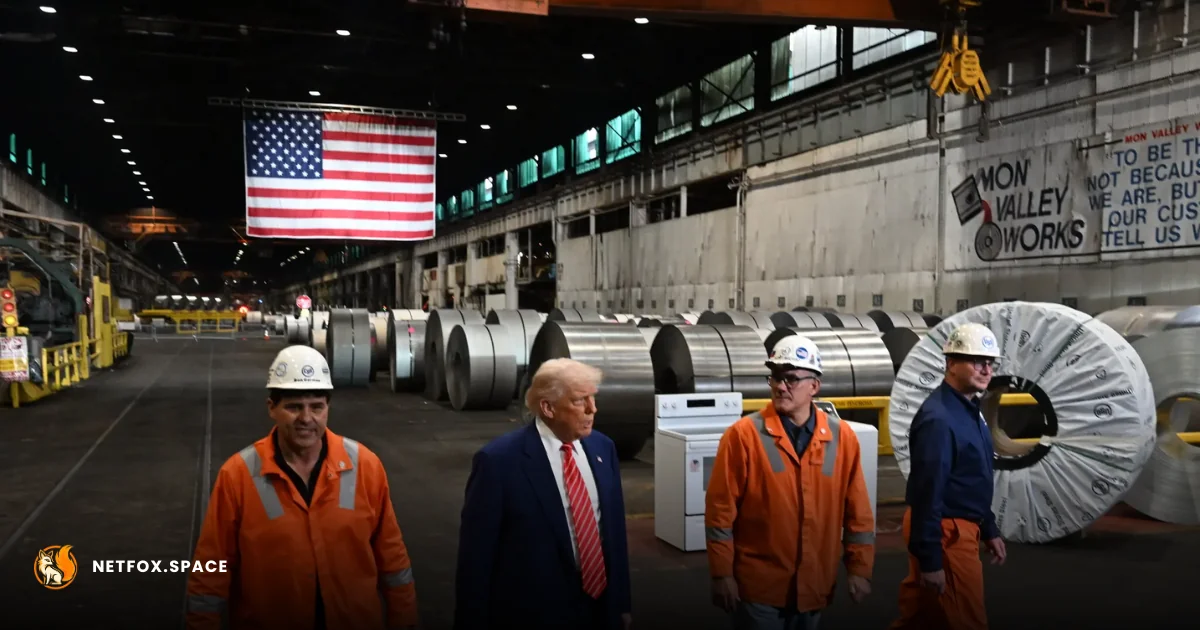
Markets react to potential shift in trade protectionism
Steel and aluminum producers saw their share prices tumble on Friday, February 13, 2026, following reports that the Donald Trump administration is considering a significant narrowing of its aggressive tariff policies. The shift, first reported by the Financial Times, suggests that the White House is reviewing the current list of metals subject to levies as high as 50% with an eye toward exempting specific products. For domestic metal giants, the news signaled an end to the "protected" pricing environment that has bolstered their margins since the tariffs were expanded in mid-2025.
Investors moved quickly to offload shares in the metals sector, with Century Aluminum plummeting by 13.3% in intraday trading. Other major players followed, as Cleveland-Cliffs Inc. dropped 7.6%, while Nucor Corp. and Alcoa Corporation each shed approximately 6%. The selloff reflects growing fears that a rollback will invite a surge of cheaper foreign competition, primarily from Europe and Canada, which have been largely sidelined by the restrictive trade barriers.
Consumer pressure and midterms drive policy reassessment
The reported pivot comes amid an escalating "affordability crisis" that has seen the cost of canned foods, beverages, and household appliances spike over the last year. Officials within the Department of Commerce and the U.S. Trade Representative’s office have reportedly expressed concern that broad-based tariffs are hurting American consumers more than the intended foreign targets. With the 2026 midterm elections looming in November, the administration is facing bipartisan pressure to lower the "inflationary tax" created by high input costs.
Internal reports from the Federal Reserve Bank of New York suggest that U.S. importers and consumers are currently shouldering the vast majority of the tariff costs. Rather than maintaining the current broad-brush approach, the administration is expected to transition toward more "targeted national security probes" into specific goods. This would allow the government to protect critical industrial sectors while providing relief to manufacturers who rely on specialized metals that cannot be efficiently sourced domestically.
Automakers and manufacturers anticipate cost relief
While metal producers suffered, the automotive and consumer goods sectors experienced a notable rally. Ford Motor Company and General Motors saw their stocks rise by 2% and 1.4%, respectively, as investors anticipated a reduction in the multi-billion dollar tariff headwinds that have plagued their 2026 profit forecasts. Similarly, Campbell Soup Company and auto-parts retailers like AutoZone posted gains, as lower raw material costs are expected to alleviate pressure on their supply chains.
| Company | Sector | Stock Change (Intraday) | Market Sentiment |
|---|---|---|---|
| Century Aluminum | Aluminum Producer | -13.3% | Bearish: Loss of protection |
| Cleveland-Cliffs | Steel Producer | -7.6% | Bearish: Increased competition |
| Nucor | Steel Producer | -6.2% | Bearish: Pricing power decline |
| Ford Motor Co. | Automotive | +2.0% | Bullish: Lower input costs |
| Campbell Soup | Consumer Goods | +1.6% | Bullish: Cheaper packaging |
White House response and the "TACO trade" phenomenon
The market reaction was partially tempered late in the day after Peter Navarro, a senior counselor to the President, dismissed the reports as "fake news" on social media. Despite the official denial, the "TACO trade"—an acronym for "Trump Always Chickens Out" popularized by Wall Street analysts—remained in full swing. This pattern describes the tendency for the administration to lead with maximalist trade threats only to negotiate them down once the economic or political cost becomes too high.
A White House official later clarified that while no final decision has been reached, the administration is "constantly reviewing" trade tools to ensure they support American workers without unnecessarily burdening the middle class. This suggests that while a full repeal is unlikely, a more surgical application of the Section 232 tariffs is the probable path forward for the remainder of the year.
Beyond the initial shock: The future of U.S. industrial policy
The long-term impact of this potential pullback extends beyond immediate stock fluctuations. It marks a critical test for the "re-shoring" movement; if the administration removes the tariff shield, domestic steel and aluminum mills may be forced to pause the $10 billion in new investments committed since 2025. Conversely, if the rollback successfully lowers consumer prices without hollowing out the industrial base, it could serve as a blueprint for a more sustainable, "managed" form of protectionism. The coming weeks will reveal whether the administration can strike a balance that protects both the furnace workers in Pennsylvania and the car buyers in Michigan.
Comments (0)
Please login to comment
Sign in to share your thoughts and connect with the community
Loading...