

Erosion of Institutional Stability and the Rule of Law
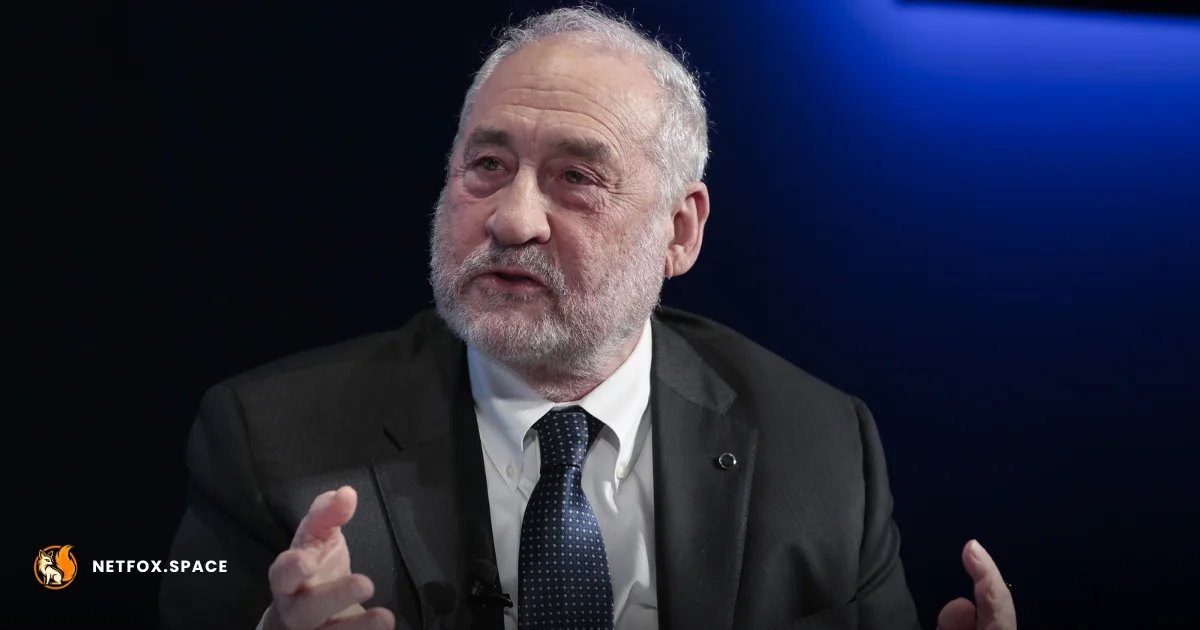
Nobel-winning economist Joseph Stiglitz issued a stark warning on February 20, 2026, suggesting that the United States is entering a period of prolonged economic malaise. He argues that the primary driver of this decline is the systemic erosion of the rule of law and institutional stability.
According to Stiglitz, a functional economy relies on predictable legal frameworks and a commitment to scientific and technological advancement. He noted that the current political climate, characterized by deep division and attacks on independent institutions, undermines the "comparative advantage" the U.S. has held for decades.
Rising Inequality and the Collapse of Aggregate Demand
The second pillar of Stiglitz’s pessimistic outlook focuses on the widening wealth gap. He asserts that the U.S. economy cannot sustain growth when the benefits of productivity are concentrated at the extreme top of the social hierarchy.
This concentration leads to a significant drop in "aggregate demand," as lower- and middle-income households—who typically drive consumption—face stagnant wages and rising costs. Stiglitz maintains that without aggressive redistribution and investment in public goods like education and healthcare, the domestic market will continue to contract.
| Economic Factor | Current Trend (2026) | Stiglitz's Projected Impact |
|---|---|---|
| Manufacturing Jobs | Focus on "Quick Fix" Tariffs | Capped at 8-9% of total GDP |
| Income Inequality | Highest level since 1928 | Collapse of long-term consumer demand |
| Institutional Trust | Declining in Federal Agencies | Reduced foreign investment and "soft power" |
| Federal Debt | Accelerating via Tax Cuts | Limited "fiscal space" for next recession |
The Long-Term Fallout of Protectionist Trade Policies
The third factor cited by Stiglitz is the failure of modern industrial policy, particularly the reliance on protectionist tariffs to revive legacy industries. He argues that the Trump administration's focus on returning to a 1950s-style manufacturing model is a fundamental misunderstanding of the modern global economy.
Advanced manufacturing today requires fewer workers and more high-tech integration. By prioritizing trade wars over long-term strategic planning, Stiglitz believes the U.S. is alienating reliable international partners and ceding ground to competitors like China, which prioritize multi-decade economic roadmaps.
The move follows a period of heightened market volatility where investors have become increasingly wary of U.S. Treasuries as a "safe haven." As international "soft power" wanes and domestic social friction increases, the question is no longer whether a slowdown will occur, but whether the current political system possesses the structural integrity to manage the transition.
References:
-
Business Insider
-
The Guardian
-
Foreign Correspondents' Club Hong Kong
Comments (0)
Please login to comment
Sign in to share your thoughts and connect with the community
Loading...