

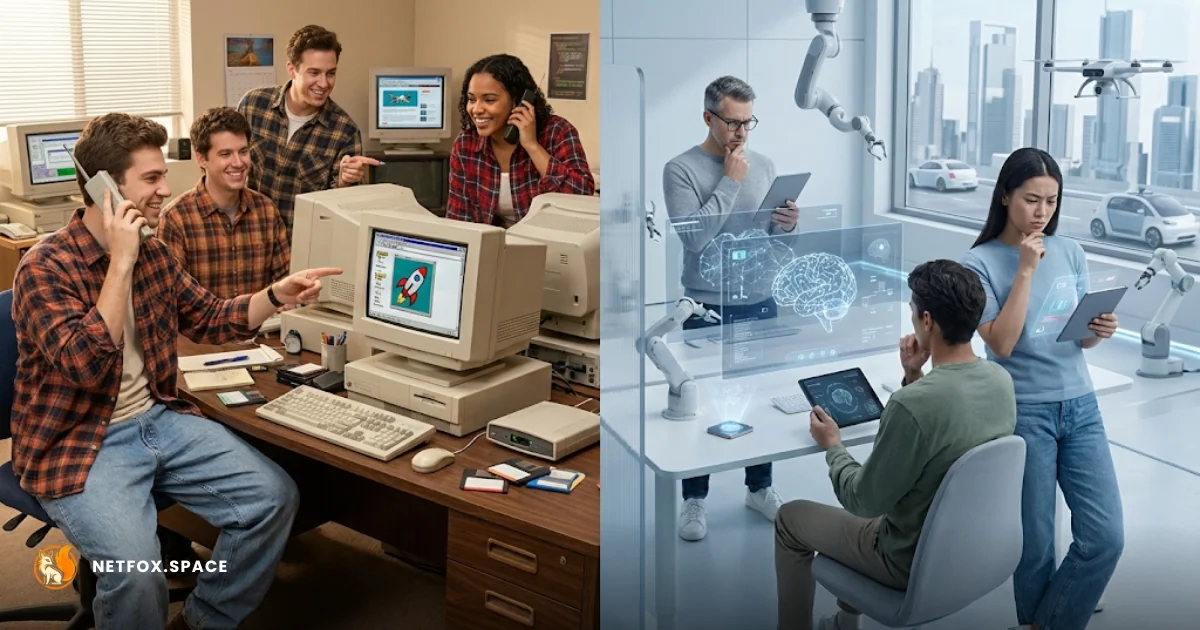
Historical Optimism Fades Amid Automation Fears
The 1990s dot-com boom was characterized by a sense of democratic empowerment, as the internet promised to connect the world and expand access to information. In contrast, the current acceleration of Artificial Intelligence (AI) is frequently met with apprehension regarding its impact on the labor market and creative industries.
Data suggests that while the internet was viewed as a tool for human enhancement, many consumers perceive AI as a potential replacement for human agency. This fundamental shift in perception has created a friction point for tech giants like Microsoft, Google, and OpenAI as they attempt to integrate these tools into daily life.
Economic Promises vs. Tangible Consumer Utility
During the early days of the web, the "killer apps"—such as email and e-commerce—offered immediate, visible benefits to the average user. The current AI cycle, dominated by Large Language Models (LLMs), has struggled to move beyond the "novelty" phase for much of the general public.
Investors have poured billions into the sector, yet the disconnect between Wall Street valuations and consumer satisfaction remains wide. Critics argue that while the dot-com era built the infrastructure of the modern world, the AI boom is currently focused on optimizing backend processes that do not always translate to a better user experience.
| Feature | Dot-Com Era (1995-2000) | AI Boom (2022-Present) |
|---|---|---|
| Primary Sentiment | Boundless Optimism | Cautious Skepticism |
| Core Utility | Global Connectivity | Content Generation / Automation |
| Labor Perception | Job Creation / New Industries | Automation Risk / Displacement |
| Public Interaction | Active Participation | Passive Consumption / Output |
Institutional Trust and Data Ethics
A significant factor in the differing receptions is the eroded level of trust in Silicon Valley institutions compared to thirty years ago. The dot-com boom occurred before the era of mass data harvesting and social media polarization, allowing the public to view tech founders as visionary underdogs.
Today, the "move fast and break things" ethos is viewed through a lens of skepticism regarding Intellectual Property and data privacy. Legal challenges from artists, writers, and software developers have framed the AI boom as an extraction-based economy rather than a participatory one.
Structural Risks in the Generative Economy
The long-term viability of the AI sector depends on its ability to overcome this "enthusiasm gap" and prove its necessity beyond corporate efficiency. If public resistance continues to manifest as regulatory pressure or consumer boycotts, the industry may face a different trajectory than its predecessor.
The broader implication lies in whether AI can evolve into a collaborative tool that restores public trust, or if it will remain a divisive technology that heightens social and economic anxieties.
Comments (0)
Please login to comment
Sign in to share your thoughts and connect with the community
Loading...