

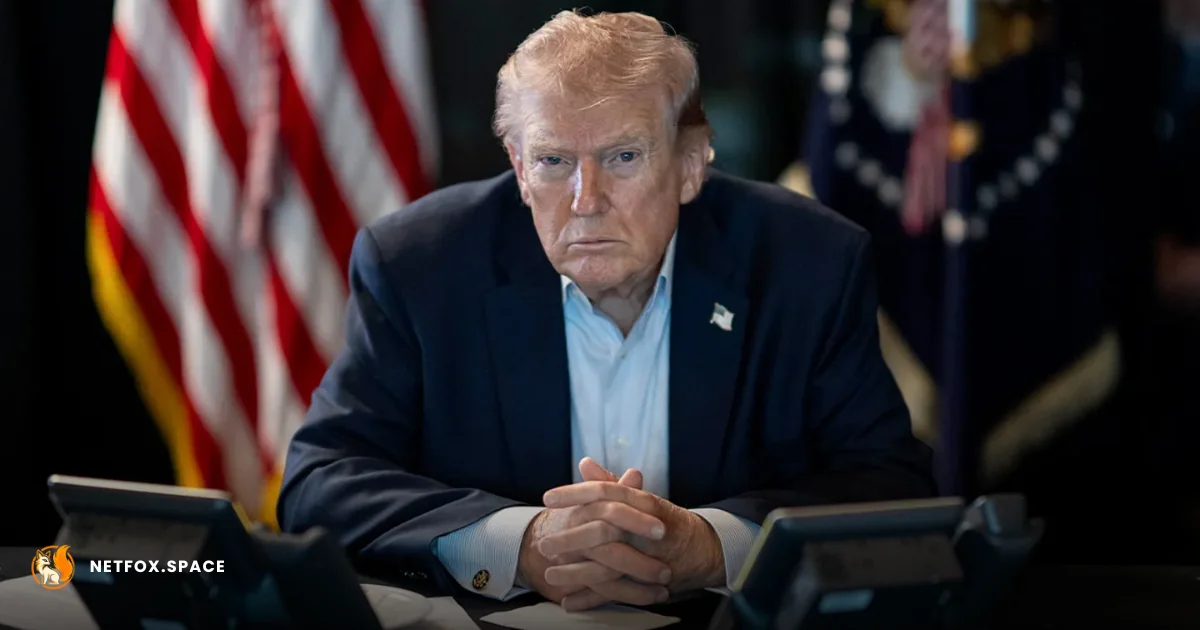
Core Event: The "Approval" Mandate and the Succession Crisis
U.S. President Donald Trump has issued a direct ultimatum to the Islamic Republic’s clerical establishment, stating that any successor to the recently assassinated Supreme Leader Ali Khamenei will "not last long" without explicit Washington approval. Speaking from Air Force One on March 7, 2026, the President framed the ongoing military campaign, Operation Epic Fury, as a decisive mechanism to ensure the next Iranian leader is "acceptable" to U.S. and Israeli interests.
The warning comes as Iran’s Assembly of Experts the 88-member clerical body responsible for leadership selection scrambles to fill the vacuum. While reports suggest Mojtaba Khamenei, the son of the late leader, is the frontrunner, Donald Trump has already dismissed him as a "lightweight" and "unacceptable." This rhetoric transforms a domestic religious transition into a direct theater of U.S. foreign policy, signaling that the White House intends to treat the selection process as a condition for de-escalation.
Defiance in Tehran: The "Dream" of Surrender
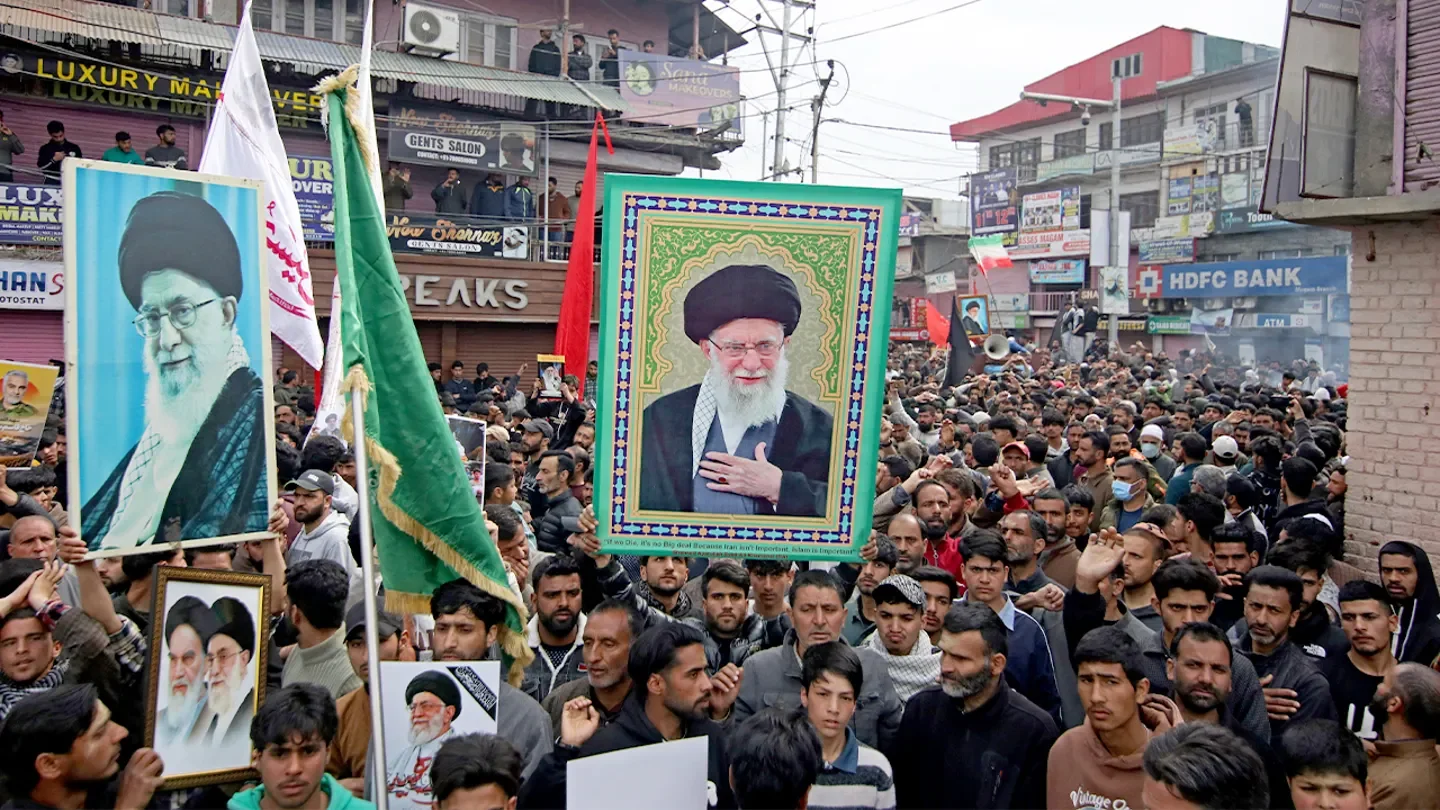 Iranians carry pictures of Ayatollah Ali Khamenei as they march in a protest rally on the fourth day of mourning in Magam, Jammu and Kashmir, on March 4, 2026. (Faisal Khan/Anadolu/Getty Images)
Iranian President Masoud Pezeshkian responded to the U.S. demand for "unconditional surrender" by labeling it a "dream" that Washington would "take to its grave." Despite the heavy bombardment of infrastructure, including Mehrabad International Airport, the presidency in Tehran has maintained a posture of "resistance as long as it takes."
In a notable shift, Masoud Pezeshkian issued a rare apology to neighboring Gulf states for recent Iranian retaliatory strikes, signaling an attempt to decouple regional neighbors from the U.S.-Israeli coalition. However, this diplomatic overture was met with a renewed threat from the White House, which claimed the apology was merely a symptom of "mounting U.S. military pressure" and warned of "complete destruction" if the regime does not capitulate.
The External Veto: A Departure from Historical Regime Change
What competitors are not discussing is the shift from "regime change" to "regime management." Unlike the 2003 invasion of Iraq, where the U.S. sought to dismantle the state, the 2026 strategy appears to involve decapitating the leadership while demanding a "certified" replacement from within the existing structure. By asserting a veto over the Assembly of Experts, Donald Trump is effectively attempting to install a U.S.-vetted "Supreme Leader," a move that lacks modern precedent and violates the traditional Westphalian sovereignty the U.S. has historically, if selectively, defended.
This strategy carries high systemic risk. By publicly blackballing candidates like Mojtaba Khamenei or Ali Larijani, the U.S. may inadvertently consolidate hardline support around them, as any candidate perceived as "U.S.-approved" would face immediate domestic illegitimacy.
Sector Implication: Global Energy and The "War of Bases"
The conflict has moved beyond a bilateral skirmish into a systemic threat to the energy sector and regional logistics. The Islamic Revolutionary Guard Corps (IRGC) has clarified that while it respects the sovereignty of neighbors, any base hosting U.S. assets specifically in Qatar, Bahrain, and the UAE is a "legitimate target."
| Metric | Impact Level | Sector Detail |
|---|---|---|
| Crude Oil Prices | High | Surge due to threats in the Strait of Hormuz. |
| Aviation | Critical | Widespread cancellations of flights through Persian Gulf airspace. |
| Regional Defense | High | Deployment of U.S. missile launchers at Al Udeid (Qatar). |
| Financial Markets | Moderate | Global slump in tech and manufacturing stocks linked to energy. |
Structural Shift: The End of the "Special Relationship" Consensus
The current war has exposed a widening rift in the UK-US Special Relationship. While the Trump administration demands total alignment, Downing Street, led by Prime Minister Keir Starmer, has shown hesitation in committing carrier groups to the conflict. This hesitation has drawn sharp criticism from the White House, with the President noting that the U.S. "will remember" the lack of immediate support. This suggests a long-term structural shift where U.S. military operations are no longer seeking broad multilateral consensus, but rather demanding "unconditional" regional and allied participation.
Comments (0)
Please login to comment
Sign in to share your thoughts and connect with the community
Loading...