
Apple M5 Pro MacBook Pro: AI Performance and Fusion Design

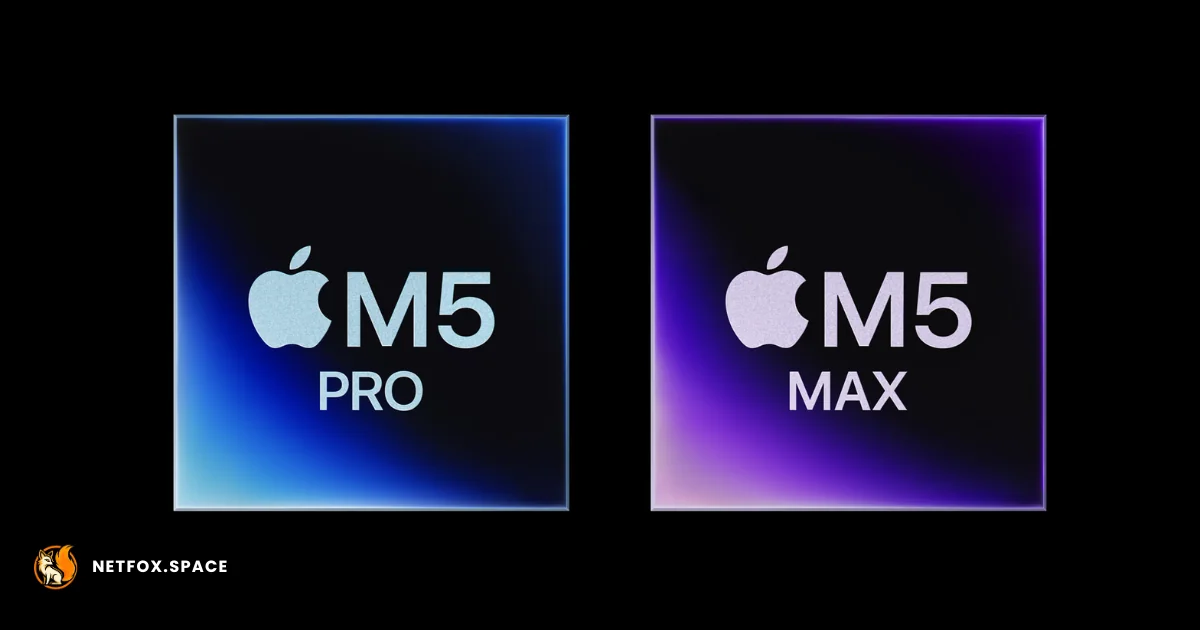
M5 Silicon Debuts with Fusion Architecture in Cupertino
Apple announced the latest iteration of the 14-inch and 16-inch MacBook Pro on March 4, 2026, centering the update on the M5 Pro and M5 Max processors. These chips utilize a new Fusion Architecture, an engineering approach that combines two dies into a single system on a chip (SoC) to maximize multithreaded performance. John Ternus, Apple’s Senior Vice President of Hardware Engineering, positioned the release as a fundamental shift for the semiconductor industry, claiming the hardware now features the world’s fastest CPU core.
The new models, available for pre-order immediately in the United States and 32 other regions, see a significant bump in baseline specifications. The 14-inch MacBook Pro with M5 Pro now starts with 1TB of storage, while the M5 Max variant begins at 2TB. This storage expansion supports a massive increase in data throughput, with new SSDs capable of reaching 14.5GB/s read/write speeds, roughly doubling the performance of the previous generation.
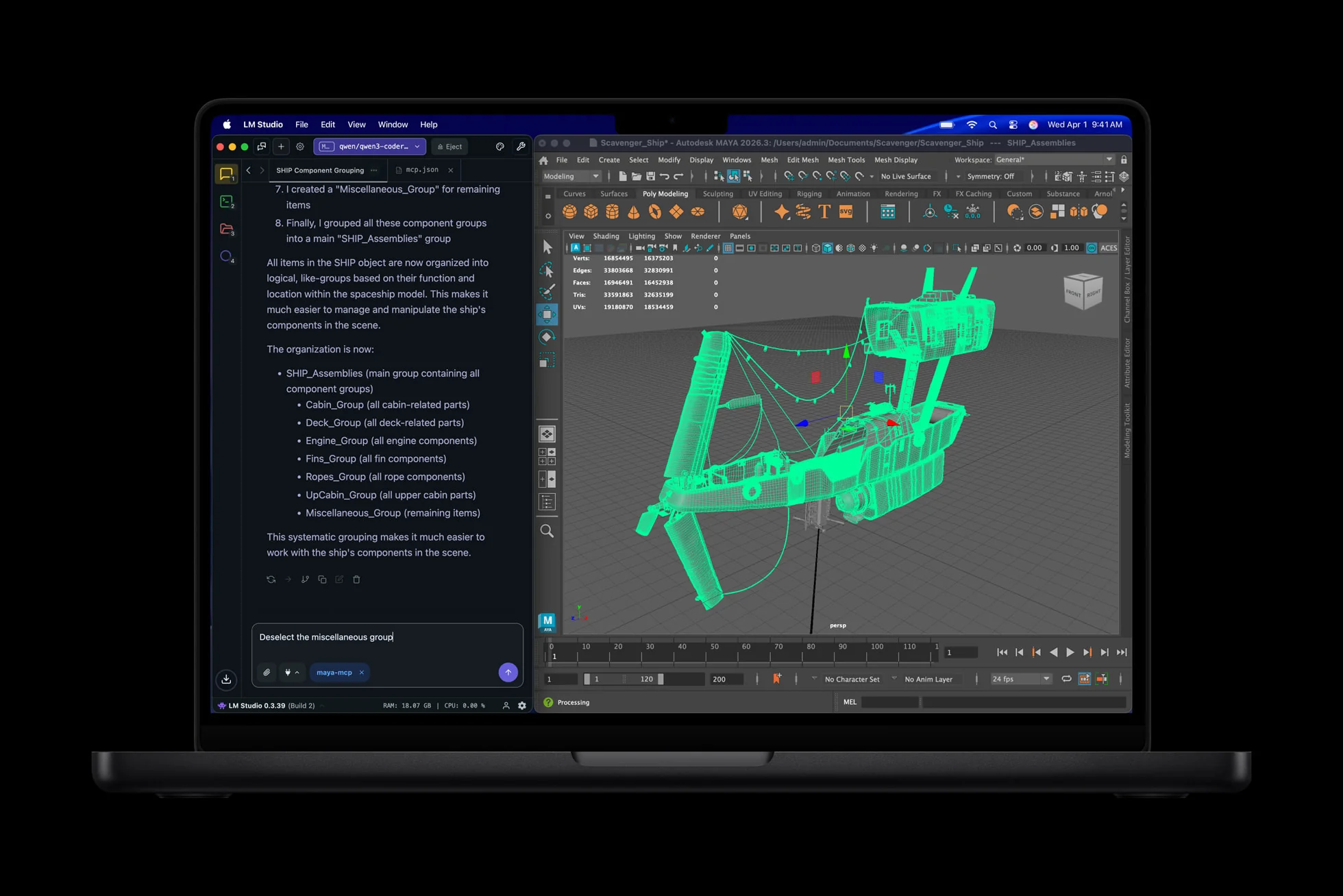 On the new MacBook Pro, LLMs will run even faster in popular apps like LM Studio.
Decentralized AI: The Shift to Per-Core Neural Accelerators
A primary technical departure in the M5 series is the integration of a Neural Accelerator within every single GPU core. Traditionally, AI tasks were offloaded to a dedicated, centralized Neural Engine; however, this new distributed topology allows for parallelized AI processing across the entire graphics pipeline. This shift results in LLM prompt processing that is up to 4x faster than the M4 Pro and nearly 7x faster than the original M1 Pro.
This hardware acceleration is paired with a significant increase in unified memory bandwidth. The M5 Pro supports up to 64GB of memory at 307GB/s, while the M5 Max reaches 128GB of memory at 614GB/s. These specifications are specifically tuned for researchers and developers training custom AI models locally rather than relying on cloud-based GPU clusters, marking a strategic move to keep sensitive data on-device.
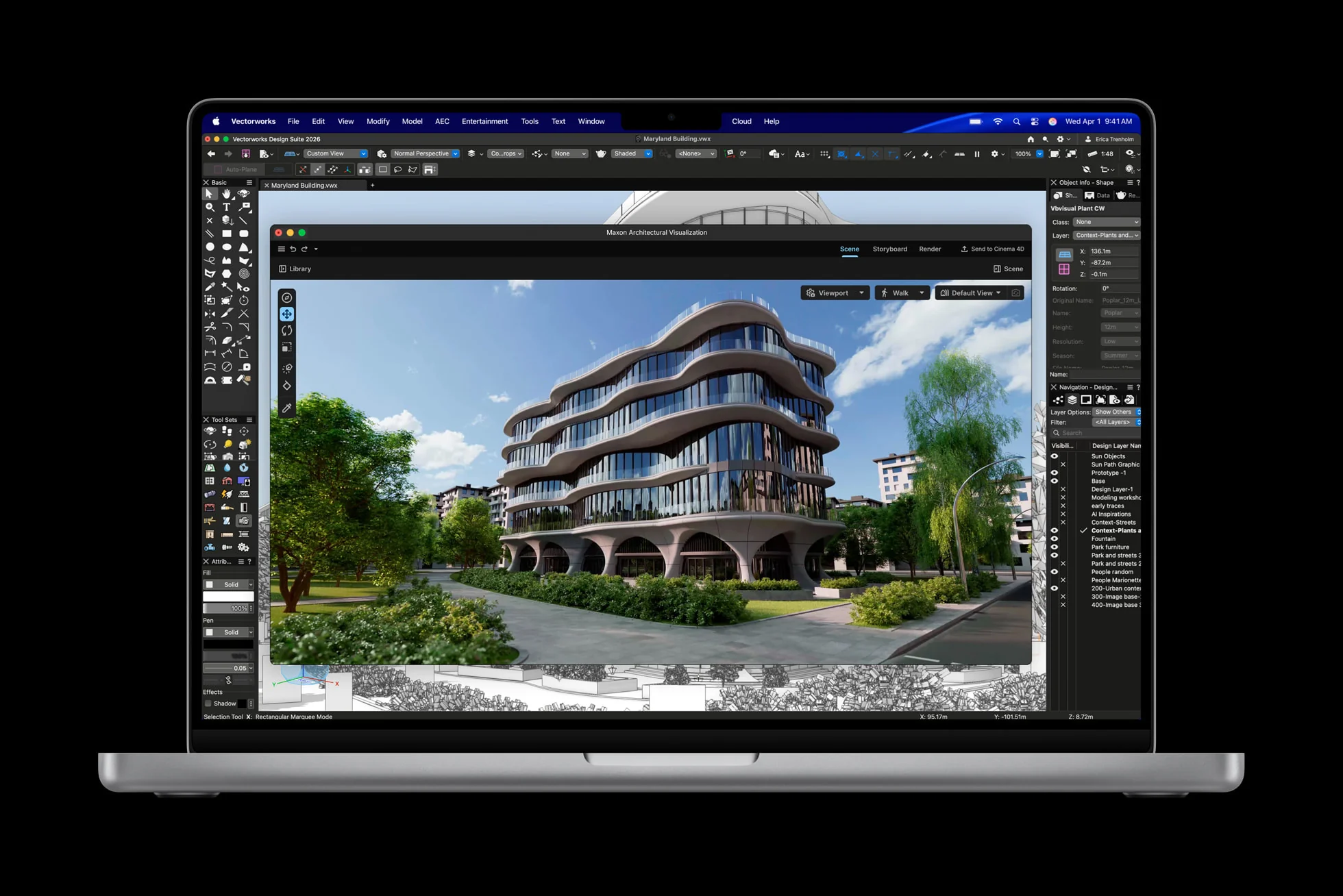 With the power of M5 Pro and M5 Max on MacBook Pro, AI researchers and developers can train custom models locally, and creative professionals are able to leverage AI-powered tools for video editing, music production, and design work.
Comparative Performance Metrics: M5 Pro vs. Previous Generations
| Feature | M1 Pro (Baseline) | M4 Pro (Previous) | M5 Pro (New) |
|---|---|---|---|
| AI Prompt Processing | 1x (Base) | ~1.8x | 6.9x |
| SSD Max Speed | ~7.4 GB/s | ~7.5 GB/s | 14.5 GB/s |
| Max Battery Life | 21 Hours | 22 Hours | 24 Hours |
| Standard Storage | 512 GB | 512 GB | 1 TB |
| Wireless Protocol | Wi-Fi 6 | Wi-Fi 6E | Wi-Fi 7 |
 The new MacBook Pro can drive up to two high-resolution external displays with M5 Pro, and up to four high-resolution displays with M5 Max, providing the flexibility to create expansive workspaces.
Hidden Implications: High-Speed I/O as the AI Bottleneck
While mainstream coverage focuses on CPU "super cores," the true differentiator for the 2026 MacBook Pro is the elimination of the I/O bottleneck. By reaching 14.5GB/s SSD speeds, Apple is addressing a specific technical constraint in AI workflows: the "loading" time of large model weights into active memory. In previous iterations, the processor often sat idle while waiting for data to move from storage to the unified memory pool.
Furthermore, the introduction of the Apple N1 chip marks the company's first internal wireless networking silicon to support Wi-Fi 7 and Bluetooth 6. This reduces dependence on third-party vendors like Broadcom and allows for tighter integration with the macOS Tahoe ecosystem. This vertical integration ensures that high-speed data transfers—whether over the air or via the three Thunderbolt 5 ports—can maintain the low latency required for real-time AI "Live Activities" and multi-device Continuity features.
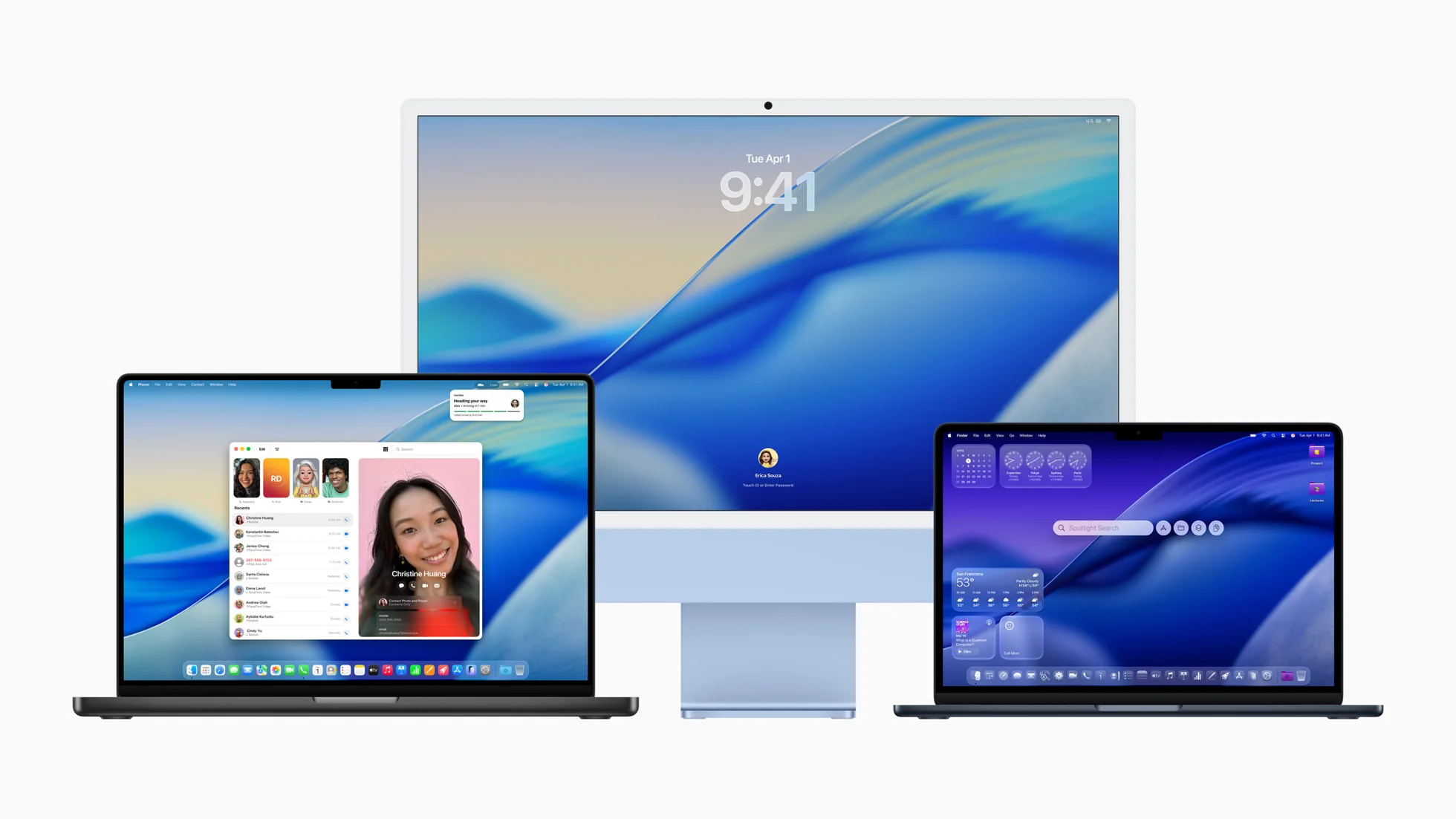 Apple is moving away from simple cloud-assisted queries toward a model where the OS itself is an "AI Agent" running constantly in the background.
Software Synergy and the macOS Tahoe Environment
The hardware release coincides with the deployment of macOS Tahoe, which introduces a "Liquid Glass" design aesthetic and deeper Apple Intelligence integration. The OS utilizes the M5’s hardware-level Neural Accelerators to power a new Live Translation system that functions across FaceTime and the native Phone app. This indicates that Apple is moving away from simple cloud-assisted queries toward a model where the OS itself is an "AI Agent" running constantly in the background.
Professional creative suites, such as Blackmagic DaVinci Resolve Studio and Maxon Redshift, have been optimized for the M5's new GPU architecture. Benchmarks provided by the consumer electronics sector suggest that 3D rendering is now up to 5.4x faster than the M1 Max. These gains are achieved while maintaining a 24-hour battery life, a metric that continues to challenge the Windows laptop ecosystem as it struggles with the efficiency-to-performance ratio of ARM-based designs.
Structural Challenges in the Pro Market
As Apple pushes the entry price of the 16-inch model to $2,699, the "Pro" lineup is increasingly diverging from the general consumer market. The decision to make 1TB the storage floor suggests that the company no longer views the MacBook Pro as a general-purpose machine, but as a specialized workstation for the biotech sector, software engineering, and high-end visual effects. This aggressive hardware scaling creates a widening gap between the Air and Pro lines, potentially alienating mid-tier creative professionals who may find the "AI-first" overhead unnecessary for traditional 2D workflows.
The reliance on Fusion Architecture also signals a looming ceiling for monolithic chip design. As Apple hits the physical limits of how many transistors can be packed onto a single die, the shift toward multi-die interconnects suggests that future performance gains will rely more on sophisticated packaging and thermal management than on simple node shrinks. This transition introduces long-term risks regarding manufacturing yields and the repairability of increasingly complex, interconnected silicon.
Comments (0)
Please login to comment
Sign in to share your thoughts and connect with the community
Loading...