

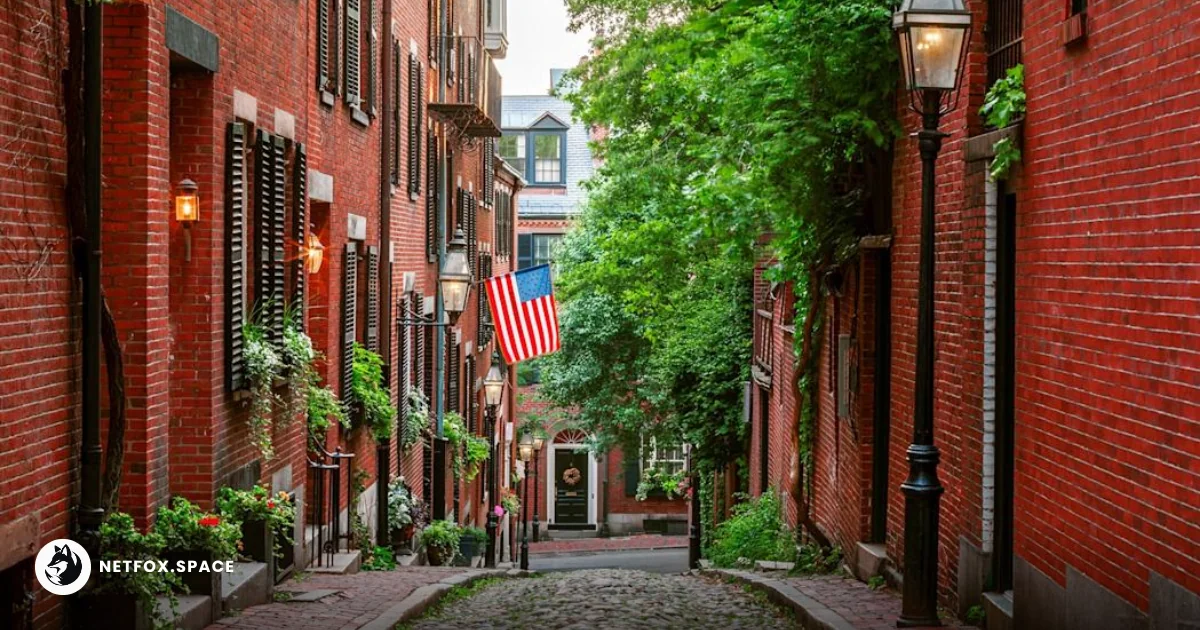
Colonial Foundations and the Mediterranean Corridor
The pursuit of European aesthetics within the United States often begins with the oldest continuously inhabited European-established settlement: St. Augustine, Florida. Founded by Spanish explorers in 1565, the city’s footprint predates the standard American grid system, favoring narrow, cobblestone streets and the Castillo de San Marcos, a masonry fortification built of coquina.
Further north, Charleston, South Carolina, serves as a primary surrogate for English and French coastal aesthetics. The city's French Quarter and the pastel-hued "Rainbow Row" reflect 18th-century Georgian architecture, a style necessitated by the high-density urban planning of the colonial era. These locations offer a reprieve for those monitoring 2026 US family travel trends, where budget constraints are steering travelers toward domestic cultural hubs.
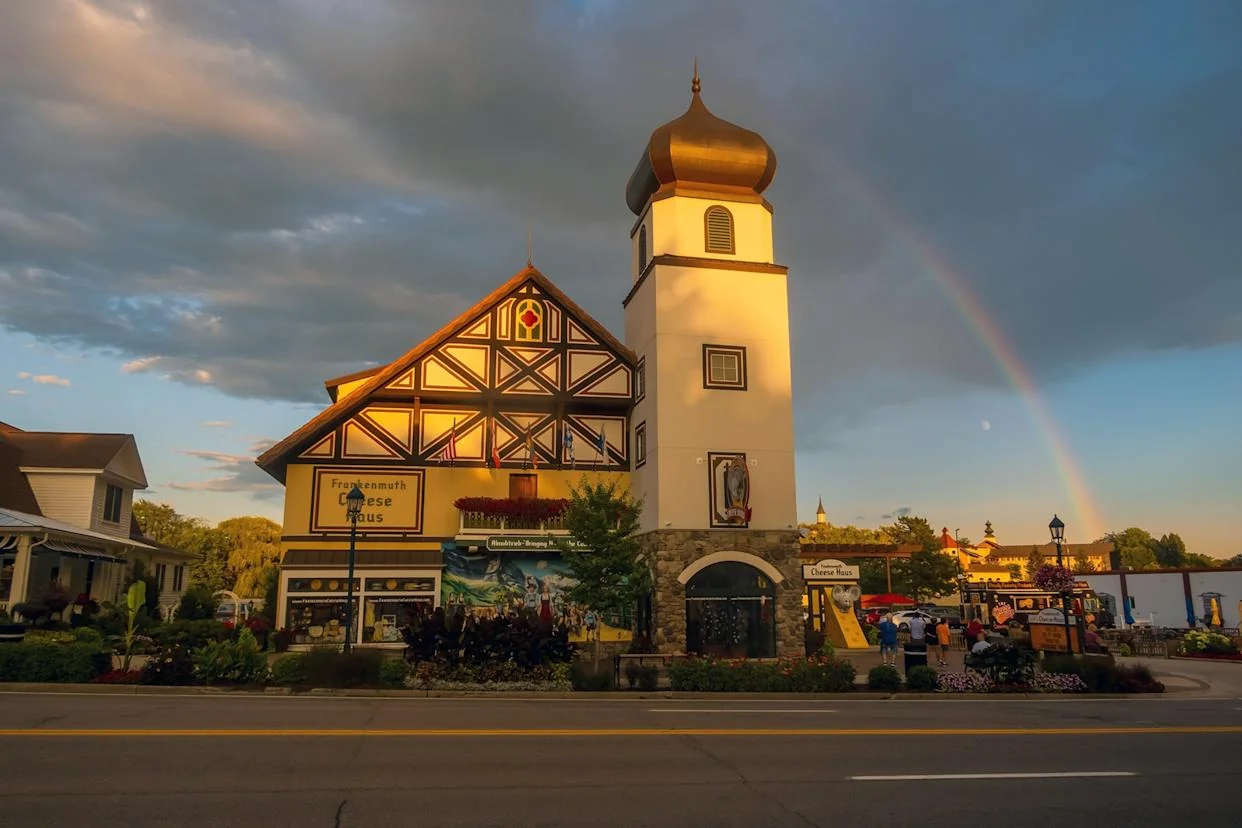 The Frankenmuth Cheese Haus in Frankenmuth, Michigan, sells cheeses from around the world. SNEHIT PHOTO, Shutterstock
The Alpine and Nordic Micro-Climates of the West
The Santa Ynez Valley in California hosts Solvang, a city intentionally designed to mirror a Danish village. Established in 1911 by Danish immigrants, the architecture features traditional half-timbered construction and several scale-model windmills. This is not merely an aesthetic choice but a preservation of specific cultural entities, including the Danish Royal Family's historical influence on the diaspora.
In Washington State, the town of Leavenworth underwent a radical structural transformation in the 1960s to mimic a Bavarian village. While the geography of the Cascade Mountains provides the physical backdrop, the city's building codes mandate "Old World" Alpine facades. This commitment to thematic consistency has turned a former timber town into a primary destination for the Pacific Northwest tourism sector.
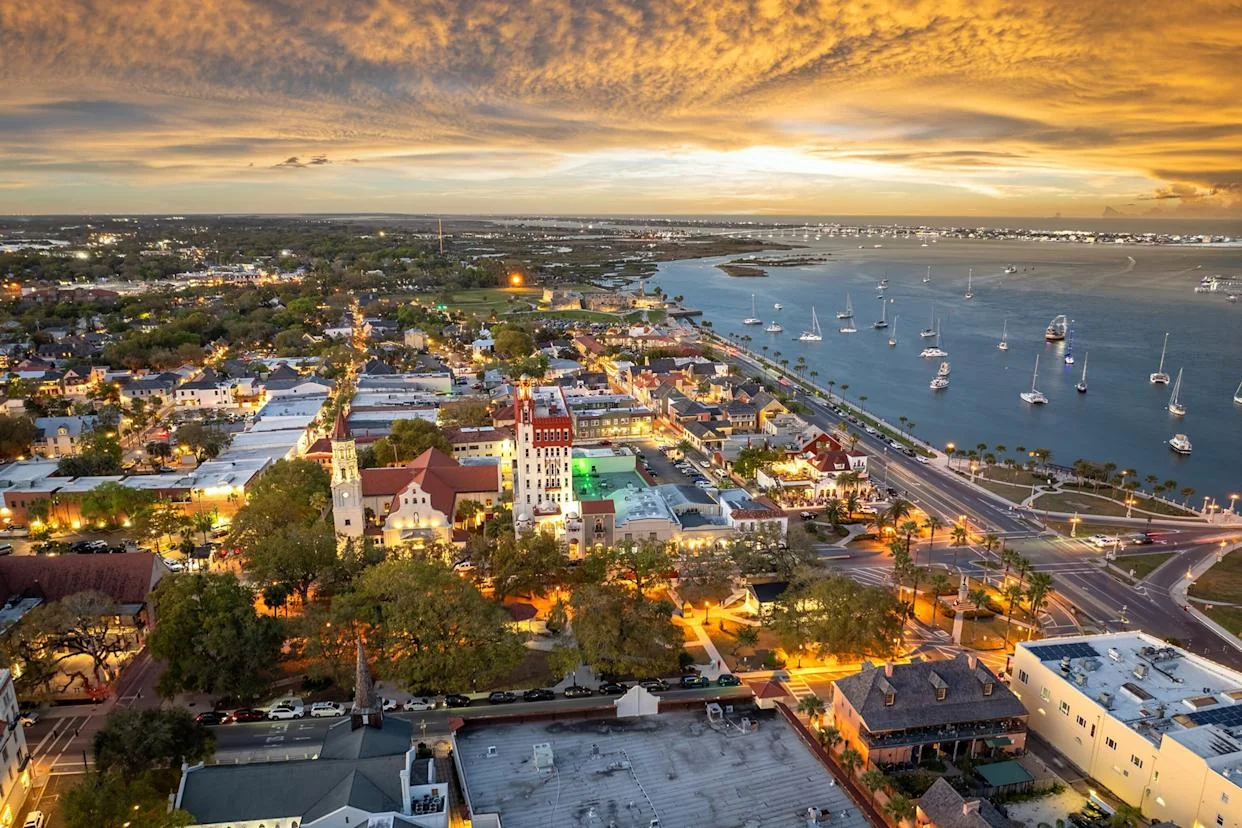 St. Augustine, Florida, dates back to 1565. Bilanol, Getty Images
The Urban Morphology of "Old World" Planning
What competitors often overlook is that "European-feeling" cities are defined less by their decorations and more by their urban morphology. European cities are characterized by high-density, mixed-use zoning, and pedestrian-centric "third places" squares, plazas, and narrow alleyways. Most American cities are defined by the 19th-century grid and 20th-century car dependency.
The cities on this list including New Orleans, Louisiana, with its Spanish Colonial and French Creole fusion are anomalies because they preserved their pre-automobile layouts. This structural difference creates a psychological sense of "Europe" because it forces a slower, pedestrian-paced interaction with the environment, a stark contrast to the sprawling infrastructure of the modern Sun Belt.
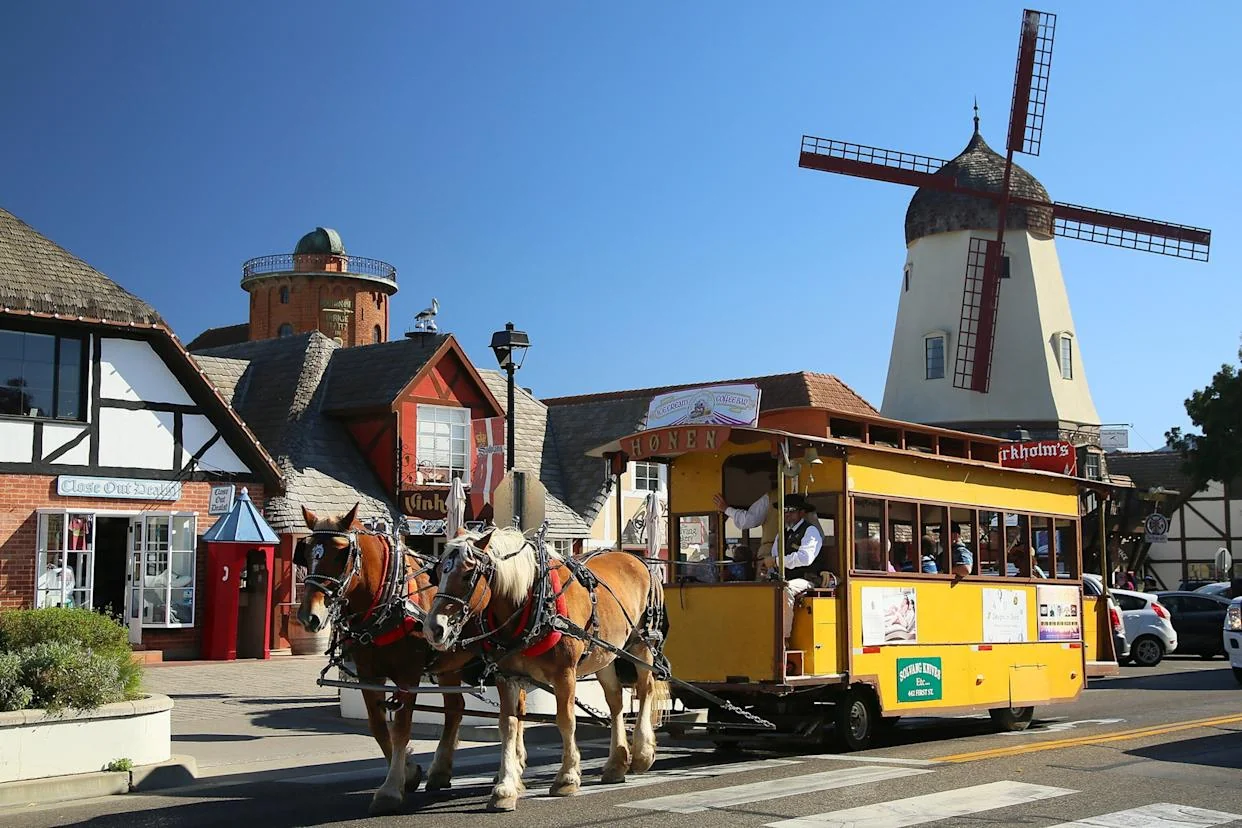 Solvang, California, was founded by Danish-American educators in 1911. Martin Sasse/laif, Redux
Structural Comparison: US vs. European Urban Layouts
| Feature | Standard US City (Post-1940) | European-Style US Enclave | Primary Influence |
|---|---|---|---|
| Street Layout | Wide, Linear Grids | Narrow, Radial/Irregular | Pre-Industrial Planning |
| Zoning | Strictly Segregated | Mixed-Use (Residential/Retail) | Medieval Market Logic |
| Main Material | Steel, Glass, Siding | Coquina, Stucco, Brick | Regional Geology |
| Transit Focus | Automotive | Pedestrian/Streetcar | 18th-Century Logistics |
Economic Migration and the Rise of "Coolcations"
The shift toward these domestic destinations is linked to the broader rise of "coolcations", where travelers seek alternatives to the extreme heat and overcrowding of traditional European summer hotspots. As the European Union implements more stringent ETIAS (European Travel Information and Authorisation System) requirements for US citizens in 2026, the friction of international travel increases.
Cities like Montpelier, Vermont, provide an alternative for those seeking the aesthetic of the French countryside or Swiss foothills without the logistical burden of transatlantic logistics. This trend is particularly relevant for those researching the best places to visit in the USA this May, as spring weather highlights the manicured greenery typical of European gardens.
Safety and the Domestic Travel Premium
For the International Travel Reader, safety remains a primary metric of destination viability. Many of these European-styled enclaves overlap with the top 10 safest cities in America, benefitting from lower crime rates associated with high-density, affluent tourism districts.
The structural consequence of this shift is a deepening economic divide in domestic tourism. As these "European surrogates" become more popular, real estate and hospitality costs in these specific zones are decoupling from their regional averages, creating premium "travel bubbles" that mimic the high costs of London or Paris without the long-haul flight.
Comments (0)
Please login to comment
Sign in to share your thoughts and connect with the community
Loading...