


Evidence of a Rapid Thermal Acceleration Phase
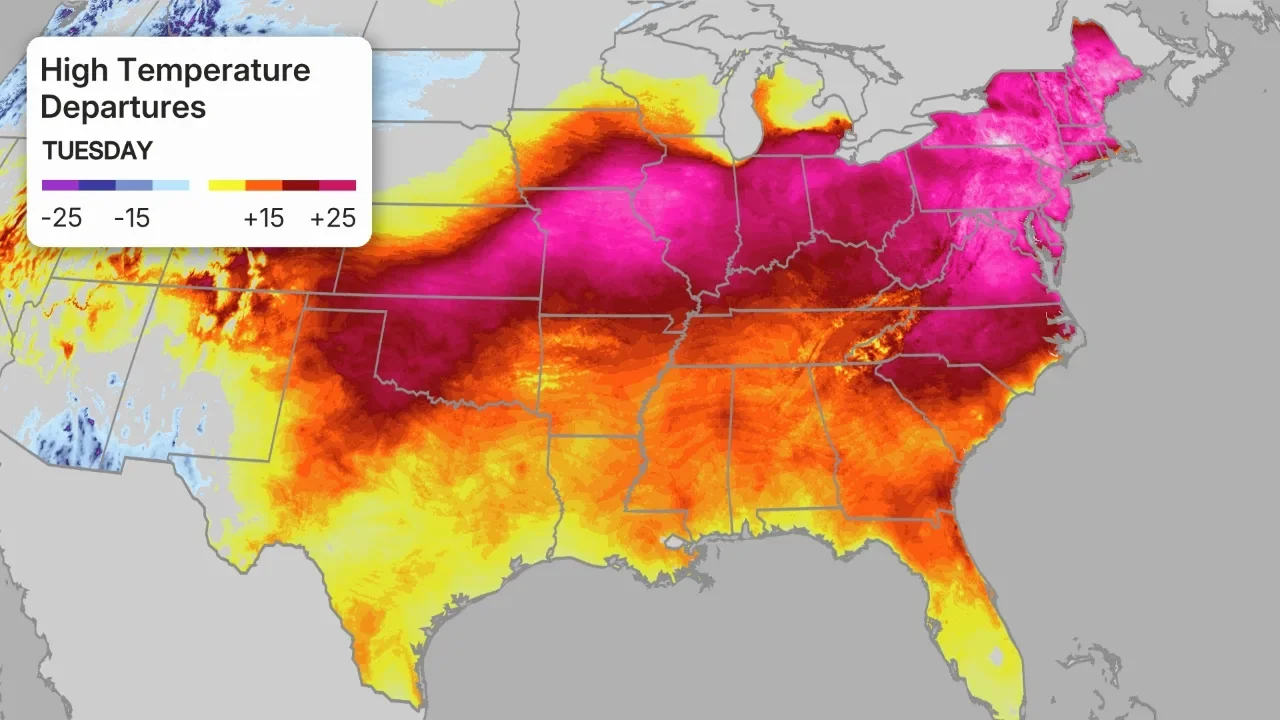
Recent climatological data indicates that the Earth is warming at a rate significantly higher than the benchmarks established in previous decades. A study focusing on planetary energy imbalance confirms that the rate of heat accumulation has nearly doubled since the early 2000s.
This acceleration is not merely a linear continuation of greenhouse gas emissions but represents a "step-change" in how the planet retains energy. Scientists from the National Aeronautics and Space Administration (NASA) and the National Oceanic and Atmospheric Administration (NOAA) have identified that the Earth's "energy budget" is increasingly out of equilibrium, meaning the planet is taking in more energy from sunlight than it is radiating back into space.
The Aerosol Paradox and the Masking Effect
The primary driver behind this unexpected surge is the reduction of atmospheric aerosols tiny particles from coal plants and shipping fuels that reflect sunlight. As the global energy sector shifts toward cleaner fuels to improve air quality, the unintended consequence is the removal of a "cooling mask" that previously dampened the effects of CO2.
This phenomenon, often referred to as the Aerosol Paradox, suggests that our success in reducing localized air pollution is paradoxically unveiling the true, unmitigated strength of global warming. The International Maritime Organization (IMO) regulations implemented in 2020, which slashed sulfur emissions from ships, are cited as a critical turning point that may have accelerated North Atlantic warming specifically.
The "Climate Sensitivity" Gap: What Models Missed
Most existing climate projections, including many utilized by the Intergovernmental Panel on Climate Change (IPCC), have historically relied on moderate estimates of "equilibrium climate sensitivity" how much the temperature rises per doubling of CO2. However, the new data suggests that the Earth's climate system may be more sensitive to forcing than previously documented.
The differentiation lies in the feedback loops of the Cryosphere. As Arctic sea ice vanishes, the "Albedo Effect" weakens; darker ocean waters absorb more heat than reflective white ice. This creates a self-reinforcing cycle where warming leads to less ice, which leads to more warming, independent of human emission levels. This structural shift in the Earth's reflective capacity was previously modeled as a long-term risk but is now manifesting as an immediate thermal driver.
Systemic Implications for Global Infrastructure and Insurance
The acceleration of warming poses a direct threat to the global insurance industry and municipal infrastructure. Historical data used to design "1-in-100-year" flood defenses or heat-resistant power grids is becoming obsolete. As the thermal baseline shifts upward faster, the frequency of "compound events" where multiple climate disasters occur simultaneously—increases exponentially.
In the financial services sector, this rapid warming necessitates a re-evaluation of long-term asset valuations, particularly in coastal real estate and agriculture. If the 1.5°C threshold is breached significantly earlier than the mid-2030s, the "orderly transition" scenarios favored by central banks may be replaced by "disordered" market corrections as policy responses struggle to keep pace with physical reality.
| Climate Driver | Historical Impact | New Observation | Systemic Risk Level |
|---|---|---|---|
| Aerosol Cooling | High (Masked warming) | Rapidly Decreasing | Critical (Acceleration) |
| Ocean Heat Content | Gradual Increase | Record-breaking spikes | High (Thermal Inertia) |
| Arctic Albedo | Seasonal Variation | Permanent Loss Trends | Extreme (Feedback Loop) |
| Methane Release | Trace Contribution | Permafrost Thawing | Rising (Tipping Point) |
Calibrating the 2030 Climate Horizon
The immediate focus for international policy must shift from decadal targets to immediate atmospheric intervention. The acceleration indicates that the window for "adaptation" is narrowing, as the speed of change exceeds the biological and structural capacity of many regions to adjust.
The transition from a slow-warming paradigm to an accelerated-warming reality forces a confrontation with the limits of current carbon capture technology. If the Earth's internal feedback loops have truly taken over as primary drivers, the global community faces a period of extreme meteorological volatility that defies traditional historical precedent.
Comments (0)
Please login to comment
Sign in to share your thoughts and connect with the community
Loading...