
GPT-5.2 vs. Claude 4.5 vs. Gemini 3: 2026 AI Breakdown

The first week of 2026 has solidified a new "Big Three" in generative artificial intelligence. Following the sequential releases of Anthropic’s Claude 4.5 Opus in November and OpenAI’s GPT-5.2 in December, the industry has transitioned from "proof of concept" models to specialized "agentic" engines.
Unlike previous years where models were ranked by simple chat capabilities, the 2026 landscape is defined by reasoning effort levels, native multimodality, and long-horizon autonomy. For enterprise leaders and developers, the choice between OpenAI, Anthropic, and Google now hinges on specific technical trade-offs rather than brand loyalty alone.
 GPT-5.2: The Master of Agency and Reasoning
GPT-5.2: The Master of Agency and Reasoning
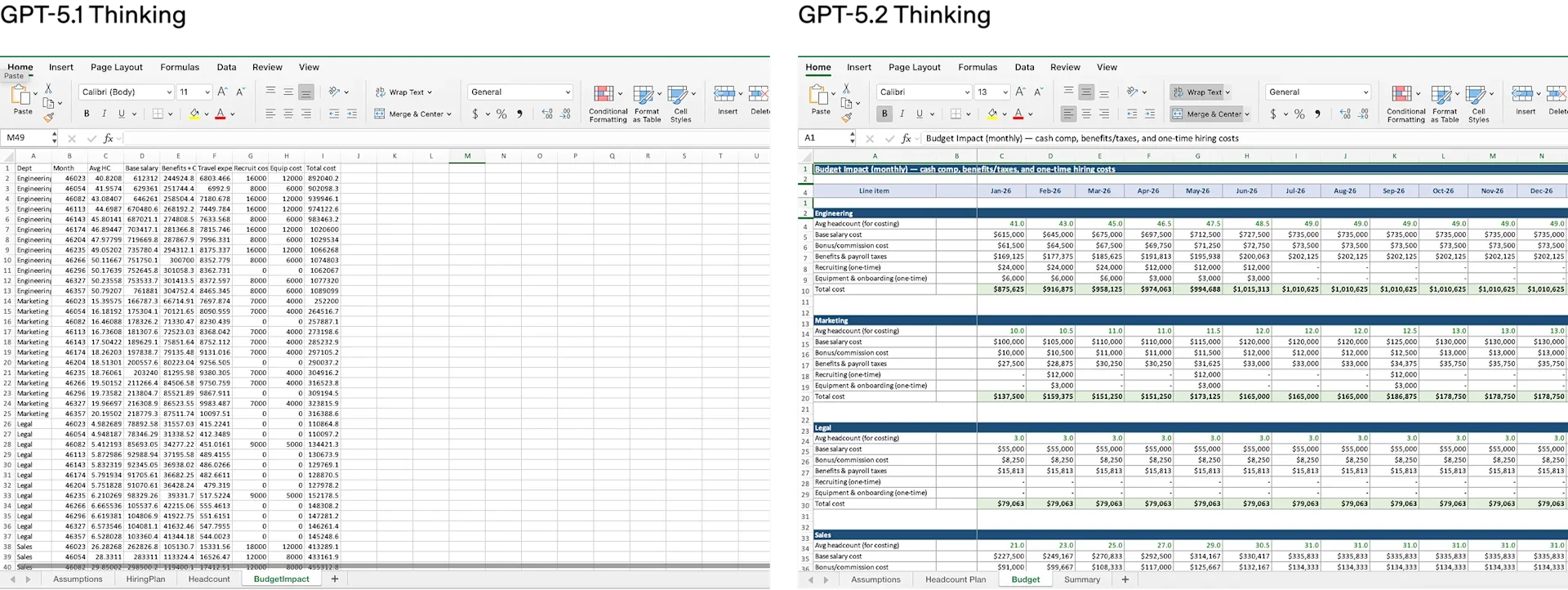
Launched on December 11, 2025, OpenAI’s GPT-5.2 has introduced a "Thinking" architecture that prioritizes verification over speed. It is the first model to score a 70.9% win rate on the GDPval benchmark, which evaluates professional knowledge work across 44 occupations.
The defining feature of 5.2 is its "xhigh" reasoning effort, allowing the model to self-correct during complex math or scientific inquiries. In the official GPT-5.2 system card, OpenAI highlights a significant reduction in response-level error rates—down to 6.2%—by utilizing internal search and Python-driven verification loops.
 Claude 4.5 Opus: The Gold Standard for Engineering
Claude 4.5 Opus: The Gold Standard for Engineering
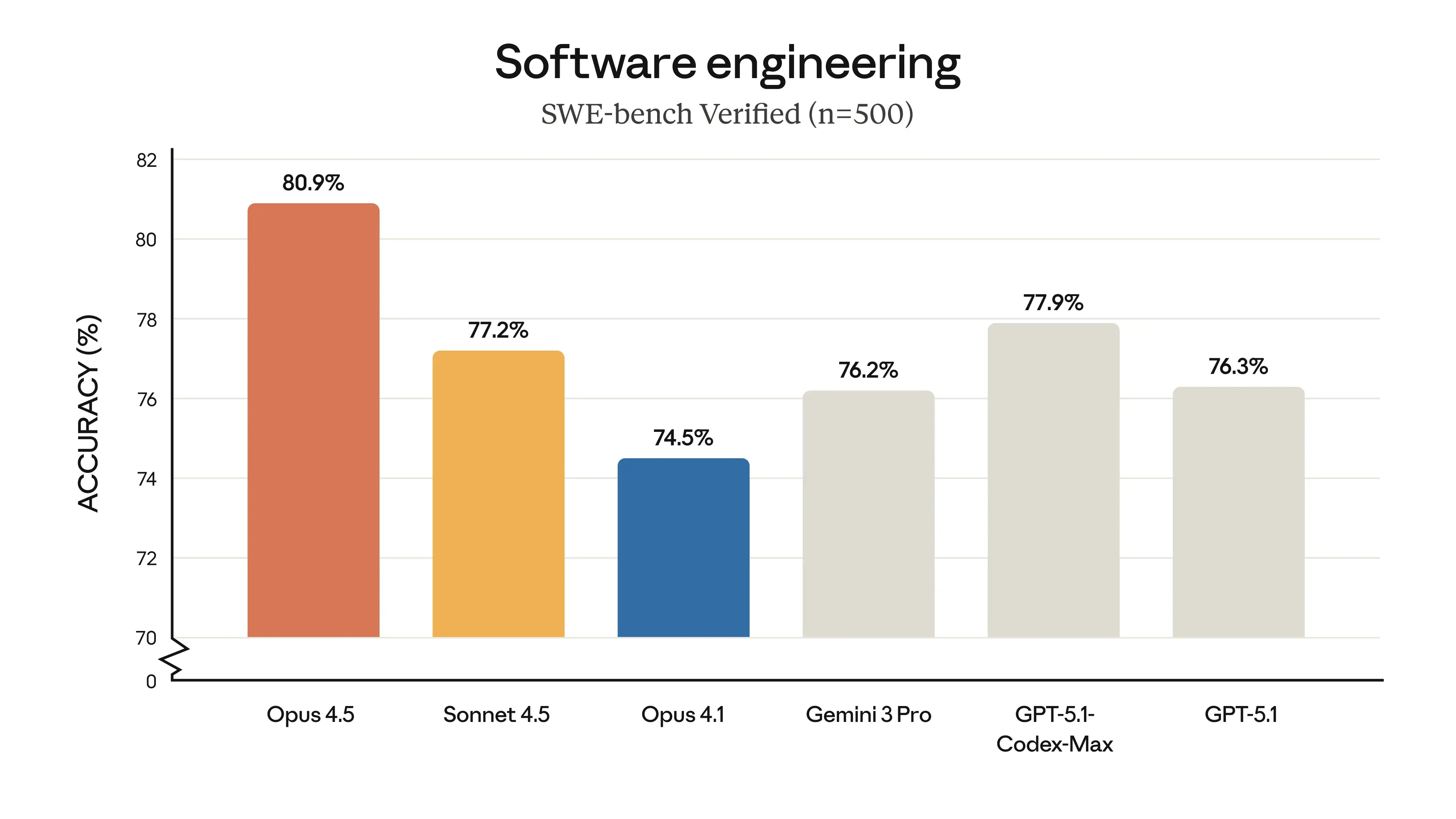
Anthropic’s Claude 4.5 Opus, released in late November 2025, is widely regarded as the premier model for software development. It leads the SWE-bench Verified leaderboard with an 80.9% success rate, specifically excelling in code migrations and large-scale refactoring.
A unique technical addition to Opus 4.5 is the Verbosity and Effort parameter, which allows developers to toggle between "Low" for token efficiency and "High" for maximum thoroughness. This control is critical for production environments where cost-per-token must be balanced against the depth of architectural analysis.
 Gemini 3 Pro: The Multimodal Efficiency King
Gemini 3 Pro: The Multimodal Efficiency King
Google’s Gemini 3 Pro has focused on "true multimodality," processing text, audio, and video within a single transformer stack rather than using separate encoders. This architecture enables a massive 1-million-token context window with nearly perfect recall, according to technical specifications on Vertex AI.
Gemini 3 Pro is particularly dominant in LiveCodeBench Pro, holding an Elo rating of 2,439. This makes it a formidable competitor in algorithmic challenges, while its deep integration into the Google Workspace ecosystem provides a seamless "agentic" experience for users managing data across Docs, Gmail, and Drive.
Benchmarking the Titans: 2026 Statistics
| Metric | GPT-5.2 (Thinking) | Claude 4.5 Opus | Gemini 3 Pro |
|---|---|---|---|
| SWE-bench Verified (Coding) | 80.0% | 80.9% | 76.2% |
| GPQA Diamond (Science) | 88.1% | 87.0% | 91.9% |
| ARC-AGI-2 (Reasoning) | 52.9% | 37.6% | 31.1% |
| Context Window | 400k Tokens | 200k Tokens | 1.0M Tokens |
| Primary Edge | Logic & Reasoning | Engineering & Integrity | Multimodal Speed |
Strategic Market Positioning
The following chart categorizes the models based on their performance in reasoning-heavy tasks versus deployment efficiency.
Technical Deep Dive: Why Claude Opus Wins at Code
For 2026 developers, the choice of Claude 4.5 Opus is driven by its ability to handle long-horizon autonomous tasks. Where other models might "drift" during a 30-minute session, Opus maintains state.
Example Case: When tasked with a 2,000-line Python refactor involving an async database migration, Opus 4.5 generates a comprehensive plan before writing code, utilizing its internal "Thinking blocks" to verify that the proposed changes don't break existing dependencies.
Editorial Conclusion: Which Model for Which Job?
As of early 2026, the market has reached a state of "Precision Routing."
-
Deploy GPT-5.2 for high-stakes decision-making and "agentic" workflows where the AI must navigate a computer interface to complete a strategic goal.
-
Deploy Claude 4.5 Opus for technical engineering, mission-critical code review, and any scenario where "refusal to hallucinate" is more valuable than speed.
-
Deploy Gemini 3 Pro for analyzing massive datasets (video, 1,000+ page PDFs) and for consumer-facing apps that require native multimodal responses at low latency.
The question for 2026 is no longer about which model has the most parameters, but which model has the most reasoning reliability. The data suggests that while Google dominates on volume and OpenAI on logic, Anthropic remains the "engineer's choice" for building the next generation of software.
Comments (0)
Please login to comment
Sign in to share your thoughts and connect with the community
Loading...