
The Science of Olfactory Branding
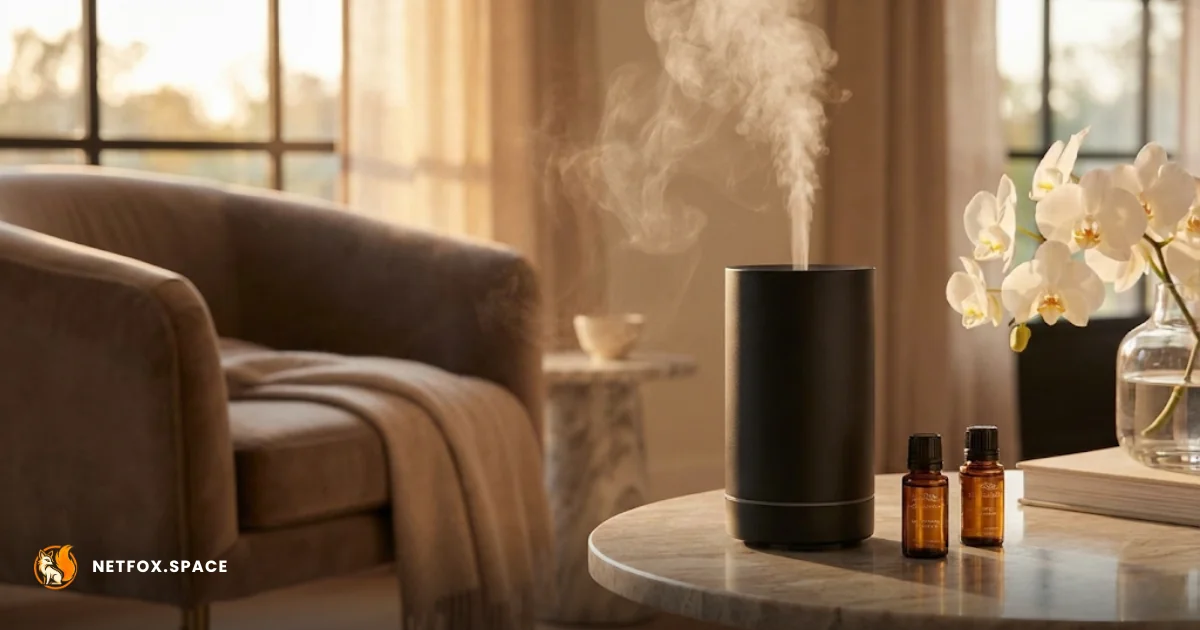
Luxury hotels do not rely on standard candles or aerosol sprays; instead, they utilize a discipline known as "olfactory branding." Global chains like Marriott, Ritz-Carlton, and Edition work with specialized fragrance houses to develop bespoke scents designed to trigger immediate relaxation and brand recognition. These scents are often dispersed through HVAC systems using cold-air diffusion technology, which breaks down essential oils into a dry mist of nanoparticles.
This technology ensures a consistent, subtle scent profile that lingers without the "peaks and valleys" of traditional fragrance methods. In 2026, this professional-grade hardware has become increasingly accessible to the general public, allowing homeowners to scent large open-plan spaces with the same precision as a boutique lobby in Paris or Tokyo.
Signature Scent Profiles of Global Giants
The "smell of luxury" is rarely a single note; it is a complex layering of base, middle, and top notes. Most 5-star environments favor "green" or "woody" bases to ground the space, topped with citrus or floral elements to provide a sense of freshness and cleanliness. For instance, the Westin utilizes "White Tea" to evoke serenity, while the Edition hotels are famous for a signature Le Labo blend featuring black tea, fig, and tobacco.
| Hotel Brand | Signature Fragrance Notes | Psychological Impact |
|---|---|---|
| Westin Hotels | White Tea, Cedar, Vanilla | Calm, Serenity |
| The Ritz-Carlton | Marine, Citrus, Jasmine | Energizing, Opulent |
| W Hotels | Lemon Blossom, Laurel, Musk | Vibrant, Modern |
| Hotel Costes | Rum, Wax, Mahogany | Sultry, Historical |
To replicate these at home, interior designers suggest focusing on "ambient layering." This involves using a primary diffuser for the main living area while placing secondary scent sources—such as reed diffusers or high-quality room mists—in transition zones like hallways and bathrooms to create a "scent journey" throughout the property.
Professional Diffusion vs. Consumer Methods
The primary differentiator between a home that smells "nice" and one that smells "luxurious" is the method of delivery. While ultrasonic diffusers (which use water) are common, they often dilute the purity of the fragrance and increase local humidity. Cold-air nebulizing diffusers, which use pressurized air to atomize pure essential oils, are the industry standard for 2026.
Experts recommend looking for oils that are free from synthetic "fillers" and phthalates. High-end fragrances often incorporate rare ingredients like Oud, Sandalwood, or Vetiver, which provide a depth that budget-tier candles cannot match. Furthermore, the placement of the scent source is critical; placing a diffuser near an air return or a doorway allows the natural airflow of the home to carry the fragrance, rather than letting it pool in a single corner.
As the "wellness-at-home" trend continues to evolve, the focus has shifted from visual aesthetics to sensory immersion. Investing in high-quality olfactory tools is no longer seen as a luxury afterthought, but as a foundational element of modern interior design that directly impacts the daily psychological well-being of the inhabitants.
Comments (0)
Please login to comment
Sign in to share your thoughts and connect with the community
Loading...