
Pesticide Safety Myths: Navigating Regulatory Limits in 2026


The Intersection of Maximum Residue Limits and Human Health
The presence of pesticides in the food supply is often conflated with immediate toxicity, yet the Environmental Protection Agency (EPA) and the European Food Safety Authority (EFSA) operate on the principle of Maximum Residue Limits (MRLs). These thresholds are not safety ceilings but are instead established as the maximum amount of residue expected when a pesticide is used according to label directions.
Current data from the USDA Pesticide Data Program indicates that over 99% of samples tested fall significantly below these established safety margins. The distinction between "hazard" (the potential to cause harm) and "risk" (the likelihood of harm under specific exposure conditions) remains the most critical point of confusion for the general public regarding agricultural chemicals.
 Most people, including myself at times, wash or rinse their produce under cold running water. This only removes some of the pesticide residues.
Structural Limitations of Consumer Mitigation Strategies
Consumer-level interventions, such as washing produce with vinegar, baking soda, or commercial "fruit washes," offer varying degrees of efficacy depending on the chemical properties of the residue. While mechanical friction and water can remove surface-level particulates and some systemic residues, many modern pesticides are designed to be "rainfast" or systemic, meaning they are absorbed into the plant tissue itself.
Because systemic pesticides circulate through the vascular system of the crop, no amount of external washing can eliminate the internal chemical presence. This structural reality shifts the burden of safety from the consumer's kitchen back to the Integrated Pest Management (IPM) protocols utilized by growers at the farm level.
The Organic Paradox: Synthetic vs. Botanical Chemistry
The prevailing narrative often positions Organic Farming as a chemical-free alternative, yet the USDA National Organic Program permits a specific list of substances. The differentiation lies not in the presence of chemicals, but in their origin; organic-approved pesticides are generally derived from natural sources, such as copper sulfate or pyrethrins from chrysanthemums.
| Comparison Metric | Synthetic Pesticides | Organic-Approved Pesticides |
|---|---|---|
| Origin | Lab-synthesized | Natural/Botanical sources |
| Targeting | Highly specific (Narrow-spectrum) | Often broad-spectrum |
| Persistence | Varies (Modern types degrade fast) | Can be highly persistent (e.g., Copper) |
| Toxicity | Measured via values | Measured via values |
The "Information Gain" here is the realization that "natural" does not inherently mean "non-toxic." In some instances, the lower efficacy of botanical pesticides requires higher application frequencies, potentially increasing the total environmental load compared to high-efficiency, targeted synthetic molecules.
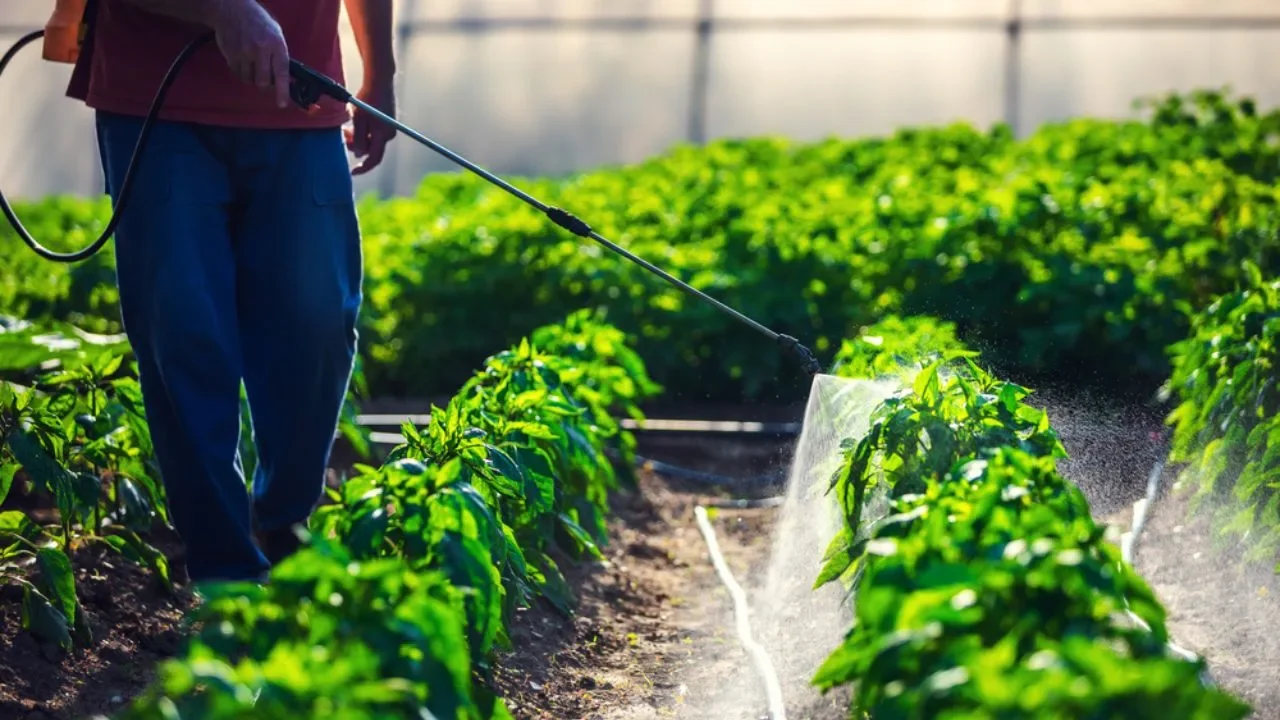 Global Supply Chain Exposure and Regulatory Divergence
Global Supply Chain Exposure and Regulatory Divergence
As the global food trade expands, the primary risk to consumers is not the existence of pesticides, but the divergence in international regulatory standards. A crop grown in a region with lax pesticide governance may contain substances banned in the target market, creating a "regulatory lag" that testing facilities struggle to monitor in real-time.
This systemic friction is particularly evident in the "export-only" production of certain chemicals, where substances prohibited for use in developed nations are still manufactured and sold to emerging economies. The resulting "circle of poison" means that residues of banned substances can reappear in imported produce, complicating the safety profile of the modern supermarket.
The Shift Toward Bio-Rational Pest Control
The agricultural sector is currently undergoing a structural shift toward biopesticides and pheromone-based disruption. These technologies represent a move away from traditional "kill-on-contact" chemistry toward biological interventions that have virtually no detectable residue on the final product.
This transition is driven less by consumer demand and more by the increasing prevalence of pesticide resistance in weed and insect populations. As traditional chemicals lose their efficacy, the financial incentive for ag-tech companies to pivot toward biologicals creates a secondary benefit of reduced chemical exposure for the end-user.
The long-term stability of the food supply now hinges on whether these biological alternatives can scale quickly enough to replace traditional chemistries before existing resistance patterns trigger widespread crop failures.
Comments (0)
Please login to comment
Sign in to share your thoughts and connect with the community
Loading...