
Netfox
HomeQ&AAnti-ScamNotifications
© 2026 Netfox. All rights reserved.
Terms of ServicePrivacy PolicyAbout UsEditorial Policy
Comment
Science

Jonathan the Tortoise Death Hoax Debunked

Seraphina Vance
Seraphina Vance
Apr 2, 20263 min
0
0
0
129
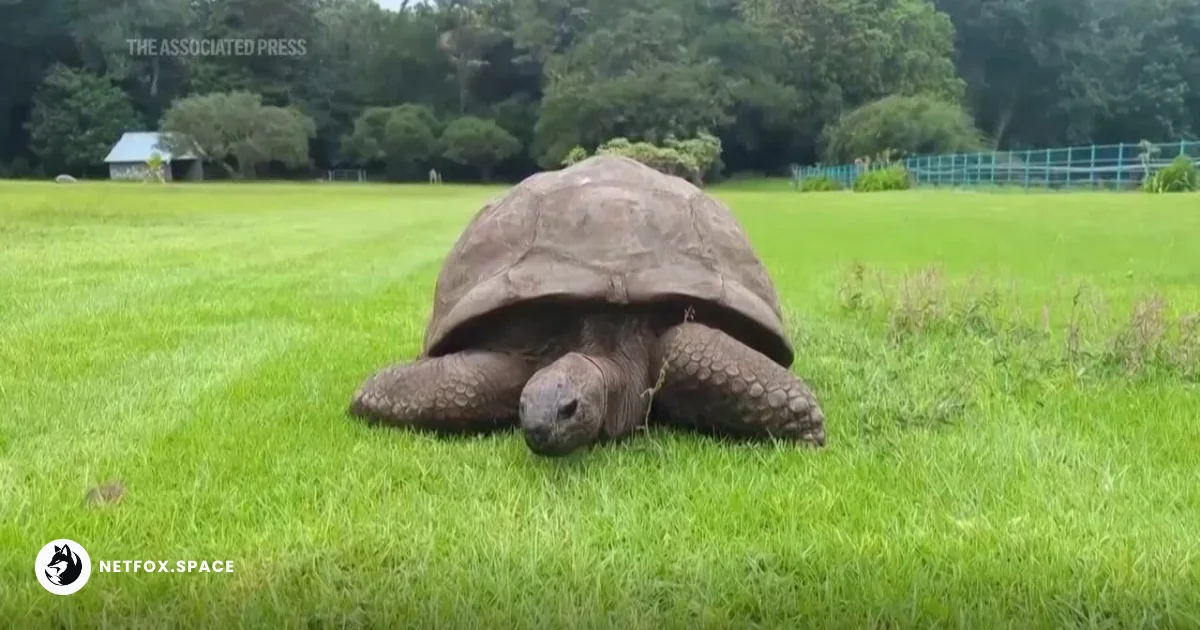
St. Helena officials confirm Jonathan the tortoise, aged 193, is alive. The viral death rumors were a hoax, and the world’s oldest animal is in good health.

Jonathan, a Seychelles giant tortoise recognized as the world’s oldest living land animal, is confirmed to be alive on the South Atlantic island of St. Helena despite a weekend of viral reports claiming his death.

St. Helena officials confirm Jonathan’s health is stable

Government representatives from the British Overseas Territory of St. Helena addressed the rumors directly, clarifying that the tortoise remains in good health at his long-time residence, Plantation House. The official confirmation followed a surge in social media posts that suggested the animal had passed away at the age of 193.

The hoax gained significant traction across multiple platforms, prompting local authorities to issue a statement to prevent further misinformation. According to the reports from the island, Jonathan continues to follow his regular routine, which includes grazing and receiving specialized veterinary care to maintain his longevity.
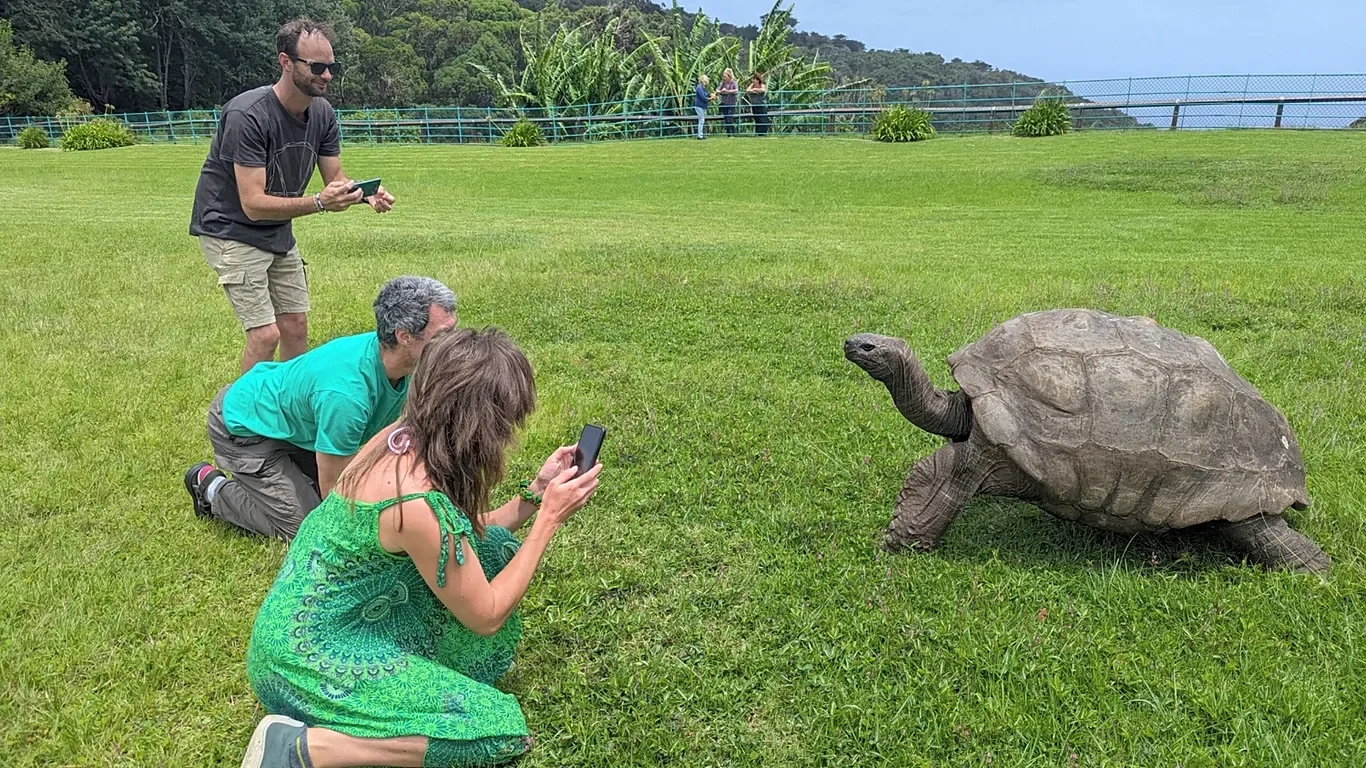
Copyright AP Photo.Copyright AP Photo.

Longevity and status of the 193-year-old chelonian

Jonathan holds two Guinness World Records: one for being the oldest living land animal and another for being the oldest chelonian (an order including turtles, terrapins, and tortoises) ever recorded. While his exact birth date is unknown, he is estimated to have been born around 1832. He was brought to St. Helena from the Seychelles in 1882 as a gift to the governor.

Although Jonathan is blind and has lost his sense of smell due to cataracts and age, his hearing remains functional. The veterinary team responsible for his care notes that he still possesses a strong appetite and responds well to the sound of his caretakers' voices. His diet is supplemented with high-calorie fruits and vegetables to ensure he receives adequate nutrition that his aging digestive system can process.
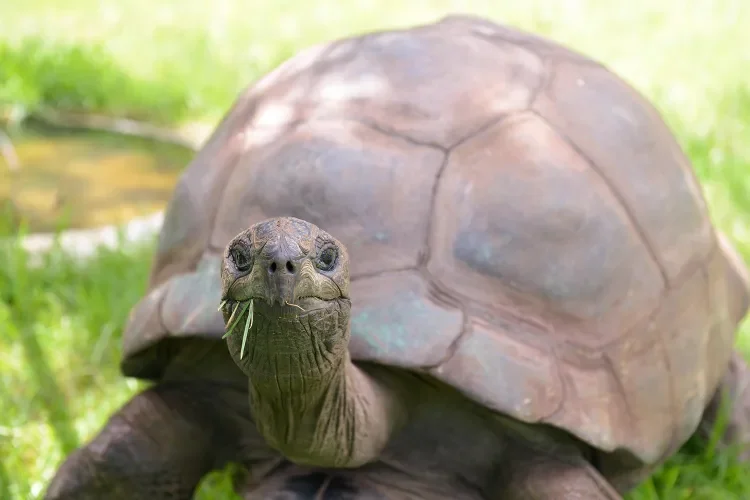
Jonathan the Giant Tortoise. Credit : Gillian Moore / Alamy Stock PhotoJonathan the Giant Tortoise. Credit : Gillian Moore / Alamy Stock Photo

Managing misinformation regarding high-profile animals

The death hoax highlights a recurring trend in digital media where the advanced age of famous animals makes them frequent targets for unverified reports. Because Jonathan is a central figure for St. Helena’s tourism and a global scientific curiosity, the spread of unfounded rumors about his condition often requires immediate intervention from official biological or governmental sources.

At 193, Jonathan has outlived the average lifespan for his species, which typically ranges around 150 years. Researchers continue to monitor his health closely, as his survival provides rare data on the biological limits of aging in giant tortoises. For now, officials emphasize that any major changes in his status will be communicated through formal government channels rather than social media updates.

Comments (0)

Sort by

Please login to comment

Sign in to share your thoughts and connect with the community

Loading...

Related news

Cal Poly researchers demonstrate how "driving" magnetic fields in time creates exotic states of matter, including many-body cages and discrete time crystals.

Scientists Engineer Exotic Quantum Matter Using Time-Driving

150 views•4 min
The 2026 Eta Aquarid meteor shower peaks May 5-6. Learn how to spot debris from Halley's Comet despite interference from a bright waning gibbous moon.

2026 Eta Aquarid Meteor Shower: Peak Times and Viewing Guide

160 views•4 min
Discover the biological and behavioral mechanisms that allow a single queen to suppress the fertility of an entire colony of naked mole-rats in East Africa.

Why Only One Naked Mole-Rat Reproduces: Biological Explainer

125 views•3 min
The Gombe chimpanzee war shows how internal fractures and resource shifts can dismantle complex social structures, offering a biological lens on societal collapse.

Gombe Chimp Civil War: Lessons in Societal Collapse

125 views•3 min
Erle Ellis proposes Anthroecology theory, framing the Anthropocene not just as an environmental crisis, but as an evolutionary process of sociocultural niche construction.

Beyond the Crisis: How 'Runaway' Cultural Evolution Shaped the Anthropocene

127 views•5 min
The 2026 Lyrid meteor shower peaks in late April. Learn about the radiant point in Lyra, the impact of the waxing crescent moon, and how to spot "Lyrid fireballs."

Lyrid Meteor Shower 2026: Peak Dates and Viewing Guide

180 views•3 min
Researchers have sequenced the genome of a 5,000-year-old Bristlecone pine, identifying specific DNA repair and stress response genes linked to its longevity.

Scientists Sequence 5,000-Year-Old Bristlecone Pine Genome

122 views•3 min
New evidence from Tinshemet Cave shows Neanderthals and Homo sapiens shared technology and burial rites 110,000 years ago, suggesting high social connectivity.

Tinshemet Cave: Neanderthals and Sapiens Shared Culture

201 views•5 min
Scientists suggest a new way to detect gravitational waves by observing frequency shifts in photons emitted by atoms, moving beyond classical test-mass sensors.

Detecting Gravitational Waves via Atomic Spontaneous Emission

275 views•4 min
A technical and historical comparison of the Artemis II 'Earthset' and the 1968 'Earthrise' images, focusing on orbital mechanics and imaging technology.

Artemis II Earthset vs Earthrise: Science and Context

146 views•3 min
University of Tokyo researchers identify CAHS proteins as the key to tardigrade survival, creating a protective "bioglass" that prevents cell shrinking.

Why Tardigrades Survive Without Water: The CAHS Mechanism

121 views•3 min
New research reveals Saturn’s magnetic cusps are skewed toward the dusk side, driven by rapid rotation and plasma from the moon Enceladus.

Why Saturn's Magnetic Shield Is Skewed to One Side

131 views•5 min
Researchers identify Megachelicerax cousteaui, a 500-million-year-old fossil from Utah that pushes back the origin of the spider and scorpion lineage by 20 million years.

Oldest Spider Relative Fossil Found in Utah Reshapes Evolution

122 views•4 min
Researchers identified five large chromosomal inversions that suppress genetic recombination, allowing Lake Malawi cichlids to adapt and speciate at high speed.

How DNA Supergenes Drive Rapid Evolution in Lake Malawi

169 views•4 min
Scientists have discovered a distinct liquid phase of water at biological boundaries that facilitates the rapid chemical reactions necessary for cellular function.

New Interfacial Water State Explains Biological Catalysis

144 views•3 min
New research from Texas A&M suggests that high doses of the popular supplement Nicotinamide Riboside (NR) may increase the risk of structural birth defects.

Popular NR Supplement Linked to Birth Defects in New Study

235 views•3 min
New 2026 research and clinical data show how midlife behavioral shifts and physical tests like the SRT can predict biological aging and overall lifespan.

Midlife Behavior and Longevity: Predictive Health Factors

333 views•4 min
Research from UC Berkeley reveals hummingbirds and bees consume ethanol-laced nectar daily, metabolizing it rapidly without visible behavioral impairment.

Hummingbirds and Bees Regularly Consume Ethanol in Nectar

222 views•2 min
Scientists reconstruct the 12-billion-year history of galaxy NGC 1365, revealing how galactic "space archaeology" uncovers the structural evolution of the universe.

12-Billion-Year Galaxy Evolution Traced via NGC 1365

111 views•3 min
Scientists find that forests act as massive terrestrial sinks for airborne microplastics, with particles infiltrating deep soil layers through leaf decay.

Microplastics in Forests: New Research Reveals Soil Reservoirs

166 views•4 min