
New Interfacial Water State Explains Biological Catalysis

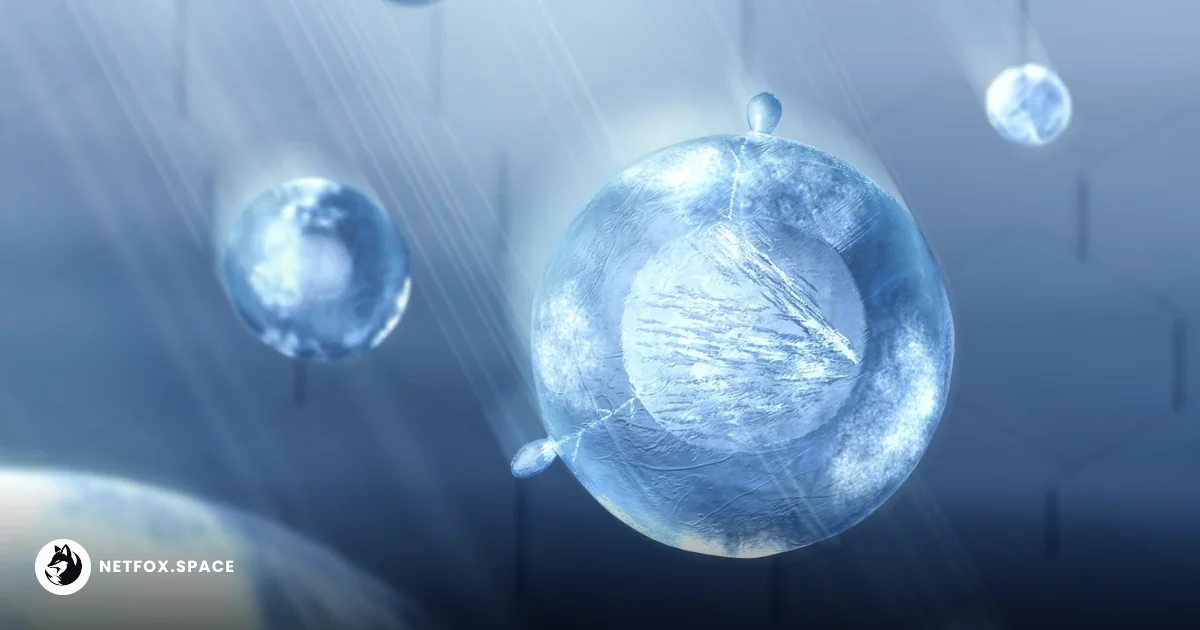
A study published in Science has identified a previously unconfirmed state of liquid water that forms exclusively at the boundary of biological membranes and proteins. This "interfacial" water phase appears to possess different physical properties than bulk liquid water, providing a mechanical explanation for how biochemical reactions occur at the speeds required to sustain life.
High-density liquid phase forms at biological boundaries
The research team used advanced spectroscopic imaging to observe how water molecules behave when in direct contact with organic surfaces. While water is typically viewed as a uniform solvent, the research findings indicate that it separates into a distinct, high-density liquid phase when it meets a biological interface.
In this state, the molecules organize into a constrained, "quasi-liquid" layer. This layer is significantly more ordered than the chaotic movement found in a standard glass of water but remains more fluid than ice. This specific structural arrangement allows the water to act as a bridge between the environment and the protein, facilitating the movement of protons and electrons with high efficiency.
Molecular "cages" facilitate rapid biochemical signaling
The discovery addresses a long-standing mystery in biophysics regarding how enzymes and proteins communicate across cellular distances almost instantaneously. The report on molecular dynamics suggests that this hidden state of water creates a "proton wire" effect.
Because the molecules in this interfacial state are pre-aligned, they can pass electrical signals and chemical messages along the surface of a cell membrane without the delay associated with standard diffusion. This biological catalysis mechanism suggests that water is not merely a passive medium in which life happens, but an active, structural component of the cell's machinery. Without this high-density phase, the chemical reactions necessary for metabolism would likely be too slow to support complex organisms.
Implications for the origins of early cellular life
The identification of this water state provides a new framework for understanding the transition from chemistry to biology on the early Earth. Standard models of the "primordial soup" often struggle to explain how the first fragile molecules remained stable long enough to form complex chains.
The researchers suggest that the formation of this interfacial water layer could have protected early replicators, such as RNA, by providing a stable, highly conductive environment. By concentrating reagents within these dense water layers, early biological systems could have achieved the necessary reaction rates even in dilute environments. This finding shifts the focus of origin-of-life research from the specific "ingredients" of the primordial sea to the physical behavior of water at the boundaries where the first cells formed.
Comments (0)
Please login to comment
Sign in to share your thoughts and connect with the community
Loading...