


The 120-Day Shift: From NDP to Conservative Exodus
Prime Minister Mark Carney has achieved a statistical anomaly in the Parliament of Canada, securing four floor-crossings from opposition benches in a mere four months. The latest addition, Lori Idlout (former New Democratic Party MP for Nunavut), joined the Liberal Party of Canada on March 11, 2026. This follows a high-velocity wave of defections from the Conservative Party of Canada, including veteran MPs Matt Jeneroux, Chris D’Entremont, and Michael Ma.
While floor-crossing is as old as the 1st Parliament, the speed of this realignment is historic. In the modern era, only Jean Chrétien rivaled this pace, though his gains typically followed the systemic collapse of opposing parties. In contrast, Carney is pulling members from functional, competitive opposition caucuses, signaling a specific magnetic pull toward his "Security and Prosperity" agenda just one year into his mandate as the 24th Prime Minister.
Strategic Realignment: The North and the West
The geography of these defections is as significant as the numbers. By bringing in Lori Idlout, the government gains a powerful Inuk voice and direct representation for the Arctic and Northern region, a cornerstone of Carney’s 2026 defense strategy. Simultaneously, the inclusion of Matt Jeneroux and Michael Ma provides the Liberals with rare "insider" economic perspectives from the Alberta and Western Canadian corridors.
The immediate impact is a narrowed gap in the House of Commons. As of March 13, 2026, the Liberals hold 170 seats, leaving them just two seats shy of the 172-seat threshold required for a working majority. This rapid caucus expansion has fundamentally altered the legislative landscape, effectively neutralizing the opposition’s ability to block key budgetary measures in the current session.
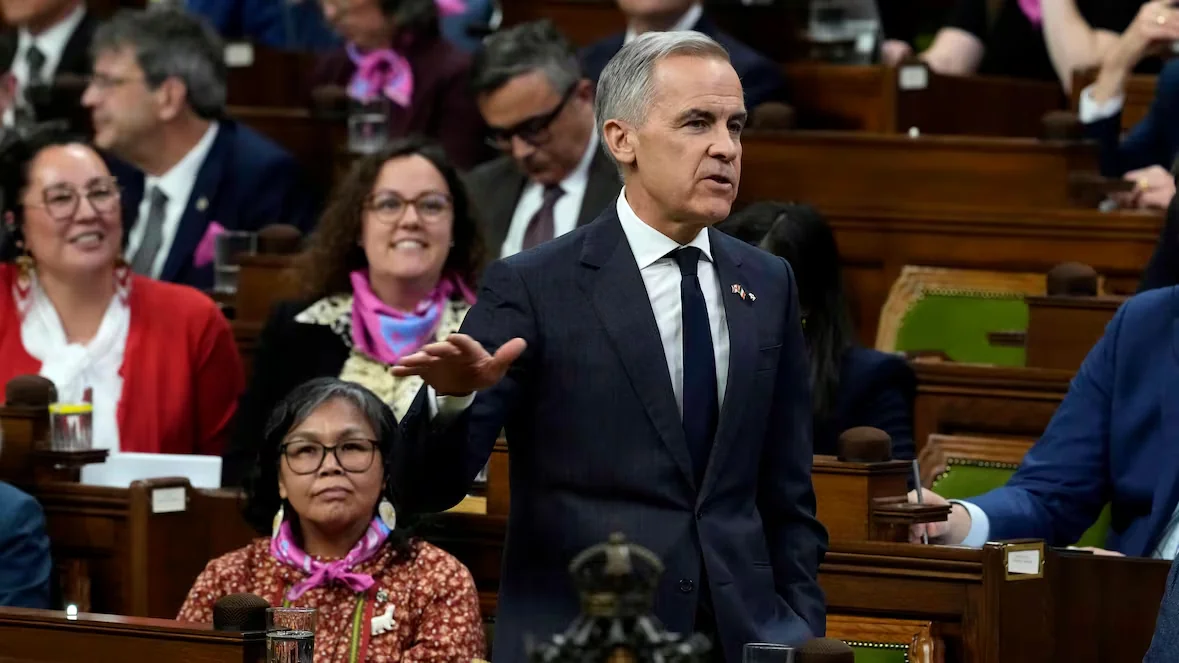 Prime Minister Mark Carney is seen in the House of Commons on Wednesday with his latest floor-crosser, Lori Idlout, seated beside him. (Justin Tang/The Canadian Press)
The "Executive Magnet": Technocratic Pull vs. Ideological Loyalty
The differentiation in Carney’s success lies in his unique background as a former Governor of the Bank of Canada and Bank of England. Most historical floor-crossers moved due to personal slights or regional grievances. However, the "Carney Shift" is being framed as a move toward Technocratic Governance. Defectors like Jeneroux have explicitly cited Carney's "Davos Speech" and his focus on "Strategic Autonomy" as the primary catalysts, rather than typical partisan disillusionment.
This represents a hidden structural shift: the House of Commons is increasingly operating under a "CEO-led" model where policy expertise is valued over traditional party dogma. For the Financial Sector and international partners, this suggests a stabilization of Canadian policy. However, for the voter, it creates a "representation gap" where the platform they voted for in the 2025 election—whether Conservative or NDP—is effectively voided by the MP's personal move toward the Liberal center of gravity.
The April 13 Threshold: Securing a "Floor-Crossed" Majority
The systemic implication of these moves will be tested on April 13, 2026, when three high-stakes byelections take place. Two of these contests are in historically "safe" Liberal ridings, meaning that if the government holds its ground and wins at least two, the combination of byelection victories and floor-crossings will deliver Carney a "synthetic" majority government.
This path to power—cobbling together a majority through defections rather than a general election—is a high-risk gamble. Pierre Poilievre, leader of the Conservative Party, has characterized the moves as "back-room deals" that betray the "sacred trust" of the electorate. If the Liberals fail to win the upcoming byelections, the floor-crossers will be viewed as isolated opportunists; if they succeed, it will signal a permanent realignment of the Canadian political center.
Historical Comparison: Prime Ministers Attracting Opposition MPs
| Prime Minister | Total Floor-Crossers | Context of Influx |
|---|---|---|
| John A. Macdonald | 9 | Post-Confederation coalition building |
| Jean Chrétien | 8 | Collapse of the Progressive Conservatives |
| Mark Carney | 4 (in 4 months) | Technocratic/Economic consolidation |
| Stephen Harper | 3 | Strategic minority government survival |
| Justin Trudeau | 1 | Traditional individual defection |
The tension heading into the spring session is palpable. While Carney has the momentum, he now manages a caucus of "rivals" that spans the political spectrum from the socialist-leaning NDP to fiscal-hawk Conservatives. The long-term risk is internal fragmentation: as the Prime Minister attempts to pass the One Canadian Economy Act, he must balance the indigenous rights advocacy of Idlout with the resource-extraction priorities of his new Alberta members, a balancing act that could easily fracture his fragile new majority.
References:
-
Lori Idlout explains her decision to join the Liberals - This video provides the direct reasoning from the latest MP to join the government, offering insight into the specific regional and indigenous issues that are driving this rare wave of political realignment in 2026.
Comments (0)
Please login to comment
Sign in to share your thoughts and connect with the community
Loading...