

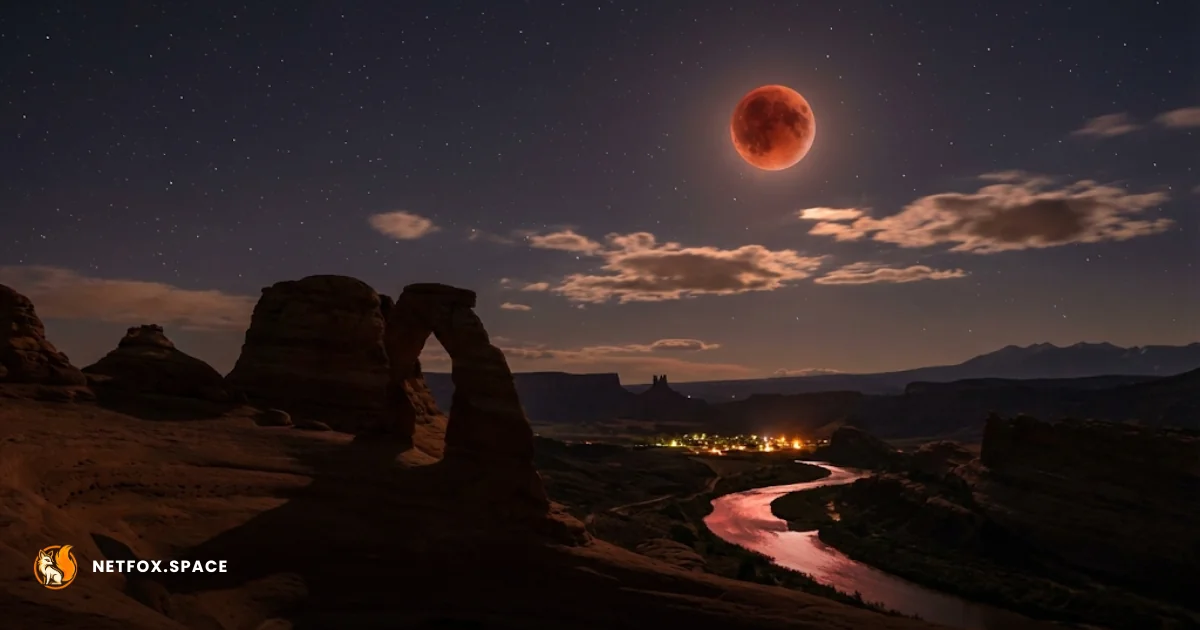
Local Timings for the Utah ‘Blood Moon’ Event
On March 3, 2026, skywatchers across Utah will be in a prime position to witness the first total lunar eclipse of the year. Unlike many celestial events that favor the eastern hemisphere, this "Blood Moon" will be fully visible across the western United States, with the Mountain Time Zone offering some of the clearest viewing windows.
The eclipse will begin in the early morning hours, with the moon gradually slipping into the Earth’s shadow. Because the entire period of totality occurs well before sunrise in Salt Lake City and surrounding areas, observers will see the moon turn a deep coppery red while it is still high enough in the western sky to avoid most horizon obstructions.
| Phase of Eclipse | Local Utah Time (MST) | Visual Appearance |
|---|---|---|
| Penumbral Begins | 1:44 am | Subtle dimming of the lunar surface |
| Partial Begins | 2:50 am | Earth's dark shadow begins "taking a bite" |
| Totality Begins | 4:04 am | Moon fully enters shadow; turns red |
| Maximum Eclipse | 4:33 am | Peak scarlet intensity |
| Totality Ends | 5:02 am | Moon begins to leave the central shadow |
| Partial Ends | 6:17 am | Final dark shadow leaves the lunar disk |
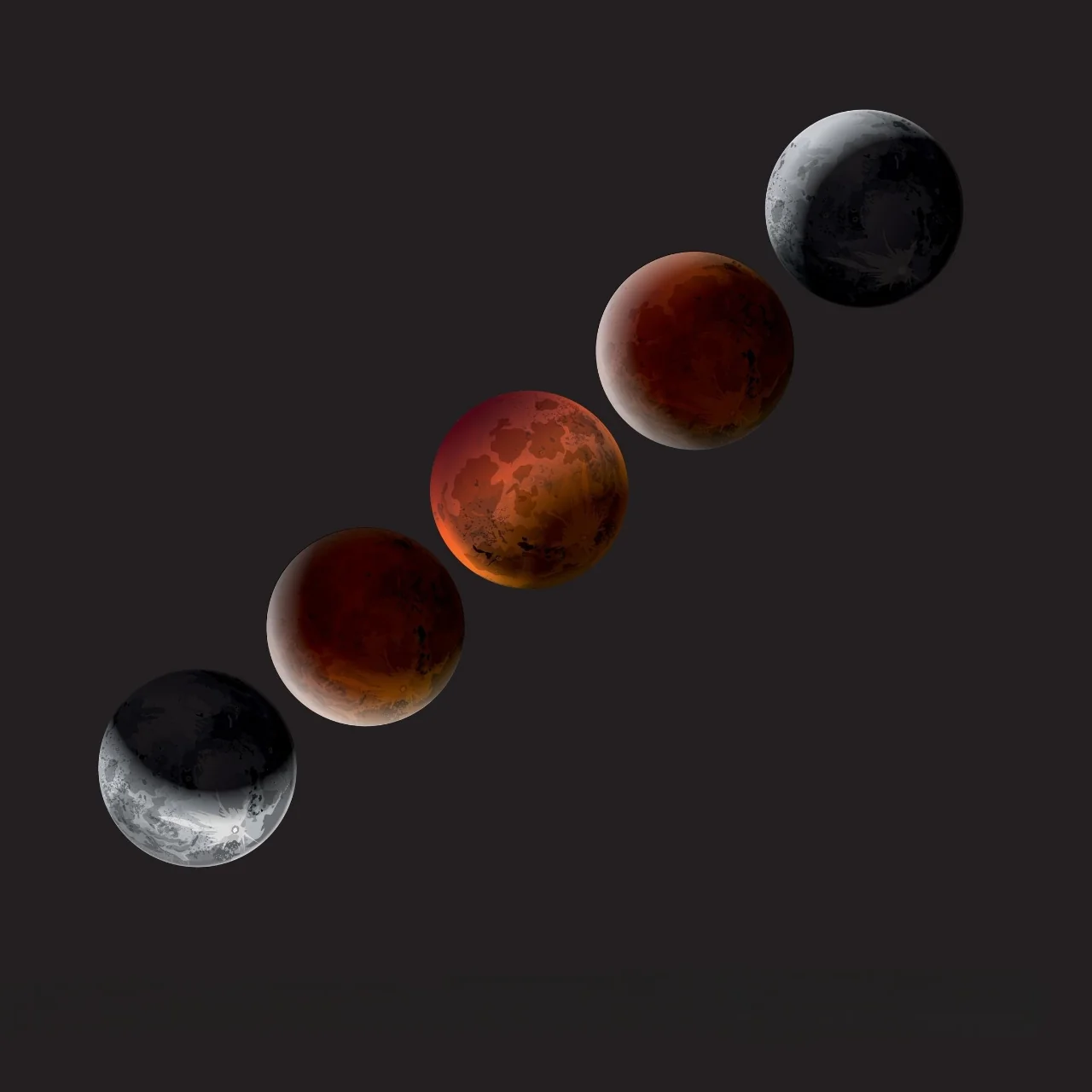 TOTAL ECLIPSE OF THE MOON
The Science of the Scarlet Hue: Rayleigh Scattering
The dramatic transformation of the moon from white to deep red is the result of a phenomenon known as Rayleigh scattering. While the Earth physically blocks direct sunlight from hitting the lunar surface, our planet's atmosphere acts as a giant lens, bending (or refracting) sunlight around the edges of the globe.
As sunlight passes through the atmosphere, shorter blue and violet wavelengths are scattered away. Longer red and orange wavelengths, however, pass through and are projected onto the moon. Effectively, the light seen on the moon during a total eclipse is the collective glow of every sunrise and sunset occurring on Earth at that exact moment.
Strategic Viewing Locations and Dark Sky Parks
While the eclipse is visible with the naked eye even from urban areas, Utah's abundance of International Dark Sky Parks offers a superior experience. Locations such as Zion National Park, Bryce Canyon, and Arches National Park provide the low light pollution necessary to see the stars "re-emerge" as the moon’s brightness fades during totality.
Experts from NASA’s Scientific Visualization Studio recommend finding a location with a clear, unobstructed view of the western horizon. As the eclipse progresses toward its final stages, the moon will be descending toward the west. High-altitude spots or open desert playas, such as the Bonneville Salt Flats, are considered top-tier locations for photographers looking to capture the red moon against the silhouette of the Wasatch Range.
Practical Tips for Maximizing the Lunar Experience
Observing a lunar eclipse requires no specialized safety equipment, making it far more accessible than a solar eclipse. However, specific preparations can enhance the detail visible on the lunar maria (the dark plains on the moon).
-
Optics: While not required, 7x50 or 10x50 binoculars are ideal for observing the "turquoise fringe"—a rare blue band that sometimes appears at the edge of the shadow due to the Earth's ozone layer.
-
Photography: To capture the red tint, use a tripod and a camera with a telephoto lens (at least 200mm). During totality, exposure times of 1 to 4 seconds are typically required due to the significant drop in lunar brightness.
-
Weather Readiness: Early March in Utah can bring sudden cloud cover or freezing temperatures. Observers are encouraged to check local forecasts from the National Weather Service and prepare with layers, as the total duration of the event exceeds five hours.
The move follows a period of high lunar activity, with this being the first of two lunar eclipses scheduled for 2026. The second event, a partial eclipse, will occur on August 28, 2026, though it will not offer the same "Blood Moon" intensity as the March display. For those in the Pacific and North America, this represents the last opportunity for a full year to see a total lunar immersion under such favorable orbital conditions.
References:
Comments (0)
Please login to comment
Sign in to share your thoughts and connect with the community
Loading...