

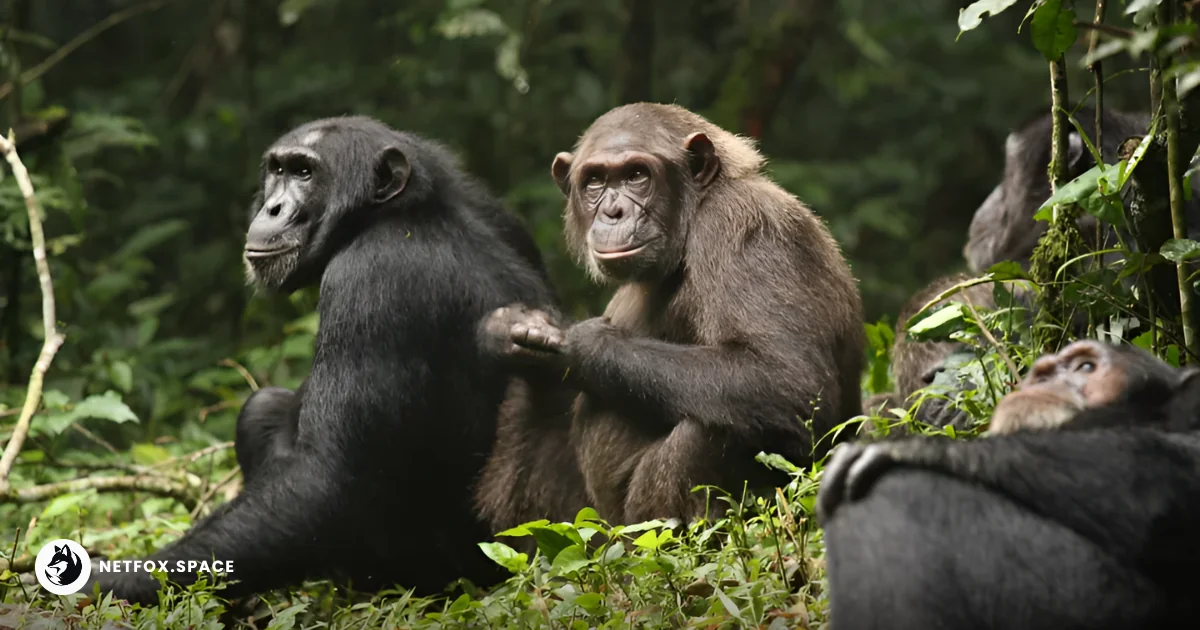
The collapse of a society often appears sudden, yet the underlying fractures usually begin with a shift in internal coalitions and resource management. In the 1970s, Jane Goodall observed a four-year "civil war" among the chimpanzees of Gombe Stream National Park in Tanzania, a rare event that researchers now use to understand the fundamental mechanisms of how complex social orders disintegrate.
The Kasakela-Kahama fracture as a model of internal decay
The conflict began not with an external invasion, but with a slow schism within a single, once-unified community. For years, the chimps lived in a stable hierarchy, but long-term observations of the Gombe population showed that as the community grew, internal competition for reproductive access and high-quality food sources created distinct sub-groups.
When the group finally split into the northern Kasakela and southern Kahama factions, it broke the social contract of mutual grooming and protection that had previously mitigated violence. Primatologists note that once the "us vs. them" boundary was established, the cost of aggression dropped while the perceived benefit of eliminating neighbors rose. This suggests that societal stability depends less on total resource abundance and more on the strength of the social ties that manage those resources.
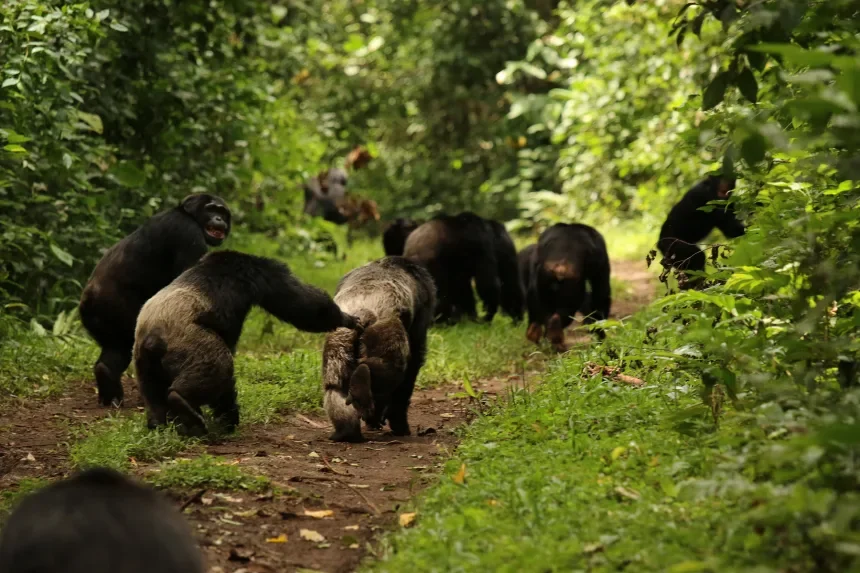 Ngogo chimpanzees grimace and reassure each other upon hearing other chimps in 2015. Aaron Sandel
Coalition shifts and the tactical elimination of rivals
The four-year war was characterized by targeted, lethal violence that differed from routine territorial skirmishes. The larger Kasakela group systematically picked off individual males from the Kahama group, often in coordinated "patrols" along the border. Analysis of these primate conflict dynamics indicates that this was not random aggression but a strategic consolidation of territory.
In primate societies, power is maintained through coalitions rather than brute force alone. The Gombe collapse illustrates that when a dominant coalition decides that the cost of maintaining a unified group outweighs the benefits of monopolizing territory, they may opt for a "scorched earth" approach to social restructuring. By the end of the conflict, the Kahama community was completely annihilated, demonstrating that once the threshold of total war is crossed in a social species, the outcome is rarely a return to the status quo, but rather the total erasure of the weaker faction.
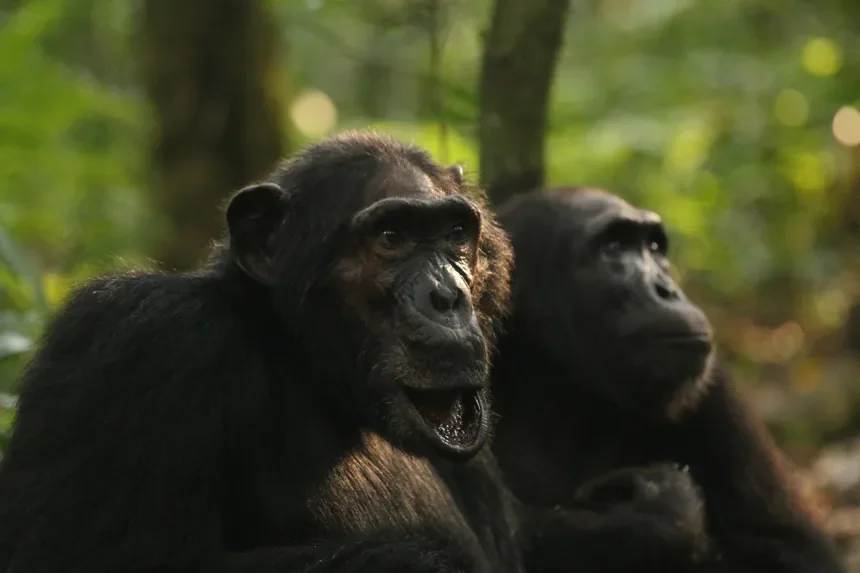 BF (left) was the last male to go between the Central and Western chimps and was close with Basie. Aaron Sandel
Limitations of the chimp-to-human societal comparison
While the Gombe war offers a stark biological mirror to human conflict, scientists caution against direct anthropomorphism. Recent re-evaluations of the Gombe data suggest that external pressures, such as human-driven habitat changes or artificial feeding stations during early research phases, may have exacerbated the intensity of the competition.
Furthermore, human societies possess institutional safeguards laws, diplomacy, and trade that chimpanzees do not. However, the core mechanism of the Gombe collapse remains a relevant warning for any social system: when internal divisions are allowed to harden into geographic or social silos, the biological "safety valves" that prevent lethal conflict begin to fail. The Gombe civil war proves that social complexity is a fragile equilibrium that requires constant maintenance of cross-group ties to survive.
Comments (0)
Please login to comment
Sign in to share your thoughts and connect with the community
Loading...