

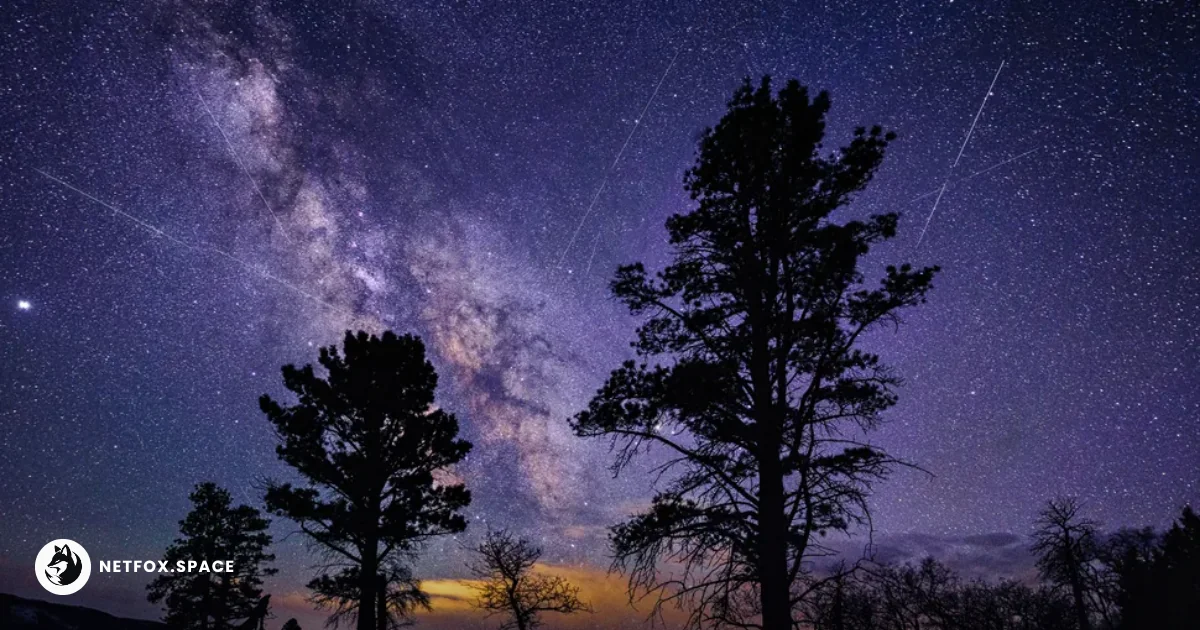
The 2026 Lyrid meteor shower offers a favorable window for observers as the Earth passes through the debris trail of Comet C/1861 G1 Thatcher. The event, which occurs annually in late April, is characterized by fast-moving meteors and the occasional appearance of bright fireballs.
Peak timing and the 2026 lunar illumination window
The 2026 Lyrid shower is active from approximately April 15 to April 29, with the peak of activity expected between the late evening of April 21 and the early morning of April 22. During this window, the Zenithal Hourly Rate (ZHR) typically reaches approximately 18 meteors per hour.
Observing conditions in 2026 are particularly favorable due to the lunar cycle. During the peak, the moon will be a waxing crescent with roughly 24% illumination. Because the moon will set relatively early in the night, it will not wash out the sky during the prime viewing hours before dawn, allowing for the high-contrast conditions necessary to spot fainter meteor streaks.
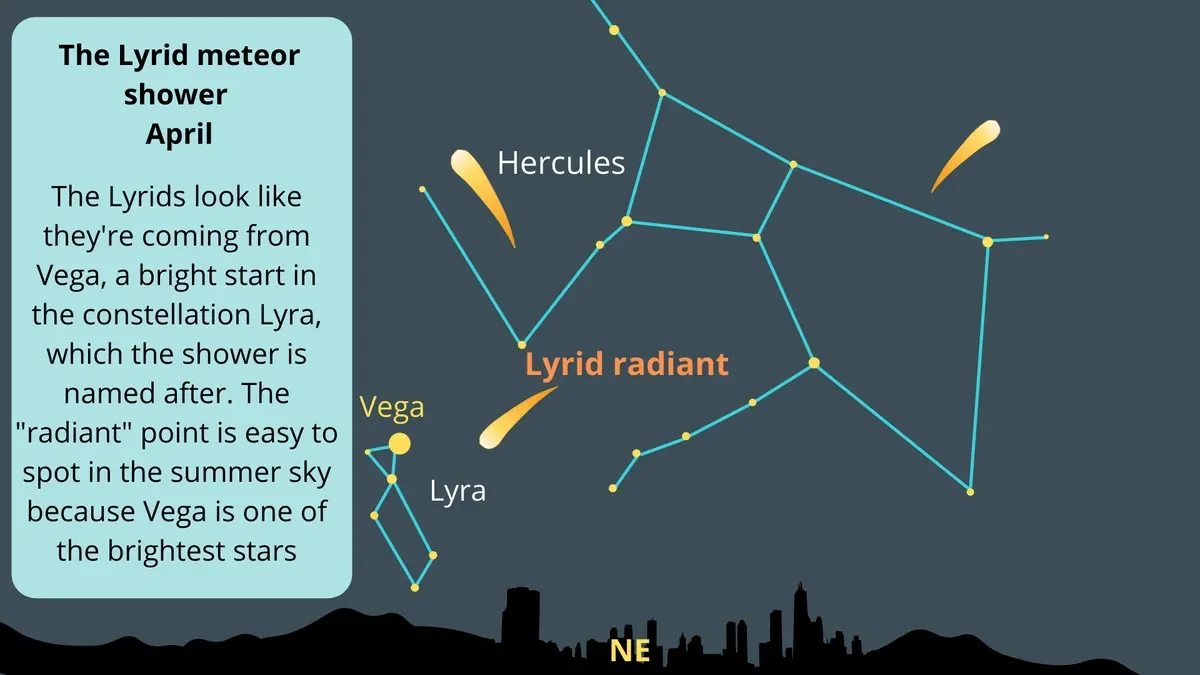 The radiant of the Lyrid meteor shower is located near the Hercules-Lyra border. (Image credit: Future)
Locating the radiant point in the constellation Lyra
While meteors can appear anywhere in the sky, they will appear to originate from a "radiant" point near the constellation Lyra, specifically close to the bright star Vega. This star is one of the brightest in the Northern Hemisphere and serves as a reliable navigational marker for observers.
As the night progresses, the radiant point rises higher in the sky. For observers in the Northern Hemisphere, the best viewing begins after midnight when Lyra has climbed sufficiently above the horizon. However, astronomical guides suggest looking away from the radiant point itself; meteors viewed further from their origin point often appear to have longer "tails" or trails, making them easier to track.
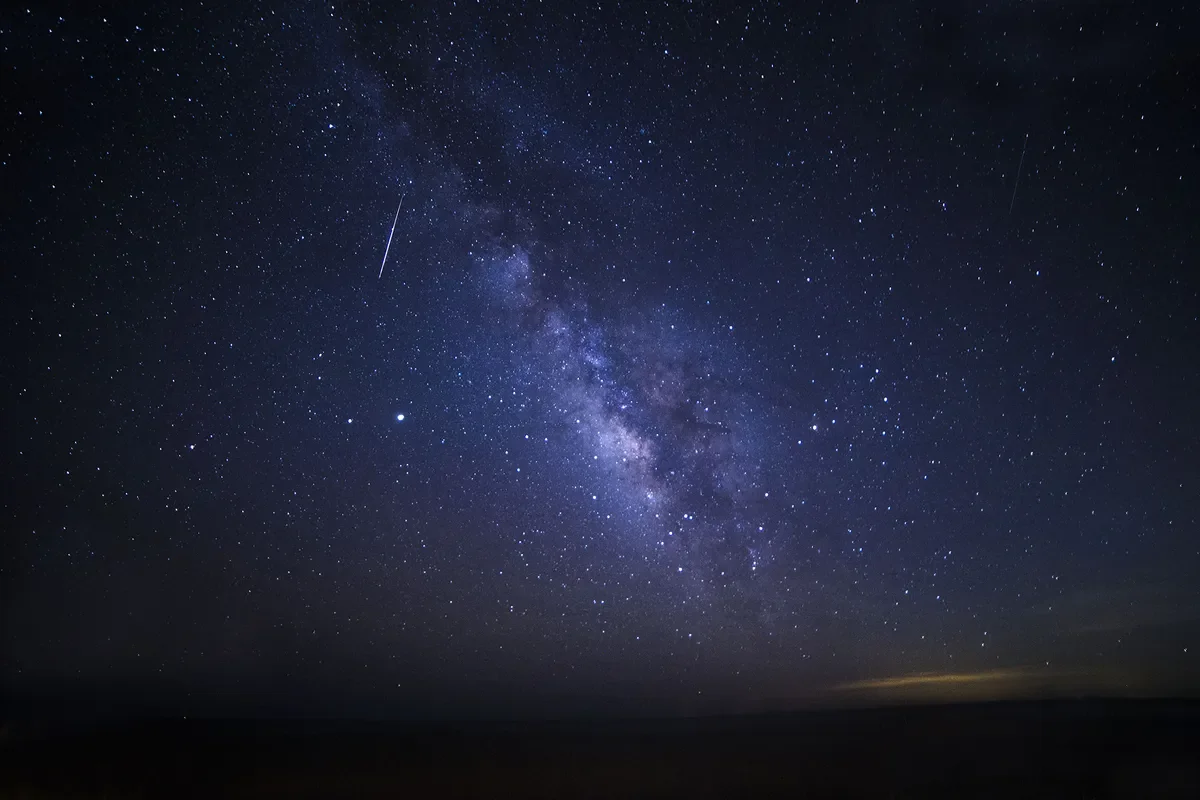 A Lyrid meteor crosses the Milky Way galaxy in this photo taken by Tina Pappas Lee on Fripp Island, South Carolina. The photo was taken at approximately 4:45 a.m. local time on April 22, 2020. (Image credit: Courtesy of Tina Pappas Lee)
Debris characteristics and the "Lyrid Fireball" phenomenon
The Lyrids are composed of particles shed by Comet Thatcher, which takes roughly 415 years to orbit the sun. Unlike some showers that produce a steady stream of faint flashes, the Lyrids are known for producing bright fireballs. These occur when larger fragments of cometary debris enter the atmosphere at speeds of approximately 110,000 miles per hour.
These fireballs can leave glowing ionized gas trails known as "persistent trains" that remain visible for several seconds after the meteor has disappeared. While the average rate is 18 meteors per hour, the Lyrids are occasionally unpredictable; historical records show rare "outbursts" where rates have surged significantly, though such events are not currently forecasted for the 2026 passage.
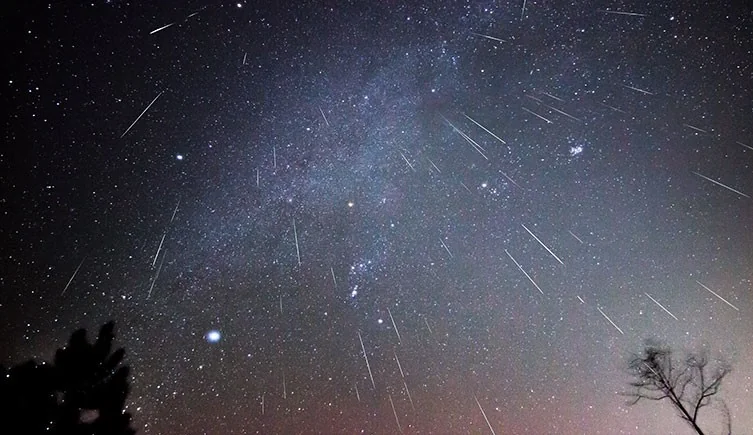 A meteor shower and the Milky Way in a composite image taken over several hours. © Genevieve de Messieres/ Shutterstock
Practical constraints for ground-based observation
Successful observation of the 2026 Lyrids requires managing light pollution and local weather variables. Because Lyrid meteors are moderately fast, they can be difficult to see in urban environments with high ambient light.
Observers should seek out dark-sky locations and allow at least 20 to 30 minutes for their eyes to dark-adapt to the surroundings. No specialized equipment like telescopes or binoculars is required, as these devices narrow the field of view, making it harder to catch meteors appearing in the periphery. Instead, a wide-angle view of the open sky remains the most effective method for tracking the 2026 peak.
Comments (0)
Please login to comment
Sign in to share your thoughts and connect with the community
Loading...