
Beyond the Crisis: How 'Runaway' Cultural Evolution Shaped the Anthropocene

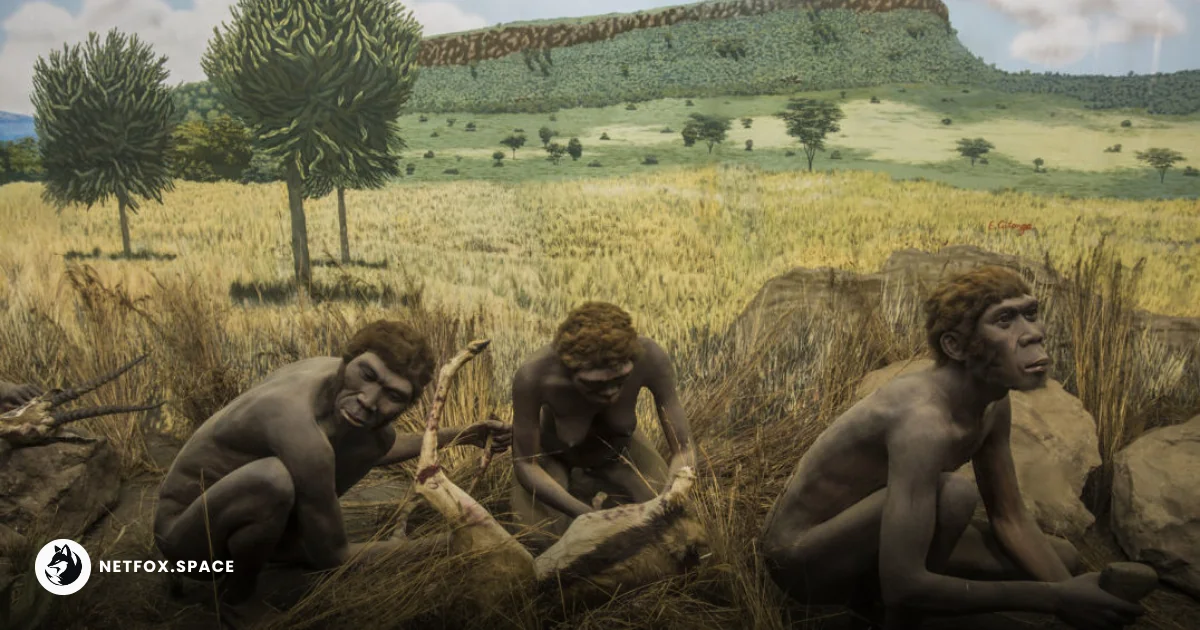
The Anthropocene is frequently framed as a contemporary failure of industry, but new evolutionary research suggests it is the inevitable result of a "runaway" process of human niche construction. By viewing planetary change through the lens of cultural evolution, researchers argue that human aspirations—rather than just ecological limits—are the primary force capable of redirecting Earth's future.
Human impact mirrors the scale of the Great Oxidation Event
The current era of human-driven planetary change is often treated as a historical anomaly, yet it shares a fundamental mechanism with the most disruptive event in Earth’s deep history. Research on the Great Oxidation Event shows that roughly 3 billion years ago, a single biological innovation—photosynthesis in bacteria—permanently altered the atmosphere, killing off non-adapted species while enabling the evolution of complex, high-energy life.
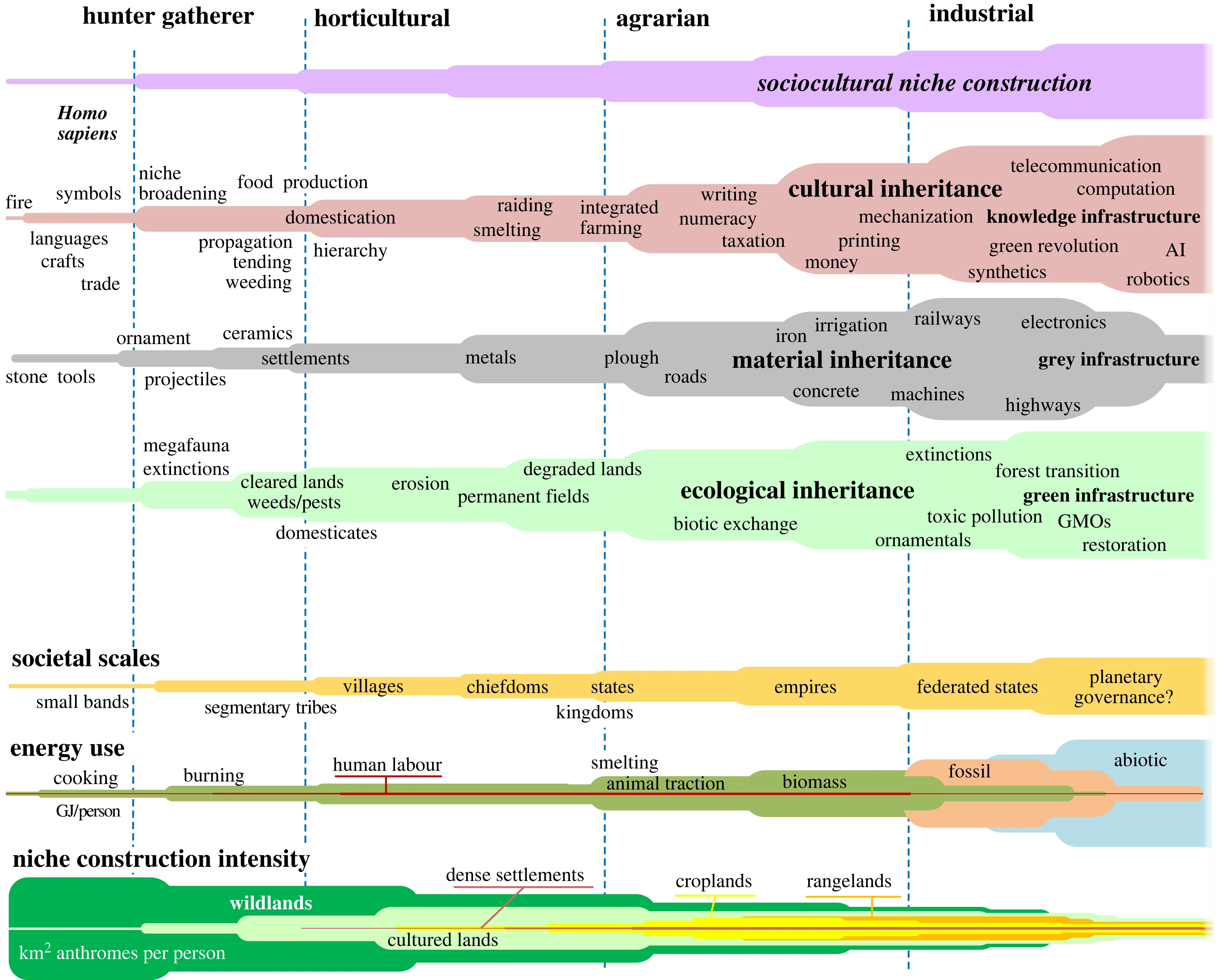 A stylized depiction of long-term evolutionary patterns of transformative anthroecological change, highlighting major regime shifts in sociocultural niche construction, cultural, ecological and material inheritances, societal scales, energy use per capita and niche construction intensity (anthrome area per capita). The linear appearance of this chart is for illustrative purposes only; patterns of change in sociocultural evolution are nonlinear, nondeterministic, and more appropriately depicted as a tree with interconnected branches—as a fabric of coevolution
In a similar vein, Erle Ellis and fellow researchers argue that human sociocultural capabilities have unlocked new scales of energy and evolutionary possibility. Just as oxygen-emitting bacteria were "ecosystem engineers" at a cellular level, human societies use fire, agriculture, and industrial technology to reconstruct the planet's ecological functioning. This perspective shifts the Anthropocene from being a modern "accident" to a predictable outcome of a species evolving the ability to accumulate culture and cooperate at massive scales.
Anthroecology theory explains the 'runaway' feedback loop
To understand why human impact has accelerated so rapidly, Ellis proposes a framework known as Anthroecology theory. Unlike standard Social-Ecological Systems (SES) theory, which focuses on maintaining the stability or resilience of a system, the full study in Philosophical Transactions of the Royal Society B focuses on the "evolution of transformational possibilities."
The core mechanism is "sociocultural niche construction." In biology, niche construction occurs when an organism alters its environment (like a beaver building a dam). Humans, however, have evolved the unique ability to pass down these environmental modifications through cultural inheritance rather than just genetics. This creates a positive feedback loop:
-
Humans develop a cultural tool (like irrigation) to solve a problem.
-
This tool transforms the environment, allowing for a larger, more complex society.
-
The new environment creates novel challenges (like soil salinity or social stratification).
-
Society develops even more complex sociocultural adaptations to solve these new challenges.
This "runaway" process explains why human societies tend toward larger scales and more intensive ecosystem engineering over time. It suggests that the Anthropocene condition is not a lack of adaptive capability, but the result of those very capabilities succeeding at an unprecedented scale.
Aspirations serve as a more effective lever than ecological limits
A critical finding of this evolutionary analysis is the limitation of "crisis narratives." Many environmental strategies emphasize "planetary boundaries" or natural limits that humans must not overstep. However, long-term archeological and ecological data suggests that human societies have rarely been constrained by fixed natural boundaries; instead, they have consistently evolved their way into new niches by transforming those very boundaries.
The research suggests that cultural narratives based on human aspirations for a better future—such as improved health, security, and connection to nature—are more likely to drive collective action than narratives of impending collapse. Because human agency is driven by shared social norms and goals, the power to "redirect" the Anthropocene lies in changing what societies aspire to achieve. If the "runaway" process of niche construction is to be steered toward sustainability, it must be fueled by a desire for a "better" planetary state rather than just a fear of a "worse" one.
The operational challenge of reconnecting people and nature
For practitioners in conservation and environmental policy, this evolutionary perspective demands a shift in strategy. If human culture is the dominant force shaping the planet, then "protecting nature" cannot mean excluding humans from it. Instead, it requires integrating human sociocultural systems with the broader web of life.
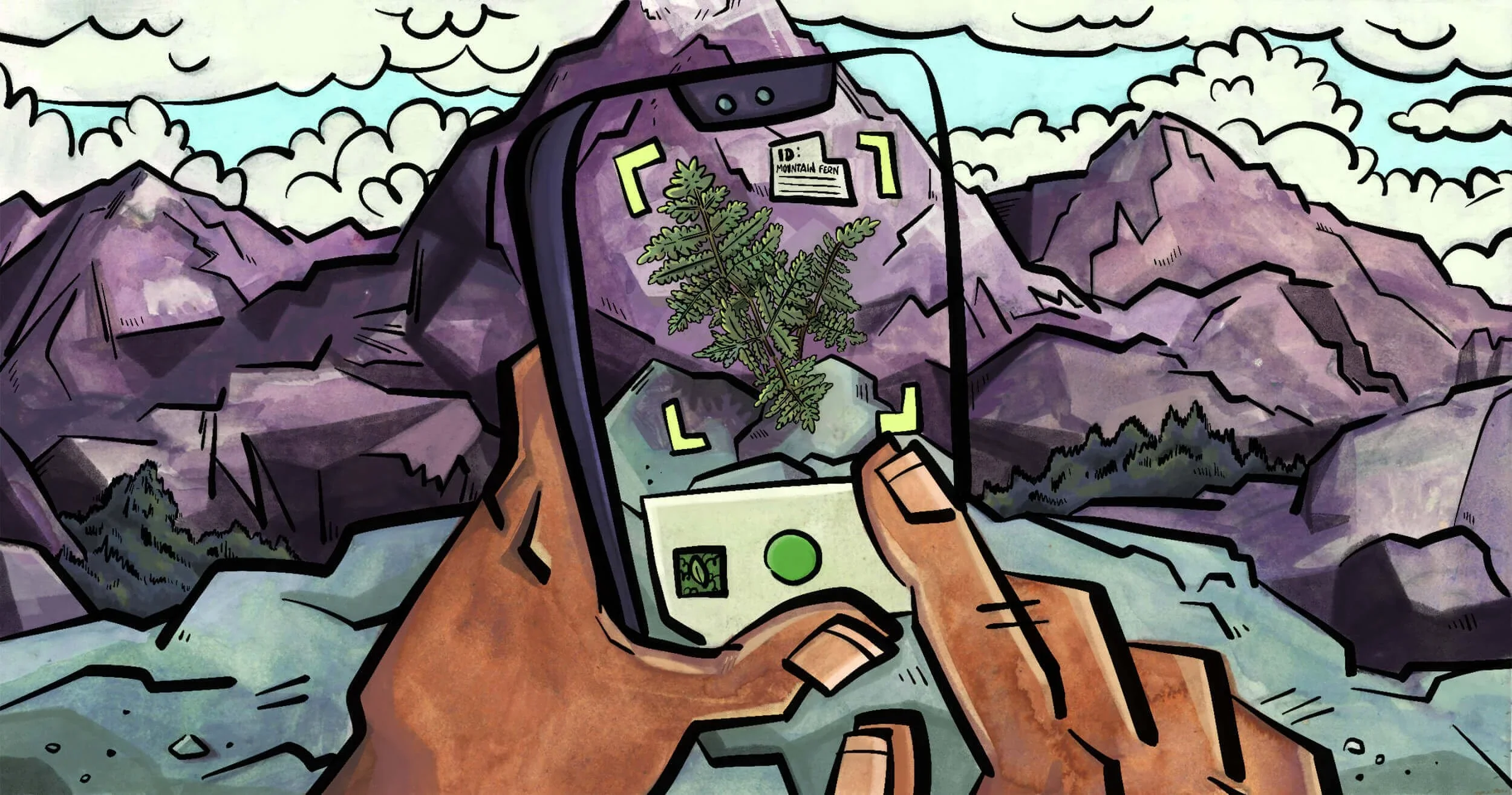 The operational challenge of reconnecting people and nature
Ellis highlights that the capabilities to solve planetary challenges—ranging from climate agreements to advanced monitoring technology—already exist. The barrier is the lack of widespread motivation to deploy them. Potential solutions involve:
-
Restoring Indigenous and traditional sovereignty: Utilizing long-standing cultural practices of environmental management that have sustained biodiversity for millennia.
-
Leveraging technology for connection: Using remote sensing, community conservation apps, and ecotourism to bridge the gap between urban populations and the ecosystems they depend on.
-
Shifting from resilience to transformation: Recognizing that some existing institutions may need to disappear to make room for new sociocultural adaptations better suited for the current planetary state.
The ultimate takeaway of Anthroecology theory is a form of cautious optimism: the same "runaway" cultural force that created the current crisis is the only force capable of engineering its way out of it. The outcome depends on whether societies can align their collective aspirations with the health of the biosphere that supports them.
Comments (0)
Please login to comment
Sign in to share your thoughts and connect with the community
Loading...