
Qingming Festival 2026: Dates, Rituals, and Regional Rules
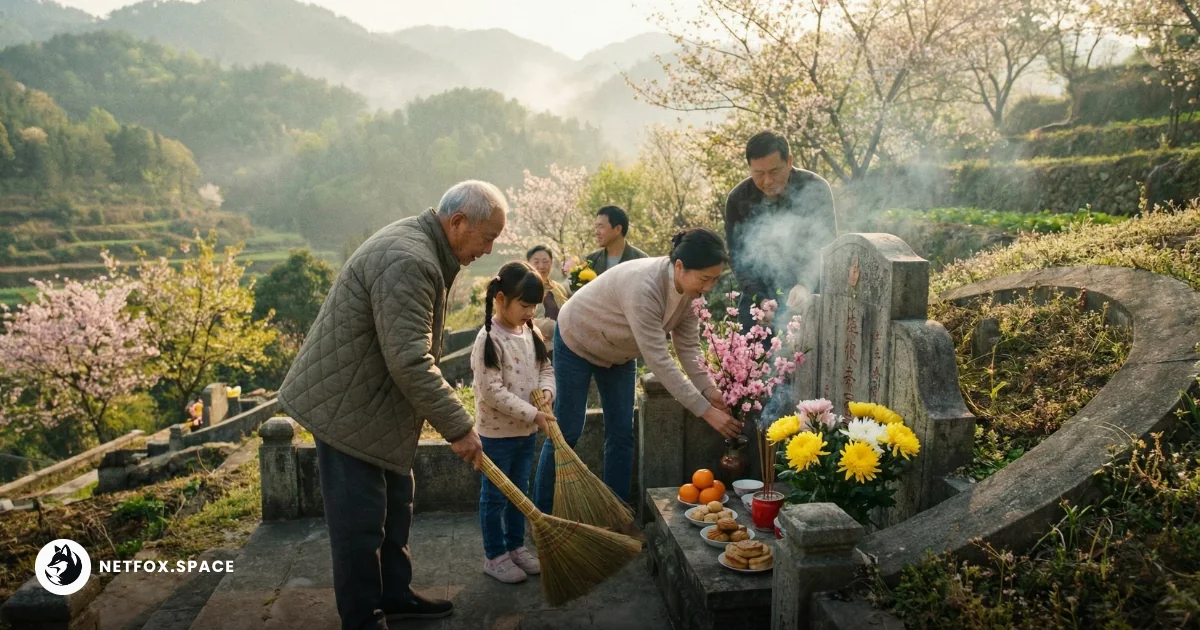
The Qingming Festival, often referred to as Tomb-Sweeping Day, falls on Sunday, April 5, 2026. As the 5th of the 24 solar terms in the traditional Chinese calendar, the day serves as the primary occasion for families to perform ancestral rites, maintain gravesites, and celebrate the arrival of spring.
Solar alignment dictates the variable April calendar date
Unlike many traditional Chinese holidays that follow the lunar cycle, the date of Qingming is determined by the solar calendar. It marks the moment the sun reaches a celestial longitude of 15°. This typically occurs 15 days after the Spring Equinox, placing the festival on April 4 or 5 in most years.
For 2026, the specific alignment results in a Sunday observance. While the day itself is a public holiday in mainland China, the cultural "window" for performing rites is much broader. Most traditions allow for tomb-sweeping activities to occur within a 20-day period—ten days before and ten days after the actual festival date. In 2026, this standard window runs from March 26 through April 15.
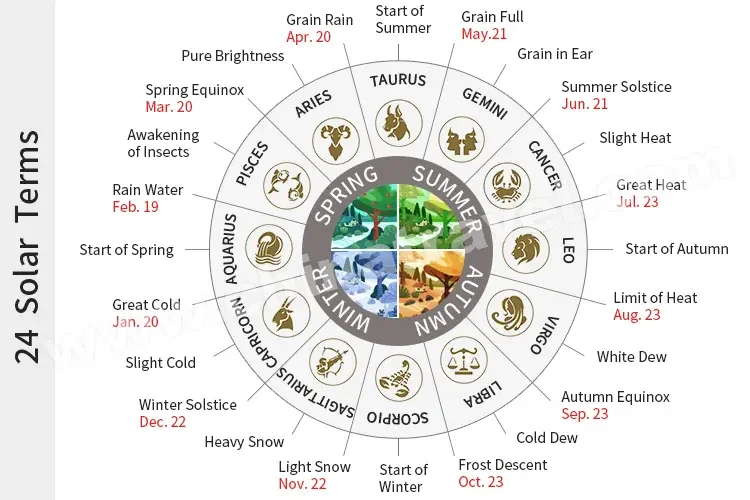 The 24 solar terms are composed of 12 major (sectional) terms, with each major term containing two minor (middle) solar terms. These terms represent a full orbit of the sun and split it into 24 segments, each lasting about half a month. The terms are used to mark the seasons, weather, and natural variations.
Regional protocols govern specific tomb-sweeping windows
While the general 20-day window is widely accepted, specific regions and dialect groups adhere to more rigid schedules. These variations often stem from local folk beliefs or historical precedents.
| Region / Group | 2026 Observance Window | Protocol Notes |
|---|---|---|
| Beijing | March 27, 29, 31; April 1, 3, 5 | Preference for odd-numbered dates leading to the festival. |
| Cantonese | April 2 – April 8 | Strictly limited to three days before and after the festival. |
| Zhejiang | April 2 – April 9 | Observations typically start three days before the date. |
| Shandong | April 1 – April 5 | Rites are concluded by the day of the festival. |
| Taiwan | Winter Solstice – April 5 | A long window for ancestral veneration starting in December. |
In southern Fujian and among Hakka communities, the window often opens as early as the Lantern Festival (March 3, 2026), allowing families flexibility to coordinate travel to ancestral villages. For those planning spring travel and cultural heritage tours, these regional dates are essential for navigating local traffic and site accessibility.
Energy management and the 9 am to 11 am ritual window
Traditional Chinese culture emphasizes the balance of yang (positive/living energy) and yin (negative/spirit energy). Rites performed at gravesites are believed to expose the living to heavy yin energy. To mitigate this, practitioners favor the hours when yang energy is ascending toward its peak at midday.
The most auspicious time for making sacrifices and sweeping tombs is considered to be between 9 am and 11 am. Most traditionalists advise that all rituals, including the burning of joss paper and food offerings, should be completed no later than 3 pm to avoid the waning of positive energy in the late afternoon.
Common rituals include:
-
Tomb Cleaning: Removing weeds and debris to perform "filial piety" through physical maintenance.
-
Offerings: Placing cold food, tea, or wine before the headstone.
-
Joss Paper: Burning "spirit money" or paper replicas of material goods to provide for the deceased in the afterlife.
-
Kowtowing: Performing three to nine prostrations based on patriarchal seniority within the family.
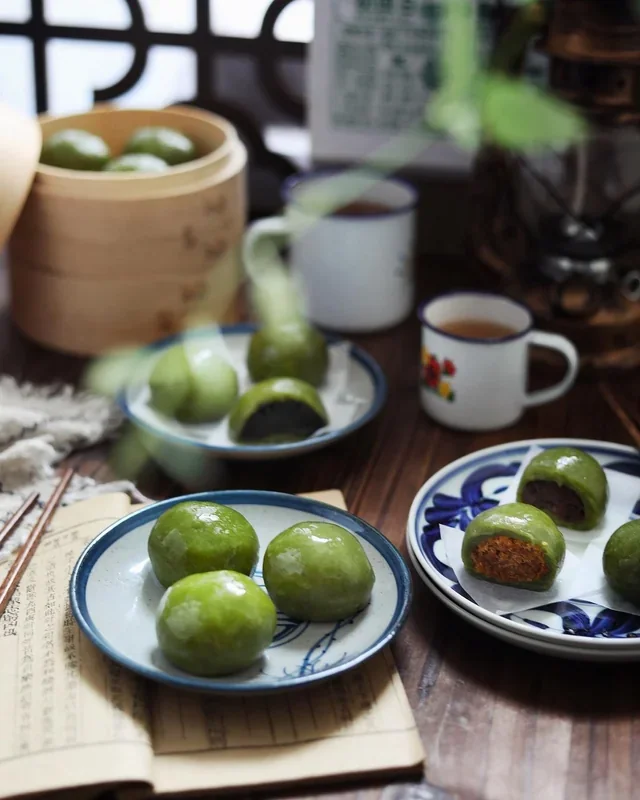 Did you know that a traditional food for this festivity is the Qingtuan (青团)? It is a sweet made of rice flour, and it has an inner stuffing of red bean paste. They are sweet and soft, with a glutinous consistency and a really unique taste.
Culinary traditions and the significance of "Pre-Qingming" tea
Qingming is also a significant marker for Chinese agriculture and tea production. The "Pure Brightness" period divides the green tea harvest. Leaves picked before April 5 are designated as Mingqian (Pre-Qingming) tea. These early-spring buds are prized for their tenderness and light aroma, often commanding significantly higher prices due to the limited harvest window and slower growth in cooler temperatures.
In terms of food, the festival is synonymous with qingtuan in eastern China—sweet green glutinous rice balls colored with barley grass or mugwort. In Taiwan, a similar herbaceous confection known as caozaiguo is consumed. These items are often prepared in advance, as the festival has historical roots in the "Cold Food Festival," a period when lighting fires for cooking was traditionally prohibited to honor the legend of the nobleman Jie Zitui.
Beyond the solemnity of the gravesite, the holiday encourages "Taqing" or "treading on the green." Families often spend the remainder of the day on outings, flying animal-shaped kites or planting willow trees, which are believed to ward off misfortune and welcome the productive spring season.
Comments (0)
Please login to comment
Sign in to share your thoughts and connect with the community
Loading...