
Qwen3-TTS Open Source: Alibaba's AI Voice Tech Released

Alibaba's Qwen team has open-sourced its Qwen3-TTS family, providing developers with high-fidelity voice cloning and speech design tools that rival the industry's most advanced proprietary systems.
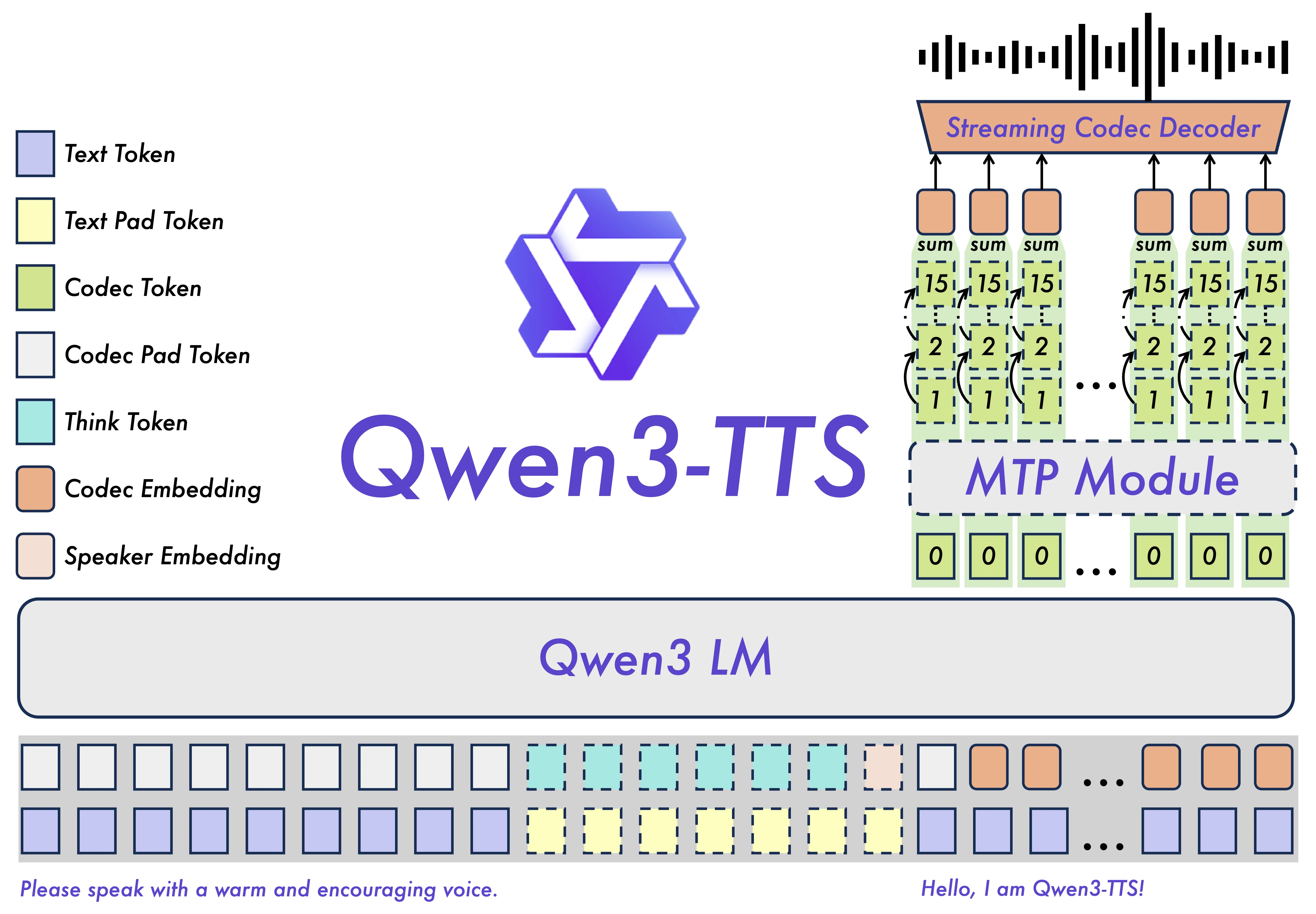
The release marks a significant shift in the accessibility of multimodal AI. By making the weights and code for the Qwen3-TTS-5B, 1B, and Small models publicly available, the Alibaba researchers are challenging the dominance of closed-door providers. Unlike traditional text-to-speech systems that often sound robotic or require massive datasets for fine-tuning, this new architecture utilizes Flow Matching and discrete speech tokens to capture the subtle nuances of human emotion and rhythm.
Voice Design and Zero-Shot Cloning
The flagship feature of the January 2026 release is its zero-shot voice cloning capability. Users can provide a mere five-second audio clip of a target speaker, and the model can immediately replicate that voice across any text input. Beyond simple cloning, the "Voice Design" feature allows for the creation of entirely synthetic personas by describing vocal characteristics—such as "breathy," "authoritative," or "excited"—using natural language prompts.
As the industry watches the heavyweight GPT-5.2 vs Claude 4.5 vs Gemini 3 2026 AI breakdown, Alibaba is carving out a dominant position in the open-weight audio sector. While top-tier models from OpenAI and Anthropic remain locked behind APIs, Qwen3-TTS offers a local-first alternative for developers concerned with data privacy or latency.
 Market Impact: The End of Proprietary Audio Moats?
Market Impact: The End of Proprietary Audio Moats?
The democratization of high-end audio generation has profound implications for the creator economy and software development. For years, realistic speech synthesis was a luxury reserved for companies with deep pockets. Now, small-scale developers can integrate human-like narration into apps without recurring per-character costs.
This move toward open multimodal accessibility arrives as competitors solidify ecosystem partnerships, similar to the Apple-Google Gemini deal that aims to reshape how consumers interact with mobile voice assistants. By providing the "voice" of the AI for free, Alibaba ensures that its architecture becomes the foundation for the next generation of digital avatars and customer service bots.
Technical Efficiency
The family of models is designed to scale across different hardware configurations. While the 5B model offers maximum prosody and realism, the Qwen3-TTS-Small variant is optimized for edge devices and real-time interaction. This versatility is essential for maintaining performance, particularly when complex developer environments are already struggling with overhead, as seen with recent Ghostty 1.3 memory leak fixes involving heavy AI-code integration.
The Qwen team has confirmed that the models are licensed for both research and commercial use, provided users adhere to the safety guidelines regarding synthetic media and deepfake prevention.
Sources:
-
Qwen AI Official Blog
-
Alibaba Group Research Division
Comments (0)
Please login to comment
Sign in to share your thoughts and connect with the community
Loading...