
Venus Wind Discovery: Atmospheric Thermostat Stabilizes Heat

The Discovery: Wind as a Planetary Temperature Regulator
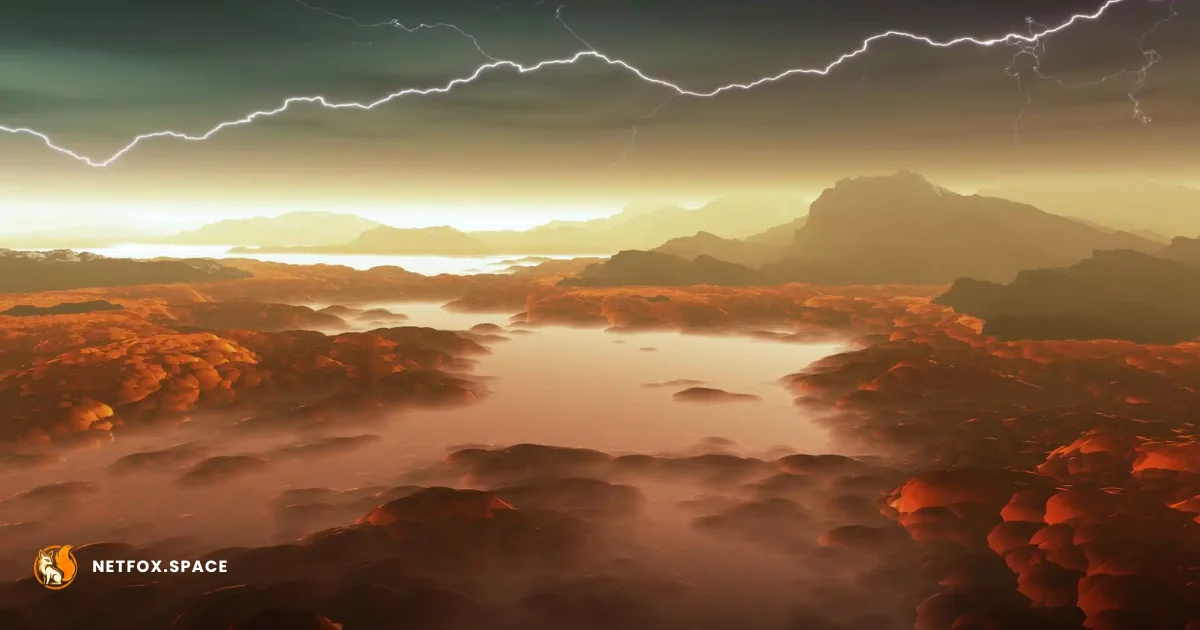
On March 7, 2026, a study published in the Journal of Geophysical Research: Planets fundamentally altered the scientific understanding of Venus’s atmospheric behavior. Led by Maxence Lefèvre of Sorbonne University, researchers utilized advanced computational models to reveal that the planet’s legendary winds do more than just whip clouds around at 220 mph; they act as a sophisticated "planetary thermostat."
This discovery marks a departure from the long-held view that the Venusian surface is a uniform, static inferno. Instead, the research demonstrates that the interaction between the dense atmosphere and the planet's rugged topography creates localized climate pockets. These winds effectively moderate the extreme temperature fluctuations caused by the planet’s grueling 117-Earth-day cycle, providing the first evidence of a self-regulating thermal mechanism on our "sister planet."
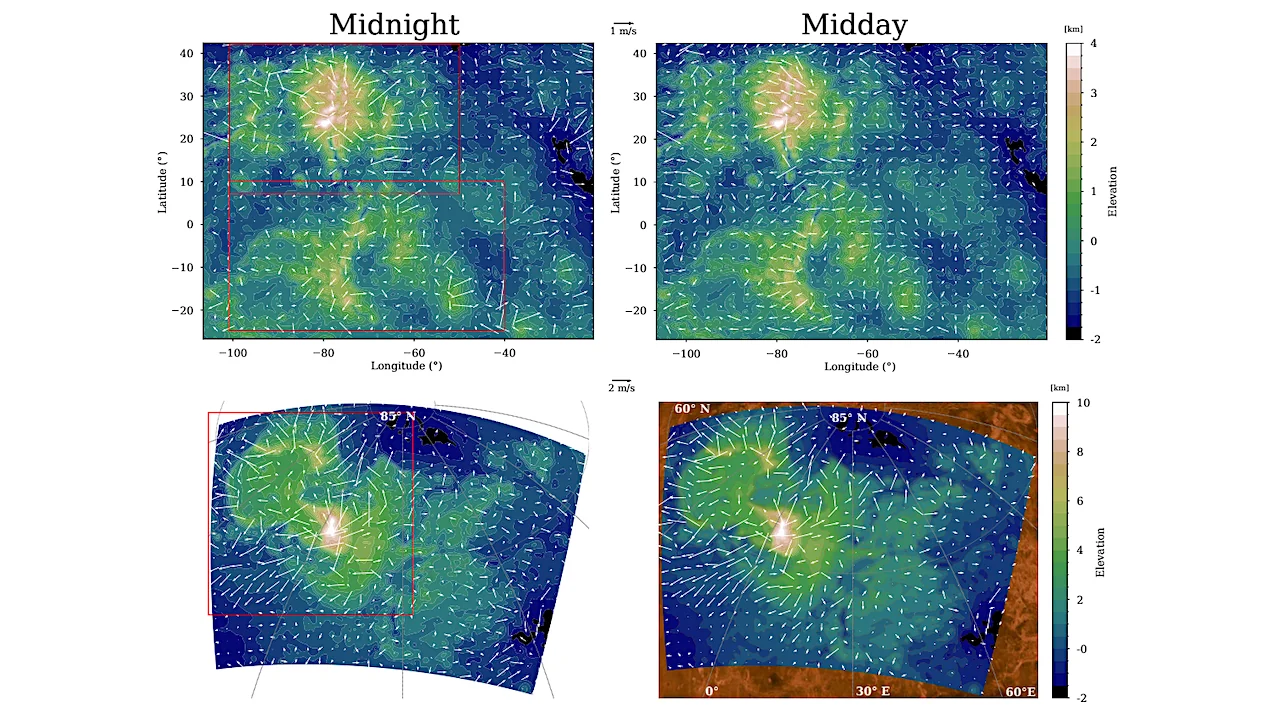 Snapshots maps of horizontal winds 10 m above the local surface (m s−1 ) at midday (left) and midnight (right) in the centre of the Equatorial (top) and Polar (bottom) domain. Squares are the domains for Phoebe Regio, Beta Regio and Ishta Terra shown in Fig 3. — astro-ph.EP
Diurnal Shifting: The Upslope-Downslope Mechanism
The study identifies a specific cyclical wind pattern driven by solar heating. During the long Venusian day, heat from the surface drives winds "upslope" toward the mountain peaks. As the sun sets and the surface begins its agonizingly slow cooling process, the cycle reverses, with air moving "downslope."
This constant movement acts as a heat exchange system. In high-elevation regions, this mechanism is so efficient that it keeps day-night temperature variations to less than 1 degree Kelvin. In contrast, the lowlands—which lack the vertical topography to trigger this exchange—experience much harsher swings of approximately 4 degrees Kelvin. This finding provides the first high-resolution map of how "weather" actually functions on a planet previously thought to have none at the ground level.
Hidden Implications: The Death of the "Uniform Inferno" Theory
For decades, the aerospace sector and planetary scientists treated Venus as a monolithic environment where conditions were identical everywhere. The "hidden" reality revealed by this study is that Venus is geologically and atmospherically segmented. By moving away from "uniform" planetary models, the Sorbonne University team has shown that the highlands are actually the most thermally stable environments in the inner solar system, despite the 900°F baseline.
This differentiation is critical because it explains why previous landers, such as the Soviet Venera probes, recorded slightly different atmospheric pressures and temperatures than predicted. We now know these weren't sensor errors; they were signatures of regional "micro-climates" created by the terrain. This structural shift in thinking moves Venus from a "dead" world to a dynamic one where the geography dictates the survival of the atmosphere.
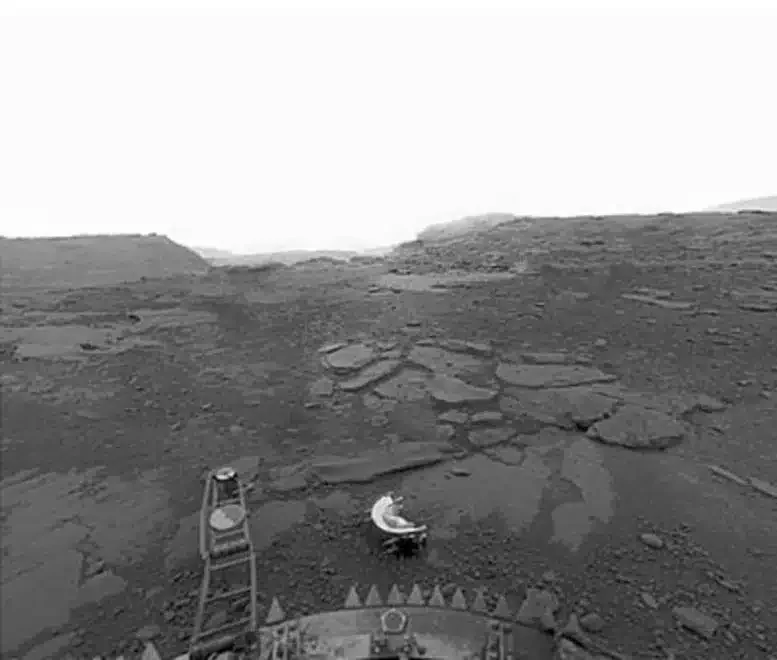 The Venera 13 spacecraft captured this view of Venus’ harsh surface. Credit: Venera 13/Don P.Mitchell
Venus Atmospheric Research Milestones
| Year | Milestone | Discovery Impact |
|---|---|---|
| 1982 | Venera 13 Landing | First color images; confirmed 90 bar pressure. |
| 2015 | Akatsuki Launch | Detected 6,200-mile-long stationary gravity waves. |
| 2024 | Akatsuki Mission End | Linked super-rotation to thermal tides. |
| 2025 | Lava Tube Discovery | Confirmed 0.6-mile-wide subsurface volcanic tunnels. |
| 2026 | Sorbonne Wind Study | Proved winds act as a regional temperature thermostat. |
Strategic Impact on DaVINCI and EnVision Landing Sites
The immediate systemic implication of this research falls on NASA and the ESA (European Space Agency). Upcoming missions, specifically DaVINCI and EnVision, are designed to drop probes into the Venusian clouds to sample the air and image the surface. Previous landing site models did not account for "downslope" wind speeds, which this study suggests could be strong enough to drift a lander kilometers away from its intended target.
Furthermore, the study highlighted a secondary risk: dust. In regions like Alpha Regio, the winds are now known to be strong enough to lift 75-micron sand particles, creating localized dust storms. For a mission like DaVINCI, which relies on sensitive optical sensors during its hour-long descent, these "fine particle storms" could obscure the very high-resolution images the mission is designed to capture.
The Next Frontier: Modeling the "Transition Region"
The focus of the space science community is now shifting to the "Transition Region" (altitudes between 80 km and 130 km). This is where the planet’s super-rotation meets the newly discovered day-to-night circulation regimes. Scientists are now racing to integrate this "thermostat effect" into global circulation models to predict how volcanic outgassing might be distributed across the planet.
If the winds are indeed as regionally controlled as the 2026 data suggests, it may mean that certain volcanic gases are "trapped" in highland basins, providing a potential explanation for the "unknown absorber" in Venus's atmosphere that has baffled astronomers for nearly a century. The success of the next decade of exploration now hinges on whether our robots can withstand the "thermostat" they are about to fly into.
Comments (0)
Please login to comment
Sign in to share your thoughts and connect with the community
Loading...