
Logo
HomeQ&AAnti-ScamNotifications
Comment
Technology

Why Vivo Aspires to Zeiss’s Optical Superiority

Galvin Prescott
Galvin Prescott
Jan 31, 20263 min
0
0
0
126
Five years into their partnership, Vivo’s pursuit of Zeiss technology reveals a shift from smartphone features to "true" professional optical reliability.

In the hyper-competitive arena of mobile photography, the gap between a "smartphone camera" and a "professional tool" has traditionally been defined by the quality of the glass. For Vivo, the pursuit of Zeiss technology has transcended a simple marketing logo, evolving into a foundational R&D mission. As of early 2026, the partnership has produced nearly 20 co-engineered devices, with Vivo's leadership admitting that the 178-year-old German firm possesses the precise, stable, and reliable optical "soul" that electronics companies can only replicate through years of high-stakes collaboration.

The Physics of Perfection: Why Coatings Matter

The most tangible element of the Zeiss influence is the T Coating*, a multi-layer thin-film technology originally invented in 1935. While many smartphone manufacturers rely on AI to "clean up" lens flares and ghosting in post-processing, Vivo has integrated Zeiss’s physical anti-reflective standards to stop these artifacts before they reach the sensor.

This hardware-first approach is central to the best Chinese phones of 2026, where Vivo’s X-series consistently outperforms rivals in complex lighting scenarios. By reducing stray light and improving light transmission from 60% to nearly 90%, the hardware achieves a level of "purity" that no amount of computational photography can fully simulate.

Reliability vs. Features: The "Pro" Conflict

Behind the scenes, the collaboration has forced a cultural shift within Vivo. Oliver Schindelbeck, a senior manager at Zeiss, recently highlighted that the greatest challenge in smartphone optics isn't adding more megapixels, but ensuring "pro" reliability. In the professional world, a tool must deliver consistent color rendition and sharpness every single time, regardless of temperature or humidity.

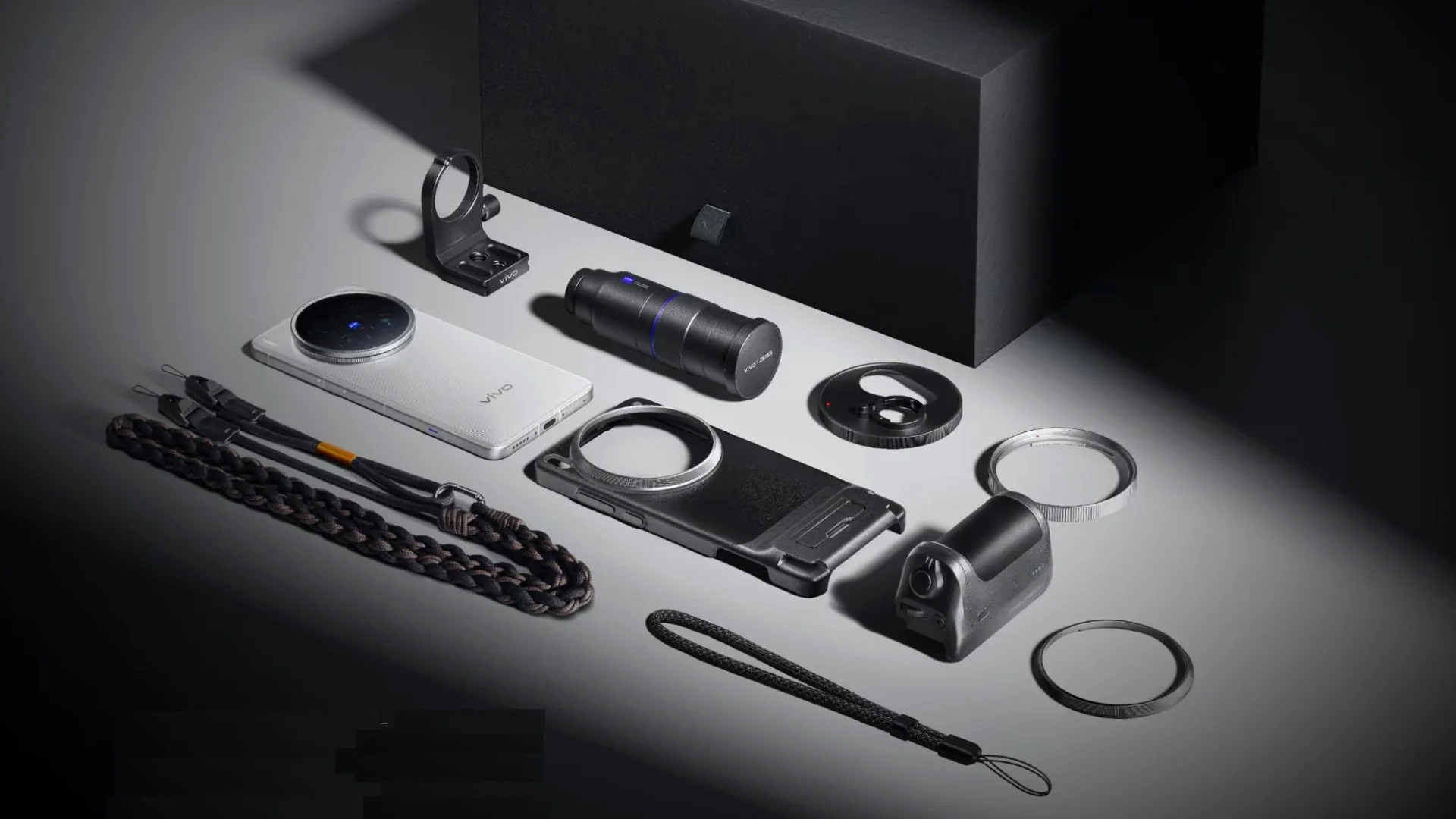
"The speed of a tech company like Vivo helps us focus, but our focus on perfection helps them stabilize," Schindelbeck noted during a 2026 workshop. This synergy has birthed the APO Floating Telephoto Camera, a system that uses aperature-correcting "floating" elements—a technology once reserved for high-end DSLR lenses—to maintain focus and clarity across extreme zoom ranges.
Beyond the Lens: The 3D Pop and AI SynergyBeyond the Lens: The 3D Pop and AI Synergy

Beyond the Lens: The 3D Pop and AI Synergy

The "Zeiss Look" is a specific aesthetic characterized by the 3D Pop effect—a combination of extreme sharpness and a mesmerizing, natural bokeh. To achieve this in a device only 9mm thick, Vivo uses custom V3 imaging chips to run Zeiss-designed algorithms that mimic iconic lenses like the Biotar and Distagon.

This deep integration allows the device to separate the subject from the background with a level of organic depth that avoids the "cut-out" look of standard portrait modes. It’s an example of how tech companies are using traditional optical science as a benchmark for their digital evolution.

The Future of the ‘Great Optics’ Strategy

Looking ahead, the partnership is expanding into the Vivo ZEISS Great Optics Strategy, which aims to bring professional-grade imaging to mid-range devices and explore 3D imaging for smart healthcare. As Vivo continues to scale its R&D, the ultimate goal remains the same: to move past the "gadget" phase and solidify the smartphone as a legitimate instrument for artists.

For the tech enthusiast, the message is clear: the future of mobile photography isn't just about more sensors; it’s about the precision of the glass they sit behind.

Comments (0)

Sort by

Please login to comment

Sign in to share your thoughts and connect with the community

Loading...

Related news

Google launches Gemma 4, a new generation of open-source models built on Gemini technology. Learn about the technical specs, performance, and how to run it locally.

Google Gemma 4 Launch: Open-Source Models and Local Access

43 views•3 min
The Vivo X300 Ultra's Chinese launch reveals a significant price gap for international buyers. Explore the specs, import costs, and software limitations.

Importing the Vivo X300 Ultra: Costs, Specs, and Risks

62 views•4 min
Recent data reveals a surprising winner in vehicle durability. Learn why standard hybrids are outperforming both electric and gasoline cars in long-term reliability.

Hybrid vs. Electric vs. Gas Car Reliability Explained

68 views•4 min
Technical deep dive into the Axios npm compromise (v1.14.1 and v0.30.4). Analysis of the plain-crypto-js RAT dropper, OIDC bypass, and anti-forensic cleanup.

Technical Analysis: Axios npm Supply Chain Attack

92 views•5 min
As Apple marks 50 years, we examine the cultural and technical shifts that turned a garage startup into a $3.5 trillion titan through eight core product leaps.

Apple at 50: From Garage Startup to $3.5 Trillion Technology Pillar

150 views•3 min
A technical narrative of a 320GB production server failure, focusing on Samsung LRDIMM errors, kernel RAS logs, and the operational cost of technical negligence.

From Morning Crash to Evening Demolition: Proving a 320GB Production Server Failure When Management Derailed

76 views•6 min
Sony increases PlayStation 5 prices by $100, citing AI-driven memory demand and geopolitical instability. The hike affects PS5, PS5 Pro, and PlayStation Portal.

Sony Hikes PlayStation 5 Prices by $100 Amid Surging Memory Costs

78 views•3 min
A technical audit of Alibaba’s AgentScope framework, focusing on its three-layer architecture, four-tier fault tolerance, and multimodal ContentBlock system.

Alibaba AgentScope Technical Deep Dive: AOP and Fault Tolerance

189 views•4 min
Meta has initiated targeted layoffs across several divisions, including Reality Labs and Instagram, as it pivots its capital allocation toward AI development.

Meta Cuts Jobs Across Reality Labs to Fund AI Pivot

234 views•2 min
litellm 1.82.8 Supply Chain Attack: Forensic Analysis of the litellm_init.pth Payload

litellm 1.82.8 Supply Chain Attack: Forensic Payload Analysis

191 views•4 min
Epic Games reduces workforce by 1,000 and slashes $500 million in costs as Fortnite growth cools. Detailed analysis of the gaming sector's structural shift.

Epic Games Layoffs: 1,000 Cut Amid Fortnite Revenue Decline

49 views•3 min
OnePlus 15T debuts with Snapdragon 8 Elite Gen 5, 7,500mAh silicon-carbon battery, and 165Hz AMOLED. Global launch as OnePlus 15s expected for 2026

OnePlus 15T: Snapdragon 8 Elite Gen 5 & 7500mAh Battery Launch

65 views•4 min
Samsung's Galaxy S26 will reportedly support Apple’s AirDrop protocol. Discover how this cross-platform shift impacts the mobile ecosystem and user interoperability.

Samsung Galaxy S26 to Feature Native AirDrop Compatibility

57 views•4 min
Apple’s upcoming M5 Pro and M5 Max chips will reportedly utilize vertically stacked dies and 3D packaging to break current silicon performance barriers.

Apple M5 Pro and M5 Max to Feature 3D Hybrid Bonding

62 views•4 min
Lightpanda challenges Chromium's dominance with a Zig-based, cloud-native browser designed specifically for AI agents and high-speed machine automation.

Lightpanda: Why the Machine-First Browser Beats Chromium

93 views•5 min
OpenAI acquires Astral, creators of the ultra-fast Ruff linter, signaling a strategic shift toward high-performance Rust-based Python tooling for AI agents.

OpenAI Acquires Astral: The Rustification of AI Development

93 views•4 min
Future gaming laptops will feature advanced OLED displays and high-performance chips, but supply chain shifts and premium specs are driving MSRPs to record highs.

Next-Gen Gaming Laptop Prices to Surge Amid Component Shifts

62 views•4 min
Samsung suspends Galaxy Z TriFold sales just three months after launch. Explore the technical hurdles, supply chain impacts, and the future of foldable tech.

Samsung Halts Galaxy Z TriFold Sales: Strategic Retreat?

81 views•4 min
NVIDIA launches NemoClaw at GTC 2026, providing a secure infrastructure layer for autonomous OpenClaw agents on RTX PCs, DGX Spark, and cloud platforms.

NVIDIA NemoClaw: Securing the OpenClaw Agent Ecosystem

174 views•5 min
Cloudflare introduces Markdown for Agents to bridge the gap between AI reasoning and human readability. Explore the impact on LLM tool-calling and API design.

Markdown for Agents: Cloudflare’s New AI Protocol Explained

116 views•4 min