

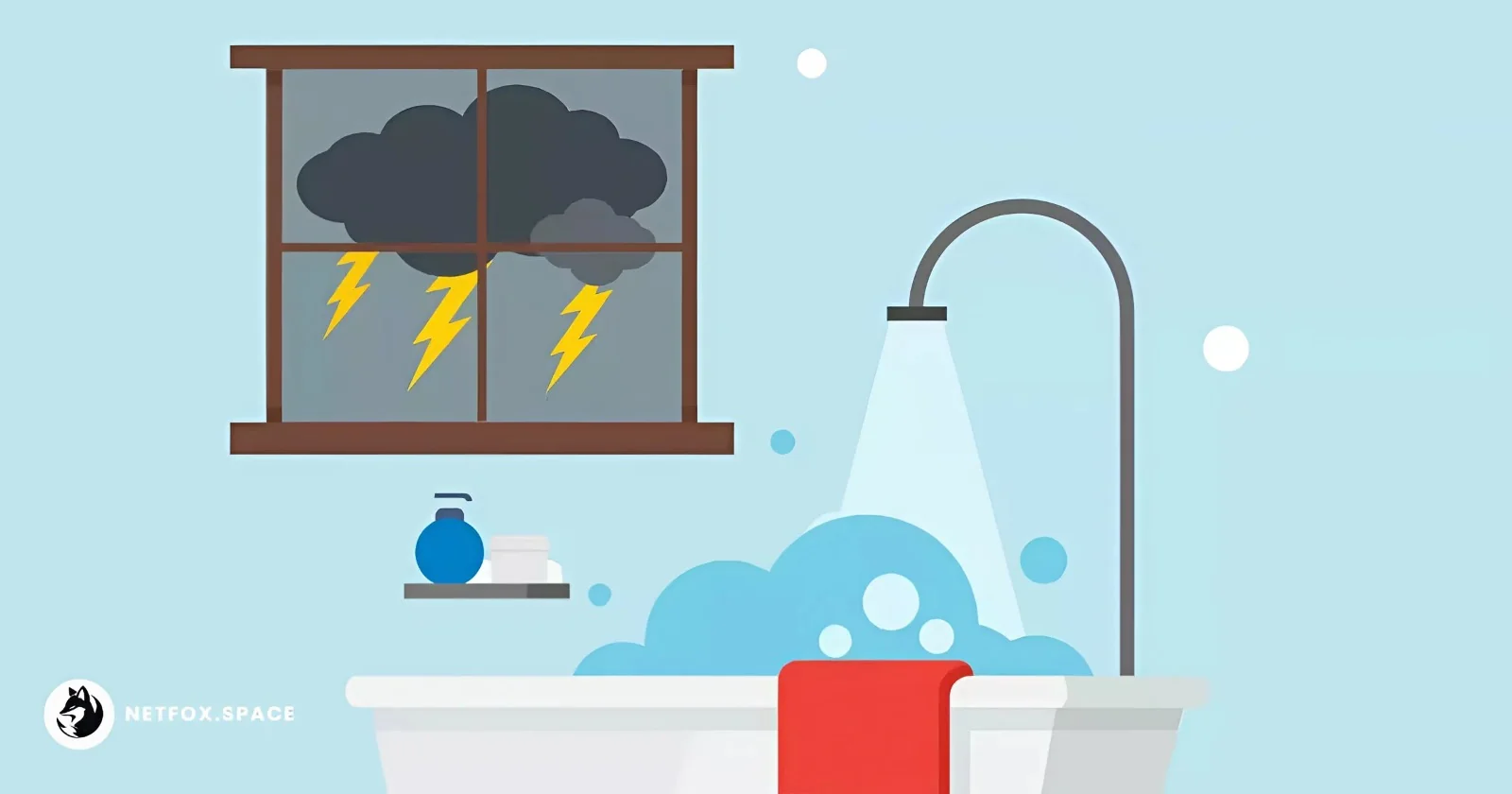
While the interior of a home provides significant protection from a direct lightning strike, it does not act as a perfect insulator. Federal safety agencies and atmospheric experts maintain that activities involving water during a thunderstorm—specifically showering—pose a documented risk of electrocution.
Lightning follows the path of least resistance through residential infrastructure
The primary danger of indoor lightning exposure is not a bolt coming through the roof, but rather the surge of electricity entering the home through utility lines or plumbing. When lightning strikes a building or a nearby utility pole, the massive electrical discharge seeks the most efficient path to the ground. In many homes, the lightning safety guidelines established by federal agencies note that metal pipes and wiring serve as high-speed conductors for this energy.
Copper and galvanized steel pipes are particularly effective at carrying current. If a strike occurs, the electricity can travel through the main water line and into the interior fixtures. A person in a shower, who is both wet and in contact with metal handles or a drain, effectively becomes part of the electrical circuit. According to data regarding risks of indoor electrocution, approximately one-third of all lightning-related injuries occur indoors, often involving contact with conductive materials during a storm.
Modern plumbing materials offer limited protection against electrical surges
A common misconception is that modern homes equipped with plastic piping, such as PEX or PVC, are immune to these risks. While it is true that plastic is an insulator and does not conduct electricity as well as copper, the safety benefit is not absolute. The water itself—which contains dissolved minerals and ions—remains a conductor.
 Avoid plumbing. Do not wash your hands, take a shower or wash dishes.
The mineral content in standard tap water allows a current to bridge gaps that might otherwise be stopped by plastic fixtures. Furthermore, even if the pipes themselves are non-metallic, the water inside them provides a continuous path from the external strike point to the faucet. Official accounts of severe lightning facts emphasize that while plastic piping may reduce the statistical likelihood of a surge reaching a resident, it is not a sufficient safeguard to override standard safety protocols. The risk remains high enough that experts recommend suspending all water-based activities, including washing dishes or using a bathtub, until the storm has passed.
Comprehensive indoor safety extends beyond water-based activities
Protecting oneself from indoor surges requires an understanding of all conductive entry points into a structure. Beyond plumbing, electricity can travel through electrical wiring, telephone lines, and even radio or television reception systems. The precautions during a thunderstorm should include avoiding any device that is physically plugged into a wall outlet.
Concrete structures also present a specific hazard. While concrete itself is not highly conductive, many floors and walls are reinforced with metal bars or mesh known as rebar. Lightning can travel through this internal metal skeleton, making it dangerous to lean against concrete walls or lie on unfinished basement floors during a peak event.
Safety experts suggest following the "30-30 rule": if you hear thunder within 30 seconds of a lightning flash, you are close enough to be at risk. More importantly, wait at least 30 minutes after the last clap of thunder before resuming use of showers, sinks, or corded electronics. This buffer ensures that the trailing edge of the storm system, which can still produce "bolts from the blue," has moved a safe distance away from local infrastructure.
Comments (0)
Please login to comment
Sign in to share your thoughts and connect with the community
Loading...